


14 Restaurant Loyalty Program Ideas To Boost Repeat Orders
Getting a customer to order once is hard enough. Getting them to come back a second, third, or tenth time? That's where restaurant loyalty program ideas come in, and where most restaurant owners either overthink it or ignore it entirely. The math is simple: repeat customers spend more per visit and cost far less to retain than new ones cost to acquire. A well-structured loyalty program turns occasional diners into regulars who order directly from you, not through a third-party app skimming 30% off every transaction.
The trick is building a program that actually fits your restaurant, your margins, and your customers' habits. A points system that works for a fast-casual taco spot won't necessarily work for a family-owned Italian place. That's why we put together 14 specific ideas you can adapt to your operation, whether you run one location or three.
At The Foody Gram, we help restaurants own their online ordering with commission-free websites and direct ordering systems. A loyalty program works best when customers order through your own platform, where you control the data, the experience, and the relationship. Below, you'll find practical loyalty strategies that pair perfectly with that kind of direct-ordering setup, no middleman required.
1. Commission-free direct ordering with The Foody Gram
The foundation of any loyalty program is owning the relationship with your customer. When customers order through Uber Eats or DoorDash, that data stays with the platform, not you. With The Foody Gram's commission-free direct ordering system, every transaction runs through your branded website, which means you keep the customer data, the margin, and the ability to build real loyalty over time.
Why this boosts loyalty and repeat orders
Third-party apps train customers to browse platforms, not individual restaurants. Direct ordering flips that dynamic. When customers bookmark your website and order straight from you, they build a habit around your brand specifically. That habit is the starting point for every other restaurant loyalty program idea on this list.
The moment a customer orders directly from you instead of through an app, you gain the data and the relationship you need to keep them coming back.
How it works in real life
You get a custom branded website built within 48 to 72 hours, with a built-in ordering system that processes payments directly to your account. Customers place orders, you get notified, and the money lands in your bank with no commission cut taken out. The Foody Gram handles setup, menu uploads, and ongoing updates so you can focus on running your kitchen.
What to offer as loyalty incentives
Use your direct ordering channel to offer exclusive discounts that customers can only access through your website, not through any third-party app. A simple 10% discount code sent via email after a customer's first direct order pulls them back fast. You can also promote free items tied to order milestones, like a free side after five direct orders placed through your site.
What data to collect and how to use it
Every direct order gives you the customer's name, email address, order history, and average spend. Collect this and segment it by order frequency and basket size. Use those segments to send targeted offers: high-frequency customers get early access to new menu items, occasional customers get a re-engagement discount, and first-timers get a welcome offer designed to trigger a second visit.
Metrics to track
Focus on repeat order rate (the share of customers who order more than once) and average order value over time. Also monitor email open rates on loyalty offers and track direct channel revenue as a percentage of your total sales. Those numbers show you whether your loyalty efforts are moving the needle.
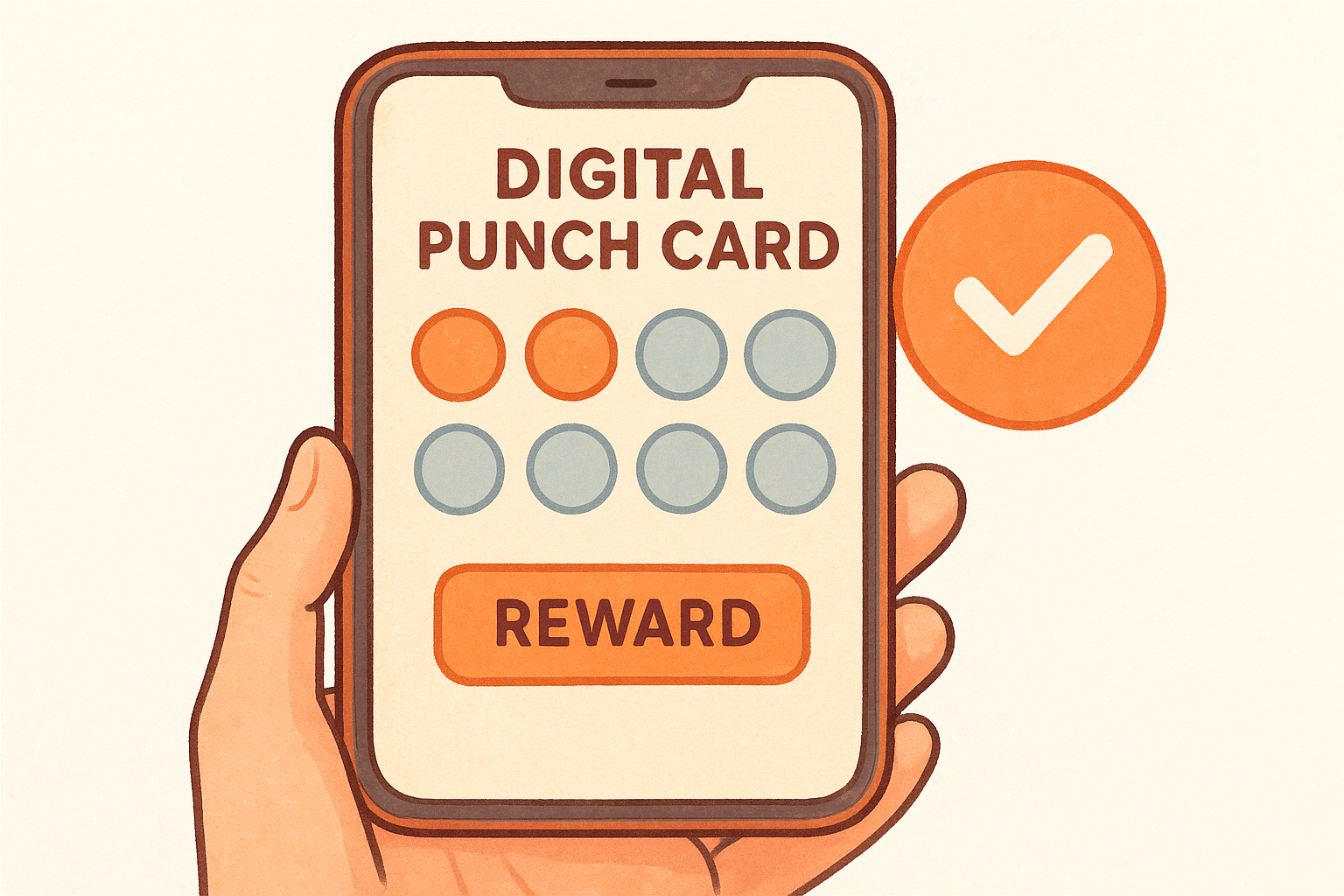
2. Simple digital punch card
A digital punch card is one of the most straightforward restaurant loyalty program ideas you can launch without a big budget or complicated software. Customers earn a stamp or credit for each qualifying purchase, and after a set number of visits or orders, they unlock a reward. Simple mechanics mean higher participation rates, because customers understand exactly what they're working toward.
Why this boosts loyalty and repeat orders
People respond to visible progress. When a customer can see they're four punches away from a free meal, they have a concrete reason to choose your restaurant over a competitor. Digital versions are better than paper cards because they don't get lost in a wallet and you can track everything automatically.
The closer a customer gets to a reward, the more motivated they are to complete it, which is why even a near-empty punch card drives behavior.
How it works in real life
You set up a card through a platform like Square Loyalty or a standalone app where customers register with their email or phone number. Every qualifying order adds a punch automatically. Customers check their progress through a link or app, and the reward triggers once they hit the threshold you define.
What to offer as loyalty incentives
Keep the reward simple and high-perceived value: a free appetizer, a free drink, or a percentage off their next order works well. Avoid discounts so deep they hurt your margins.
What data to collect and how to use it
Each sign-up gives you a customer's contact info and order frequency. Use that to identify your most active customers and send them timely reminders when they're close to earning a reward.
Metrics to track
Track redemption rate and visit frequency before and after launch to measure real impact.
3. Points per dollar with easy rewards
A points-per-dollar system gives customers a running balance they can spend like currency. Every dollar they spend earns a set number of points, and those points convert into discounts or free items once they hit a defined threshold. The straightforward math keeps customers engaged without requiring complicated rules.
Why this boosts loyalty and repeat orders
Points programs work because they turn every single order into measurable progress. Customers who track a growing balance think about your restaurant between visits, which shortens the gap between orders. Among all restaurant loyalty program ideas, points systems consistently rank highest for driving repeat purchase frequency.
The more visible your reward progress is to customers, the more it shapes their ordering decisions.
How it works in real life
Set a simple conversion rate like 10 points per dollar spent, then define a clear redemption threshold such as 500 points equaling a $5 discount. Platforms handle the math automatically. Customers see their running point balance after each purchase, which reinforces the ordering habit.
What to offer as loyalty incentives
Tie points to your highest-margin menu items so redemptions don't cut too deep into profits. A free side dish, a complimentary dessert, or a flat discount on the next order all deliver strong perceived value without hurting your bottom line.
What data to collect and how to use it
Your system captures order frequency and average ticket size along with redemption patterns for each customer. Use that data to identify who is close to a reward, then send a targeted nudge via email or SMS to close the gap.
Metrics to track
Monitor your points redemption rate monthly alongside average order frequency per enrolled customer. Both numbers tell you whether the program is genuinely changing behavior or just sitting unused in the background.
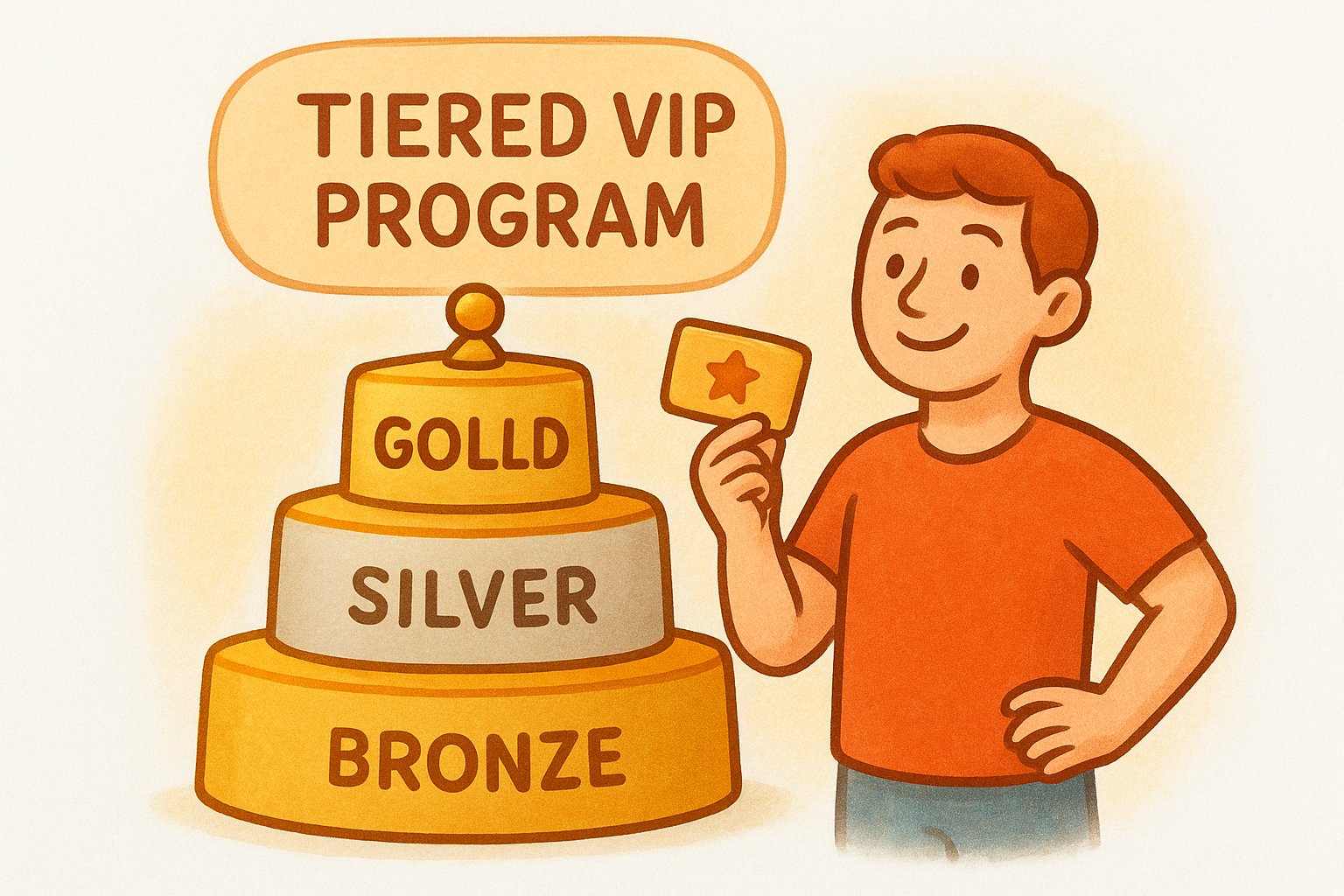
4. Tiered VIP program
A tiered VIP program ranks your customers into levels based on how much they spend or how frequently they order. As customers move up the tiers, they unlock better rewards and more exclusive benefits. This structure works especially well for restaurants with a loyal core audience who already order regularly.
Why this boosts loyalty and repeat orders
Tiers introduce status and competition into the loyalty loop. Customers who reach a Silver or Gold level want to protect that status, which pushes them to order more consistently. Among all restaurant loyalty program ideas, tiered systems are particularly effective at increasing average annual spend per customer because the reward always sits just one level above where they currently are.
The moment a customer reaches a tier they're proud of, they start ordering to maintain it, not just to earn rewards.
How it works in real life
You define two to three tiers with clear thresholds, for example Bronze (0 to $200 spent), Silver ($201 to $500), and Gold ($501 and up). Platforms like Square or Toast support tiered loyalty structures. Customers see their current tier and progress after every order, which keeps the program top of mind.
What to offer as loyalty incentives
Bronze customers might receive 5% off every order, Silver customers get 10% off plus early access to specials, and Gold customers unlock free delivery, exclusive menu items, and priority pre-order slots. Each jump in tier should feel meaningfully better.
What data to collect and how to use it
Track each customer's tier history and total spend over time. Use this to identify who is close to leveling up and send a targeted email showing exactly what they need to reach the next tier.
Metrics to track
Watch tier upgrade rate and the average spend increase that follows each tier change. Also track retention rates by tier to confirm that higher tiers genuinely reduce churn.
5. Birthday and anniversary club
A birthday and anniversary club is one of the easiest restaurant loyalty program ideas to launch because it runs on a trigger you don't have to manufacture. Customers give you a date, and your system does the rest automatically. The result is a highly personal outreach that feels less like marketing and more like a genuine gesture.
Why this boosts loyalty and repeat orders
Birthdays and anniversaries carry emotional weight. When your restaurant reaches out with a real reward on a day that matters to someone, you cut through the noise that most promotional emails create. Customers who receive a birthday offer are significantly more likely to visit that week than customers who receive a generic discount, because the timing feels intentional rather than random.
A well-timed birthday offer does not just drive one visit, it signals to the customer that you know who they are.
How it works in real life
You collect the customer's birthday or anniversary date during sign-up on your website or ordering platform. An automated email or SMS goes out three to five days before the date with a unique reward code. The customer redeems it during a defined window, typically the week of their birthday, which creates urgency without pressure.
What to offer as loyalty incentives
A free dessert, a complimentary appetizer, or a flat dollar discount on their next order all perform well. Tie the offer to a minimum order value to protect your margins while still delivering real value.
What data to collect and how to use it
Beyond the birthday date, track redemption timing and average spend during birthday visits. Customers who redeem often spend above the minimum, which means the offer pays for itself.
Metrics to track
Measure redemption rate and revenue per birthday visit against your baseline average order value to confirm the program is profitable.
6. Surprise and delight rewards for regulars
Unlike structured points programs, surprise and delight is unpredictable by design. You reward a regular customer without any prior announcement, which makes the gesture feel genuine rather than transactional. This approach is one of the most human-centered restaurant loyalty program ideas because it mirrors how a neighborhood restaurant actually treats its best customers.
Why this boosts loyalty and repeat orders
Unexpected rewards generate stronger emotional responses than expected ones. When a customer receives a free item or discount they never saw coming, they are far more likely to share that experience with friends and return to see if it happens again. The unpredictability itself becomes part of the appeal.
Customers who feel genuinely appreciated talk about it, and word-of-mouth from a loyal regular carries more weight than any paid ad.
How it works in real life
You identify your top customers by order frequency or total spend inside your ordering platform dashboard, then manually or automatically trigger a reward at irregular intervals. A handwritten note in a delivery bag, a free dessert added to an order, or a surprise discount code sent by email all accomplish the same goal without a formal program structure.
What to offer as loyalty incentives
Keep the reward proportional to the customer's history with you. A customer who orders twice a week deserves something more meaningful than a first-time visitor, so consider tiering your surprise rewards based on total lifetime spend.
What data to collect and how to use it
Track which customers received surprise rewards and whether their order frequency changed in the weeks that followed. That pattern tells you whether the gesture is building real loyalty or just providing a one-time bump.
Metrics to track
Measure order frequency before and after each surprise reward and monitor whether rewarded customers refer new guests at a higher rate than unrewarded ones.
7. Referral rewards for customers and friends
Referral programs turn your most satisfied customers into an active acquisition channel. When someone recommends your restaurant to a friend and both parties receive a reward, you gain a new customer who arrives with built-in trust. Among all the restaurant loyalty program ideas in this list, referrals deliver the lowest cost-per-acquisition because your existing customers do the outreach for you.
Why this boosts loyalty and repeat orders
Referrals work because social proof drives purchasing decisions more reliably than advertising. A recommendation from a friend carries far more weight than a promotional post, and rewarding the person who made the referral keeps them engaged with your brand long after the introduction happens.
When a loyal customer brings someone new through your door, they become personally invested in that person having a good experience, which strengthens their own connection to your restaurant.
How it works in real life
You give each enrolled customer a unique referral link or code tied to their account. When a friend places their first order using that code through your direct ordering site, both the referrer and the new customer receive a reward automatically. Platforms that support direct ordering make this tracking straightforward since every order connects back to a customer profile.
What to offer as loyalty incentives
Offer the referring customer a dollar-off credit applied to their next order, and give the new customer a welcome discount on their first purchase. Both rewards need to feel worth sharing.
What data to collect and how to use it
Track which customers generate the most referrals and treat them as high-value brand advocates. Send them personalized thank-you messages and priority access to new menu items.
Metrics to track
Measure referral conversion rate (how many referral codes sent actually result in a completed order) and the lifetime value of referred customers compared to customers acquired through other channels.
8. Double points for first-party channels
Among all the restaurant loyalty program ideas you can run, double points for first-party ordering is one of the most strategic. The mechanic is straightforward: customers earn points at the standard rate on all purchases, but they earn twice as many points when they order directly through your website instead of through a third-party app. That gap in earning speed shifts customer behavior toward the channel that actually benefits your margins.
Why this boosts loyalty and repeat orders
Customers respond to faster progress toward rewards. When ordering directly from you earns double points, the math works in your favor on two levels: you pay zero commission on the transaction, and the customer is more motivated to return. Over time, the direct ordering habit sticks because your website becomes the obvious choice for anyone who values their points balance.
Moving even a fraction of your third-party volume to direct ordering can add thousands of dollars back to your annual revenue without acquiring a single new customer.
How it works in real life
You set up two earning rates inside your loyalty platform, one for in-person or third-party orders and a higher rate for orders placed through your branded website. Customers see the double-points badge clearly displayed at checkout on your direct site, which reinforces the value of skipping the app.
What to offer as loyalty incentives
Keep the incentive tied to your standard rewards catalog: free items, order discounts, or priority access. The double points mechanic is the draw, so the rewards themselves do not need to change.
What data to collect and how to use it
Track channel-by-channel order volume for each enrolled customer. When a customer who previously ordered through a third-party app shifts to your direct site, that is a measurable loyalty win.
Metrics to track
Monitor direct channel order share among loyalty members monthly and compare average order value between first-party and third-party purchases.
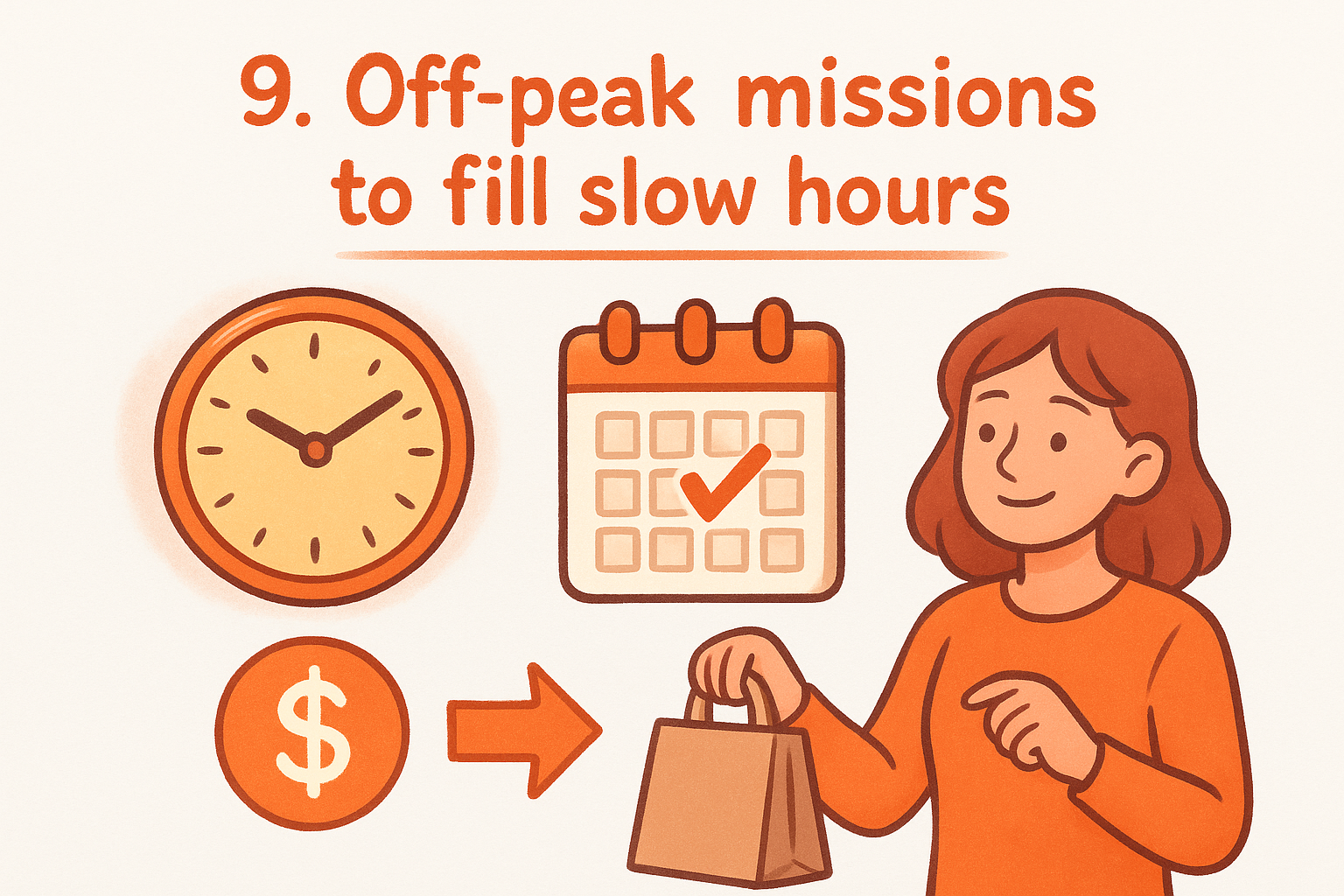
9. Off-peak missions to fill slow hours
Off-peak missions are time-limited challenges that reward customers specifically for ordering during your slowest windows, whether that's Tuesday lunch, a Sunday afternoon, or the first hour after opening. Unlike blanket promotions, missions target a specific behavior you want to change rather than simply discounting orders that would have happened anyway.
Why this boosts loyalty and repeat orders
Most restaurant loyalty program ideas focus on rewarding total volume, but off-peak missions rewire when customers order, not just how often. Slow hours are a margin killer because your fixed costs like labor and utilities run at full speed regardless of how many tickets come in. Missions give customers a direct financial reason to fill those gaps.
Changing when a loyal customer orders is often more valuable than convincing a new customer to order at all.
How it works in real life
You define a target window, such as weekdays between 2pm and 5pm, then attach a bonus reward to any order placed during that window. Your direct ordering site displays the active mission clearly at checkout, creating urgency without requiring a separate app.
What to offer as loyalty incentives
A double points multiplier or a flat bonus credit applied automatically to qualifying orders both work well. Tie the mission to a minimum order value to protect profitability while keeping the incentive strong enough to change behavior.
What data to collect and how to use it
Track order timestamps by customer across your loyalty-enrolled base. Use that data to identify which customers already order during off-peak windows and which ones only order at peak times. Target the peak-only segment with mission notifications sent 24 hours before the window opens.
Metrics to track
Measure revenue per hour during targeted windows before and after launching missions, and track how many enrolled customers shift at least one order per month into an off-peak slot.
10. Try something new challenges
Try-something-new challenges reward customers specifically for ordering outside their usual pattern. Instead of letting regulars default to the same two or three items every visit, you create a structured incentive to explore your full menu. This is one of the most underused restaurant loyalty program ideas because it solves a problem most owners do not realize they have: loyal customers who love you but only know half your menu.
Why this boosts loyalty and repeat orders
Customers who have tried more items across your menu have more reasons to return and more meals they associate with your brand. A single-dish regular is one bad experience away from leaving permanently. A customer who loves your soup, your sandwich, and your weekend special is far more resilient. Expanding their familiarity with your food deepens the relationship.
The more menu items a customer genuinely likes, the harder it becomes for a competitor to replace you.
How it works in real life
You define a list of items or categories that qualify as "new" for each customer based on their order history, then reward them when they try one. Your direct ordering platform tracks item-level history, so the system can flag when a customer completes a qualifying order automatically.
What to offer as loyalty incentives
A bonus points multiplier or a small instant credit applied after the qualifying order lands well. Keep the reward immediate so customers connect the incentive directly to the new item they tried.
What data to collect and how to use it
Track which items customers try first and which ones trigger a repeat order on their own. That data tells you which menu items do the most work for long-term retention.
Metrics to track
Measure average unique items ordered per customer monthly alongside repeat order rate for customers who completed a challenge versus those who did not.
11. Subscription pass
A subscription pass flips the usual loyalty dynamic. Instead of rewarding customers after they spend, you collect a fixed monthly or weekly fee upfront in exchange for ongoing perks like free delivery, discounted items, or priority ordering. Among all the restaurant loyalty program ideas on this list, a subscription pass is the one most likely to change how often customers think about ordering from you, because they have already paid for the privilege.
Why this boosts loyalty and repeat orders
When customers pay a recurring fee, they feel psychological pressure to use what they paid for. A customer who pays $9.99 a month for free delivery on all orders will place more orders specifically to get their money's worth. That behavior is exactly what you want.
A paid subscription turns a casual customer into someone who actively looks for reasons to order from you.
How it works in real life
You offer a monthly pass through your direct ordering site, where enrolled customers unlock a defined set of benefits on every order they place during that billing period. Your ordering platform handles the recurring charge automatically, and the benefits apply at checkout without any manual steps on your end.
What to offer as loyalty incentives
Free delivery, a fixed percentage off every order, or a complimentary item once per week all work well as subscription perks. Pick one or two clear benefits rather than bundling in so many that the value becomes unclear.
What data to collect and how to use it
Track each subscriber's monthly order count to identify low-usage members. Send a mid-month reminder showing how many perks they still have available to redeem before the billing cycle resets.
Metrics to track
Measure subscriber retention rate month over month and compare average monthly revenue per subscriber against non-subscribed customers of similar order history.
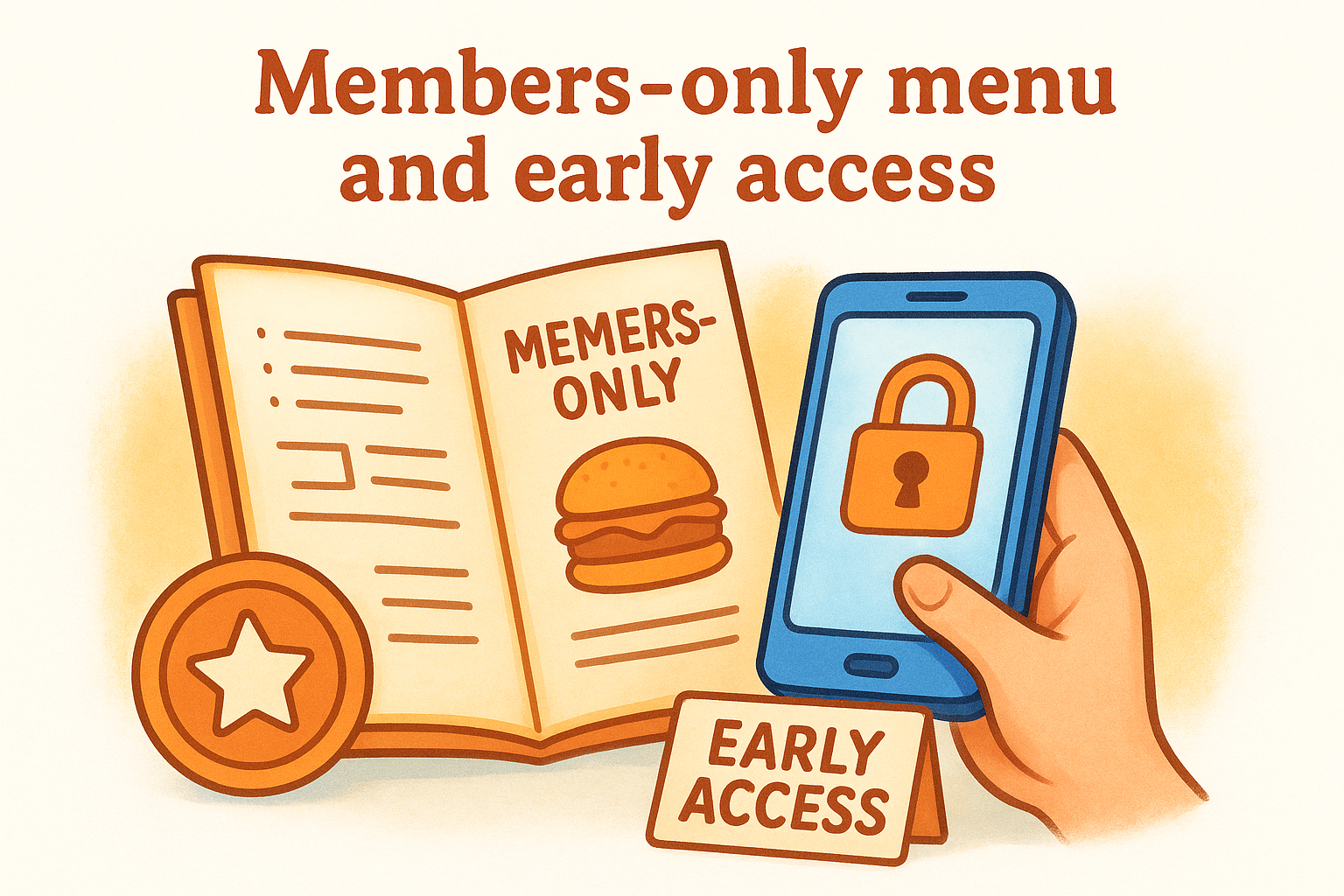
12. Members-only menu and early access
A members-only menu gives your most loyal customers access to items, specials, or ordering slots that the general public simply cannot see. This approach treats exclusivity itself as the reward, which is one of the more powerful restaurant loyalty program ideas you can execute without discounting a single item.
Why this boosts loyalty and repeat orders
Exclusivity creates genuine desire in a way that standard discounts rarely do. When customers know that certain items are only available to members, they want the membership for what it unlocks, not just for the cost savings. That shift in motivation builds a stronger connection to your brand because the value is tied to identity rather than price.
Customers who feel like insiders order more frequently because membership gives them something worth protecting.
How it works in real life
You designate a rotating selection of items or limited-release specials that only appear on your direct ordering site when a customer logs in with a member account. Non-members see the standard menu only, which makes the contrast visible and tangible every single time someone places an order.
What to offer as loyalty incentives
Exclusive seasonal dishes, secret menu items, or first access to new menu launches all work well here. Pre-order slots for high-demand items like holiday meals or limited weekend specials add practical value on top of the prestige factor.
What data to collect and how to use it
Track which exclusive items generate the most orders among your member base. That data shows you which menu innovations resonate with regulars before you commit to adding them permanently to your standard lineup.
Metrics to track
Measure member conversion rate (how many enrolled customers actually order an exclusive item) and compare order frequency between members and non-members over the same period.
13. Catering and large-order perks
Most restaurant loyalty program ideas focus entirely on individual diners, but your catering and large-order customers represent some of the highest-value transactions you will ever process. A single catering order can equal a week's worth of individual tickets. Building specific perks around that segment keeps those customers coming back to you every time a work lunch, family event, or team meeting comes up.
Why this boosts loyalty and repeat orders
Large-order customers buy infrequently but spend significantly more per transaction. Dedicated perks for this group signal that you recognize their value, which makes them far less likely to price-shop competitors for their next event. Repeat catering clients also tend to refer your restaurant to colleagues and friends because they already trust you to handle volume.
Locking in a catering client for a second event is often more valuable than converting five new individual customers.
How it works in real life
You create a tiered threshold, such as orders above $150 or $300, that automatically qualifies the customer for catering perks through your direct ordering site. When they hit that threshold, the benefit applies at checkout without any friction on their end.
What to offer as loyalty incentives
Free delivery on large orders, a percentage credit toward their next catering purchase, or complimentary add-ons like extra sauces or packaging upgrades all perform well without cutting deeply into your margin.
What data to collect and how to use it
Track each large-order customer's event frequency and average spend so you can send a targeted reminder roughly two weeks before the anniversary of their last catering order.
Metrics to track
Measure catering repeat rate and average revenue per catering customer annually to confirm the perks are driving return business.
14. Win-back campaigns for lapsed customers
Win-back campaigns target customers who ordered from you regularly but have gone quiet. Among all the restaurant loyalty program ideas in this list, a win-back campaign is the one that recovers real revenue from people who already trust your food and have already made the decision to order from you at least once.
Why this boosts loyalty and repeat orders
Lapsed customers are not lost customers. They stopped ordering for a reason, and often that reason has nothing to do with dissatisfaction. Life gets busy, habits shift, or they simply forgot you exist. A well-timed win-back campaign puts your restaurant back in front of them at exactly the right moment.
Reactivating a lapsed customer costs far less than converting a stranger because the relationship is already there.
How it works in real life
You define a lapse threshold, such as 60 or 90 days without an order, inside your direct ordering platform. When a customer crosses that threshold, an automated email or SMS goes out with a personalized message referencing their last order and a compelling reason to return.
What to offer as loyalty incentives
A flat dollar discount or a free item tied to a minimum order value performs better than a vague percentage off. The offer needs to feel like a real reason to act, not a generic blast sent to everyone on your list.
What data to collect and how to use it
Track each lapsed customer's last order date, total historical spend, and preferred items. Use that history to personalize the win-back message so it references something specific to them rather than sending an identical email to your entire inactive list.
Metrics to track
Measure win-back conversion rate and average order value of reactivated customers in the 90 days following the campaign to confirm the effort is paying off.
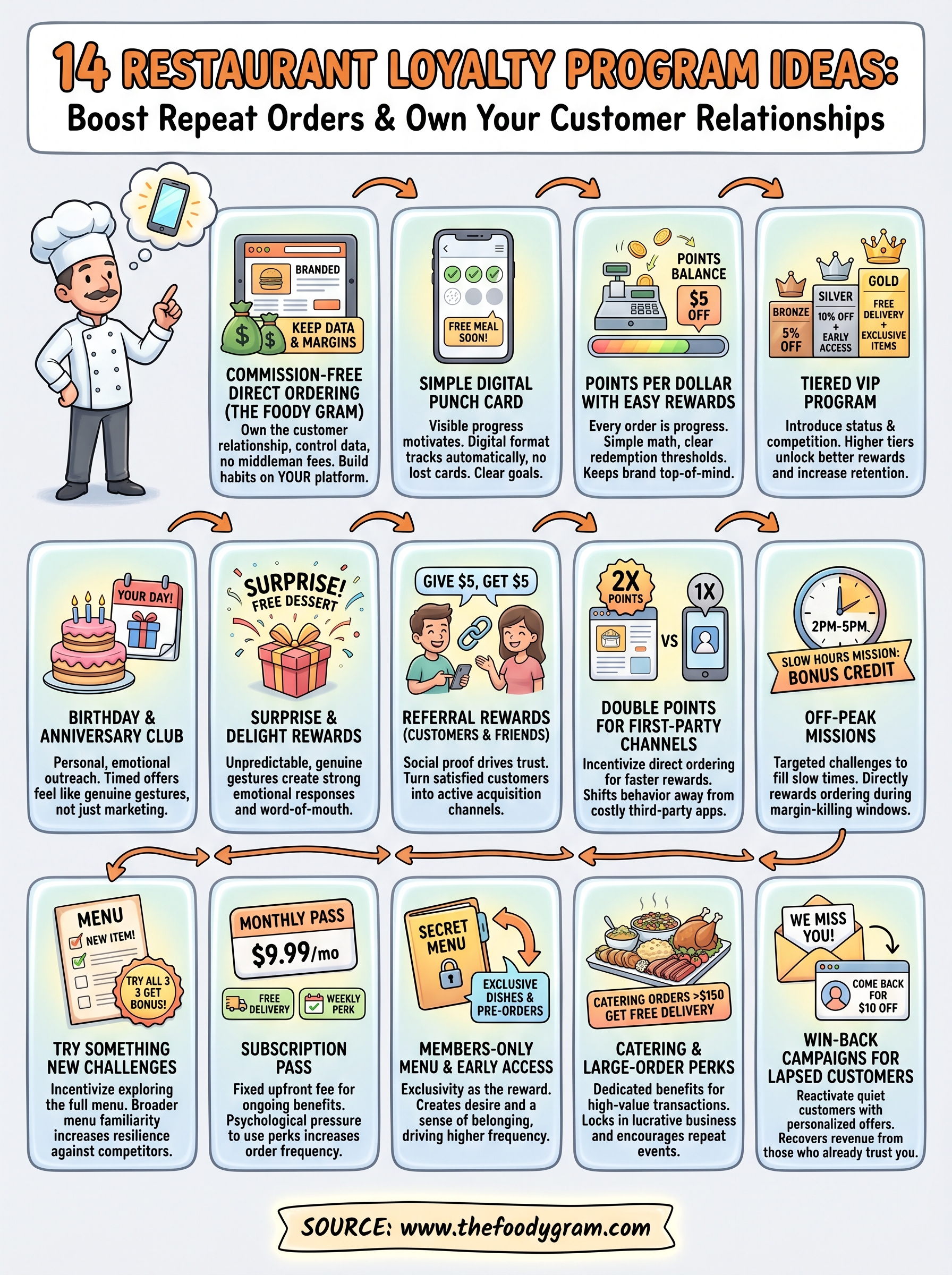
Put one idea live this month
You do not need to launch all 14 of these restaurant loyalty program ideas at once. Pick one that fits your current setup and customer base, then run it for 30 days before adding anything else. A simple win-back campaign or a digital punch card can show measurable results within weeks if you execute it cleanly and track the right numbers from day one.
The biggest obstacle is not choosing the wrong idea. It is waiting too long to start. Every week you delay is a week your regulars spend money somewhere else without any structural reason to return to you specifically. Start with the idea that solves your most immediate problem, whether that is filling slow hours, recovering lapsed customers, or moving volume off third-party apps.
If you want to build your loyalty program on a commission-free direct ordering platform, check out The Foody Gram's pricing plans and see which tier fits your operation.