


How To Promote a Restaurant on Social Media: 9 Proven Ideas
Your food might be incredible, but if nobody sees it online, you're leaving money on the table. Knowing how to promote a restaurant on social media isn't optional anymore, it's one of the most effective ways to fill seats and drive orders without blowing your budget on traditional advertising.
The challenge? Most restaurant owners are busy running a kitchen, managing staff, and keeping customers happy. Social media often falls to the bottom of the priority list, or worse, it gets treated like an afterthought with random posts that go nowhere. That's a missed opportunity. With the right approach, platforms like Instagram, Facebook, and TikTok can turn followers into loyal, repeat customers who order directly from you, not through a third-party app that takes 30% off every sale.
At The Foody Gram, we help restaurants own their online ordering and build a branded digital presence. Social media is the engine that drives traffic to that presence. Below, we're breaking down nine proven ideas you can start using right now to promote your restaurant on social media, grow your audience, and turn engagement into actual revenue.
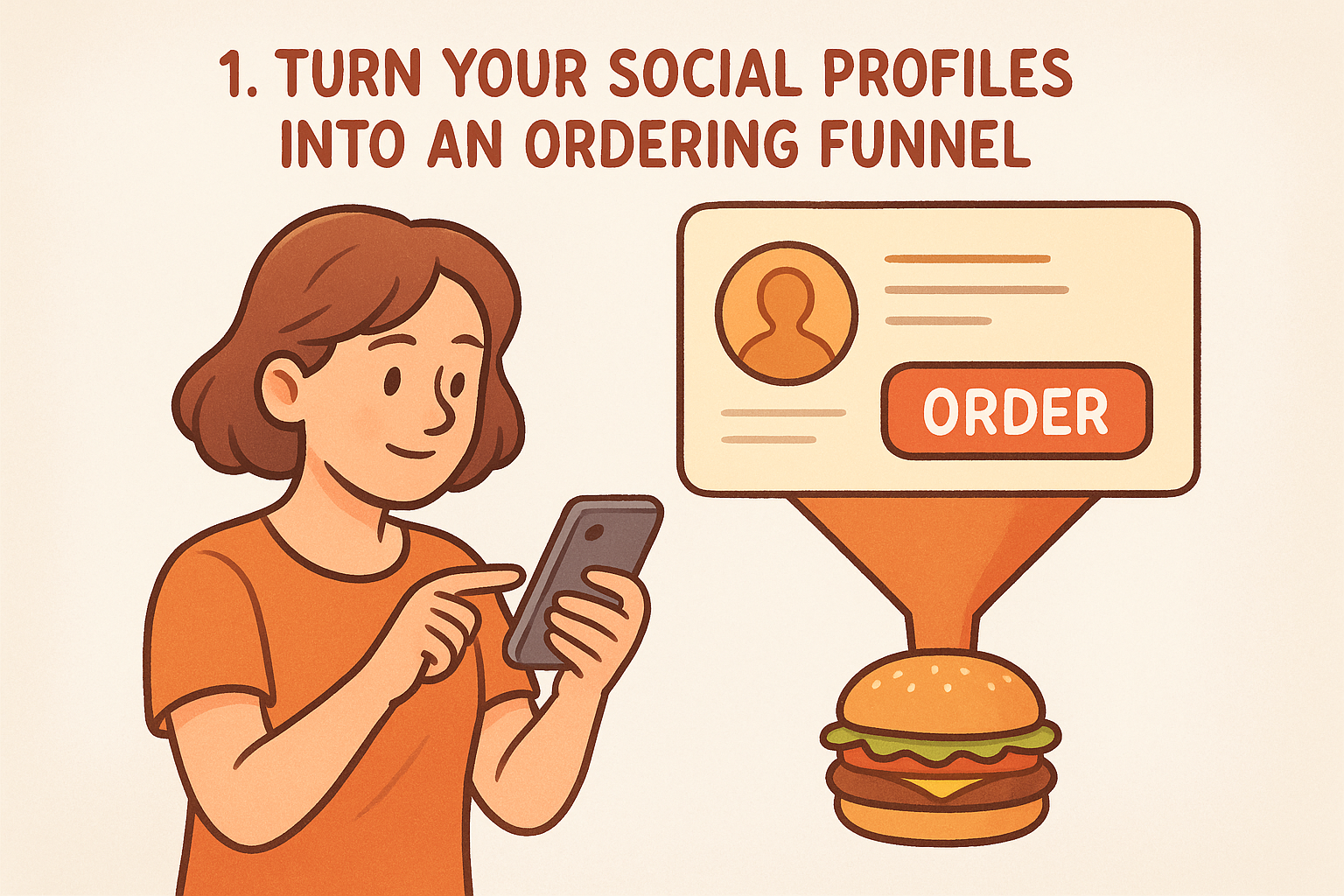
1. Turn your social profiles into an ordering funnel
Most restaurants treat their social profiles like a portfolio when they should treat them like a sales page. Every element of your profile, from your bio to your link, should move a hungry person closer to placing an order. That shift in thinking alone will change how you build and use your presence online.
Set up your owned channels first
Before you post anything, decide which platforms your customers actually use. For most restaurants, Instagram and Facebook are the starting point because they support direct links, booking buttons, and strong local discovery. Claim your profiles on both, complete every field, and make sure your branding is consistent across each one.
Add high-intent links that convert
Your bio link is the most valuable real estate on your profile. Use it to send people directly to your online ordering page, not your homepage or a generic link tree with ten options. When someone sees a dish they want at 7 PM on a Friday, they are ready to order. A single clear link removes every barrier between that moment and a completed transaction.
The fewer clicks between your social profile and your checkout, the higher your conversion rate.
Build one landing page for every promo
When you run a special, don't just send people to your main menu. Create a dedicated landing page for that offer so customers land exactly where you want them. This keeps their focus on the promotion and makes it easier to track which social posts actually drive revenue. Specific links for specific campaigns also let you measure what works without guessing.
Make mobile ordering frictionless with The Foody Gram
Over 70% of restaurant orders placed online come through a mobile device. If your ordering page loads slowly or requires too many steps, people drop off before they finish. The Foody Gram gives you a branded, mobile-optimized ordering experience built for exactly this situation. Customers who click through from Instagram or Facebook land on a clean, fast checkout page that converts browsers into buyers.
Metrics to track weekly
Knowing how to promote a restaurant on social media means nothing if you don't measure results. Check your link clicks, profile visits, and order completions every week to see what content drives actual traffic. Weekly reviews keep you from spending time on content that looks good but does not move people toward ordering.
2. Clean up your profiles so guests can act fast
A messy profile loses customers before they even see your food. Part of knowing how to promote a restaurant on social media effectively is making sure your profile does the heavy lifting for you. When someone lands on your page, they decide in seconds, so your profile structure and key details need to be immediately clear and actionable.
Write a bio that answers the top five questions
Your bio should tell people what you serve, where you are, your hours, how to order, and what makes you different. Treat it like a concise pitch that turns curiosity into a tap on the order button.
Fix your name, handle, categories, and location
Make sure your business name, handle, and category match exactly across Instagram, Facebook, and Google. Set your location tag correctly so local users can find you when they search for nearby restaurants.
Inconsistent business information across platforms confuses both customers and search algorithms, which directly hurts your local discoverability.
Add buttons for order, reserve, call, and directions
Facebook and Instagram both let you add action buttons directly to your profile. Turn these on and connect them to your live ordering page, reservation system, and phone number so guests can act without hunting for contact details.
Pin the right posts and set up story highlights
Pin your best-performing posts or a current promotion to the top of your profile. Use story highlights to organize your menu, reviews, and specials so new visitors can find key information without scrolling through months of older content.
Profile mistakes that cost you orders
The most common errors are broken links and outdated hours. Check your profile monthly to confirm every button works, every link is live, and your details reflect what is actually true right now.
3. Post short vertical videos that sell the experience
Short vertical video is the fastest way to show someone why they need to eat at your restaurant. Instagram Reels and TikTok push this format to new audiences without requiring an ad budget, making it one of the most effective tools for learning how to promote a restaurant on social media without spending on ads.
Pick video formats you can repeat every week
Repeatable formats save time and keep your content consistent. Pick two or three video types you can produce quickly, like a dish reveal, a behind-the-scenes prep clip, or a staff spotlight. When the format is fixed, the only variable is the subject, which makes showing up every week far more manageable.
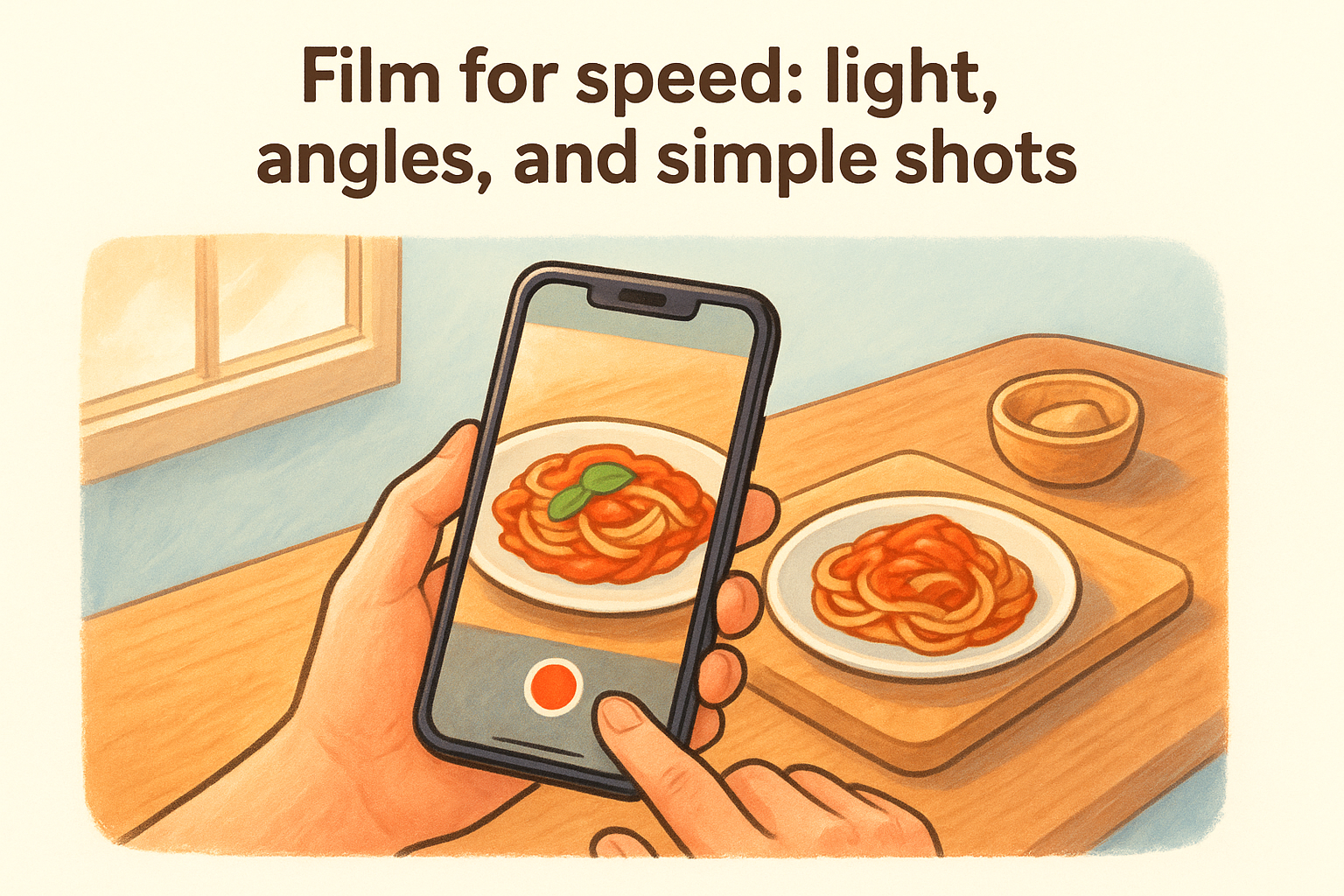
Film for speed: light, angles, and simple shots
You do not need professional equipment to produce scroll-stopping food content. Natural window light and a steady phone are enough. Shoot flat dishes from above and angle your camera at 45 degrees for anything with height, like burgers or stacked plates.
Hook viewers in the first three seconds
Open with motion or sound, a sizzle, a pour, or a tight close-up, to catch attention before someone scrolls past. Always lead with your strongest visual rather than saving it for the middle.
The opening frame of your video determines whether anyone watches the rest of it.
Add captions so videos work without sound
Many viewers watch with the sound off. Use burned-in text or your platform's native caption tool to keep your message readable in any setting so nothing important gets lost on mute.
Video metrics that matter for restaurants
Track watch time and saves over likes alone. High watch time signals the algorithm to push your content to more people. A high save rate tells you that viewers found the video worth coming back to later.
4. Build recurring content series that make posting easy
Posting consistently is one of the biggest challenges restaurant owners face when figuring out how to promote a restaurant on social media. A content series gives you a repeatable structure you can plug content into week after week without starting from scratch every time.
Choose two to three series that fit your concept
Pick series that reflect your brand personality and that you can realistically sustain long-term. A taco spot might run a weekly behind-the-scenes prep clip. A pizza place might do a "slice of the week" feature that highlights one menu item and the story behind it.
Examples of series ideas by restaurant type
Different concepts work better with different series formats. Here are a few proven options to consider:
- Casual dining: Weekly chef tips, ingredient spotlights, or customer favorites
- Fast-casual: Speed runs of popular orders or staff picks of the week
- Ethnic cuisine: Cultural ingredient deep-dives or recipe origin stories
Keep the format consistent and vary the subject
Consistency in format builds audience recognition, which means followers start to anticipate your content each week.
Your series needs a fixed visual template, a consistent color scheme, caption style, or opening shot. Change the subject each week, but keep the structure identical so your audience recognizes it instantly when it appears in their feed.
Use series to support slow days and new items
Schedule your series to run on slower days like Tuesday or Wednesday to pull in midweek traffic. When you launch a new menu item, build a dedicated series episode around it rather than posting a one-off announcement that gets buried in the feed.
How to plan a month of posts in one hour
Block one hour at the start of each month to batch your series topics for the next four weeks. Write your captions, choose your filming days, and assign each post to a specific date on your calendar. Batching decisions upfront removes the daily pressure of figuring out what to post and keeps your feed active without burning out.
5. Use user-generated content to fill your calendar
Your customers are already creating content about your food. User-generated content (UGC) is one of the most underused tools when figuring out how to promote a restaurant on social media, because it costs nothing and builds trust faster than anything you produce yourself.
Ask for tags and shares the right way
Asking for a tag at the right moment makes all the difference. Train your staff to mention your handle when serving photogenic dishes, and add your social handle to receipts, table cards, and packaging so the ask feels natural rather than forced.
Repost guests with clear permission and credit
Always ask before reposting a customer's photo, even if they tagged you. A quick DM request takes thirty seconds and protects your relationship with that guest. When you repost, tag them clearly and thank them publicly so other followers see that sharing earns recognition.
Customers who get featured become your most vocal advocates, because people love seeing their content valued by a brand they like.
Turn UGC into reels, stories, and carousel posts
A single customer video can become a story repost today, a carousel highlight this week, and a reel compilation next month. Repurposing one piece of UGC across multiple formats stretches your content calendar without any extra filming.
Make your restaurant look good in customer photos
Good lighting and clean table setups directly improve the quality of customer photos. Fix your dining room lighting and keep your plating consistent so every guest photo reflects well on your brand.
UGC metrics and brand safety checks
Track how many tags you receive weekly and review each one before sharing. Check that customer photos represent your food and environment accurately, and skip anything that does not match your brand standards.
6. Engage like hospitality, not broadcasting
Social media works best when you treat it like a two-way conversation, not a bulletin board. Part of knowing how to promote a restaurant on social media is understanding that engagement builds loyalty in a way that passive posting never will.
Set response standards for comments and DMs
Reply to every comment and direct message within 24 hours, ideally faster during peak ordering times. Set a clear standard for your team so responses are consistent, warm, and on-brand regardless of who handles the account that day.
Turn questions into bookings and orders
When someone asks about your hours or whether you offer delivery, treat that as a buying signal. Give a direct answer and include your ordering link so the path from question to purchase takes just one tap.
Handle complaints calmly and move to private channels
Respond to negative comments publicly with a brief, calm acknowledgment, then invite the guest to continue the conversation in a direct message. Never argue in the comments, because your public response tone matters more to onlookers than the original complaint itself.
How you handle a bad review publicly tells every potential customer more about your restaurant than the complaint ever could.
Create community with polls, Q and A, and prompts
Use polls and question stickers in your stories to ask followers what they want to see on the menu or which dish they love most. These small interactions build a sense of belonging that keeps your audience coming back consistently.
Engagement signals that improve reach
Platforms reward accounts where followers actively interact. More comments, saves, and shares push your content to broader audiences, so every genuine reply you give is also a reach-building action.
7. Win local discovery with tags, partners, and creators
Showing up in local search results is one of the most direct ways to attract new customers who are already nearby and ready to eat. Understanding how to promote a restaurant on social media at the local level means using every built-in discovery tool the platforms offer, from location tags to community partnerships.
Use geotags and local keywords that people search
Tag your city, neighborhood, or landmark in every post and story to make your content visible to people browsing that location. Include local keywords in your captions naturally, like your neighborhood name and cuisine type, so your posts surface when people search within the platform.
Pick hashtags that actually drive local reach
Small, location-specific hashtags outperform massive generic ones because the competition is lower and the audience is far more relevant. Use three to five targeted hashtags per post that combine your city, cuisine, and occasion so the right local audience finds you.
Niche local hashtags consistently outperform broad national ones because they reach people who are actually close enough to visit.
Partner with nearby businesses for cross-promotion
Reach out to complementary local businesses, like a nearby dessert shop or a craft brewery, to co-create content or run a shared promotion. These partnerships put your restaurant in front of an already-warm audience that trusts the partner they follow.
Work with creators without wasting budget
Choose local micro-creators with engaged, genuine audiences over accounts with large but passive followings. Set clear expectations upfront about deliverables, posting dates, and the specific link or code they should include in their content.
Track results with unique links and codes
Give every creator and partner a unique promo code or tracking link so you can see exactly which collaboration drives real orders. Review performance data after each campaign before committing to any repeat partnerships.
8. Run promos and boost the winners
Running the right promotions moves people from passive followers to paying customers. Knowing how to promote a restaurant on social media includes knowing when to spend a little on amplifying what already works rather than starting from scratch with paid content every time.
Design offers that protect margins
Build promotions around high-margin items rather than blanket discounts. A free appetizer with a minimum order protects your bottom line far better than 20% off everything, and it still feels like a genuine deal to the customer.
Use stories for time-boxed specials and events
Stories disappear after 24 hours, which makes them the perfect place to post limited-time offers. Use countdown stickers to build urgency and link directly to your ordering page so followers can act before the special ends.
Run simple giveaways without breaking platform rules
Keep giveaways straightforward: ask followers to tag a friend and follow your account. Check each platform's promotion guidelines before you launch because violating rules can get your post removed or your account flagged.
A small, well-run giveaway builds more genuine engagement than a complicated contest that confuses your audience.
Boost top posts with a small paid budget
Pick posts that already perform well organically and put a small daily budget behind them. Boosting proven content costs less and converts better than promoting posts that have not already shown traction with your existing audience.
Retarget people who watched videos or visited your site
Use custom audience tools in Meta Ads to serve ads specifically to people who watched your videos or visited your ordering page. These warm audiences already know your restaurant, so your retargeting budget works harder than cold outreach ever will.
Next steps
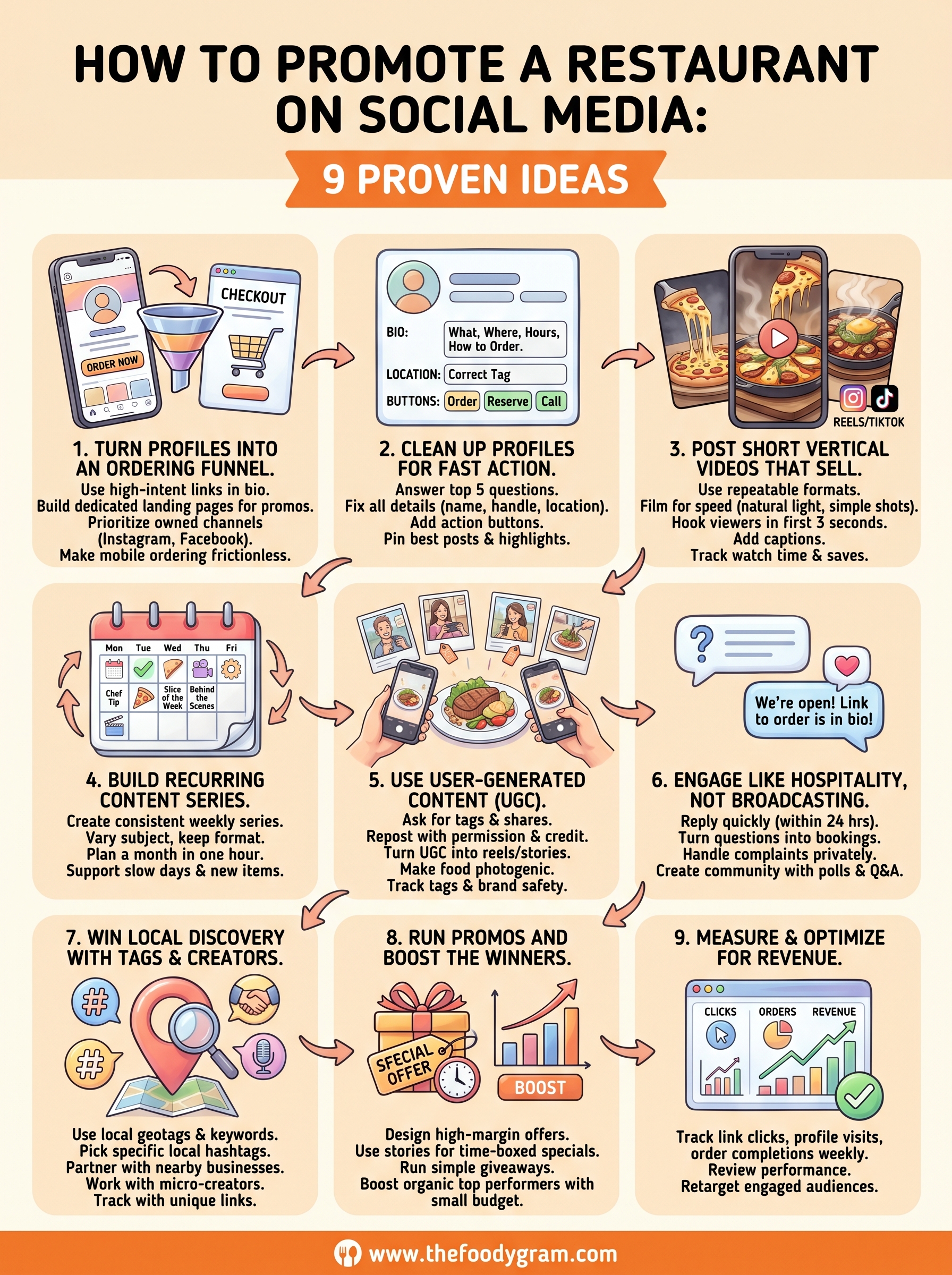
You now have nine concrete ways to figure out how to promote a restaurant on social media and turn your online presence into a direct revenue channel. The strategies above work best when you combine them: clean profiles bring people in, consistent video content keeps them engaged, local tags and creator partnerships grow your reach, and smart promotions push followers to act. Pick two or three ideas from this list and commit to them for the next 30 days before adding more.
None of that effort pays off if customers click your link and hit a slow, clunky ordering page. Your online ordering system is the last step between a follower and a paying customer, so it needs to be fast, branded, and commission-free. The Foody Gram is built to handle exactly that. Check out our restaurant online ordering plans and see which option fits your business.