


Email Marketing for Restaurants: Strategy & Campaign Ideas
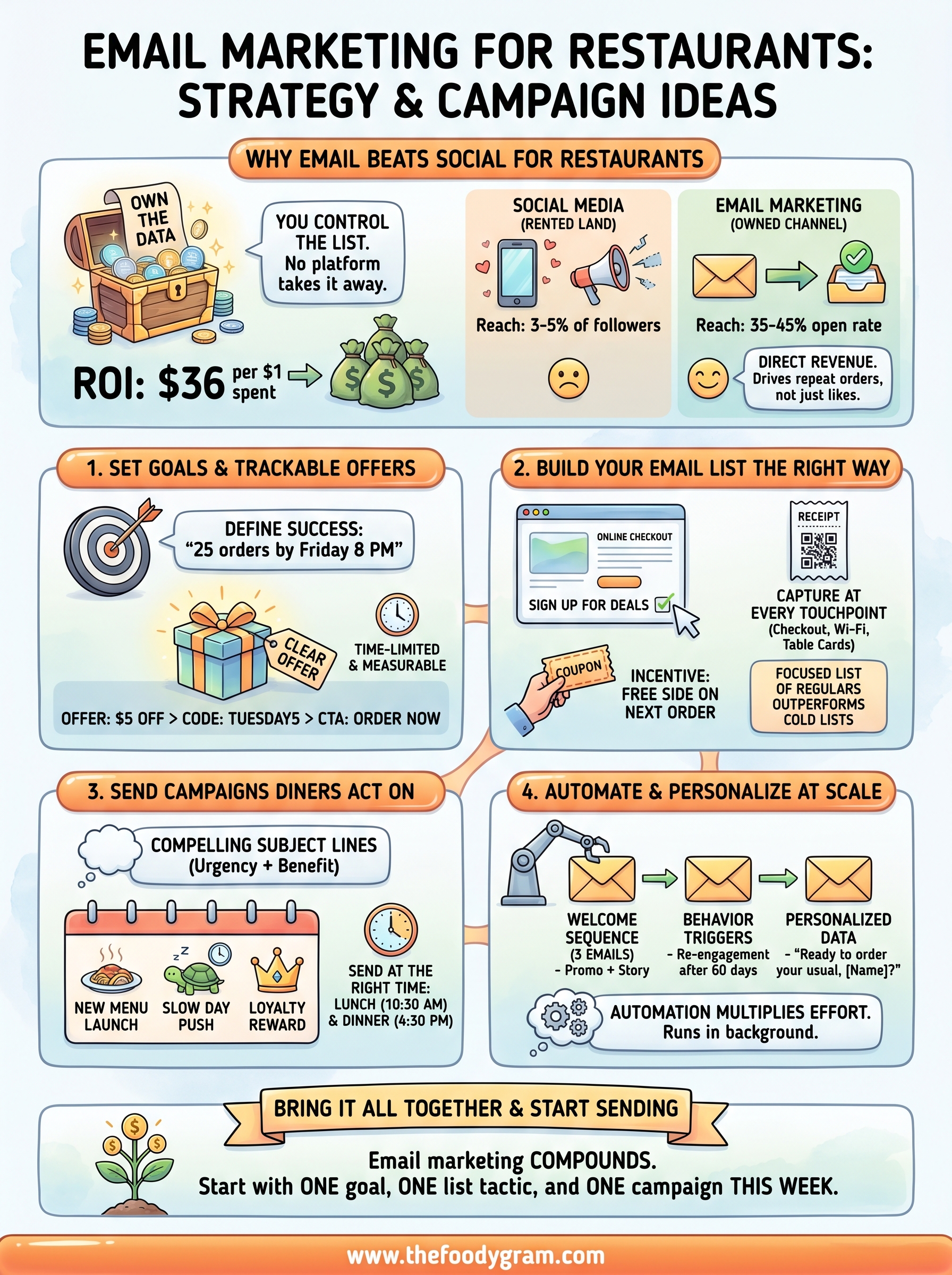
Third-party delivery apps collect your customers' email addresses, order history, and preferences, then use that data to market competitors right back at them. When you take ordering in-house, you flip that dynamic. You own the data. And email marketing for restaurants is one of the most profitable ways to put that data to work, generating an average return of $36 for every $1 spent.
That's exactly why we built The Foody Gram around direct customer relationships. Our commission-free ordering platform gives restaurants their own branded website and, critically, full ownership of their customer list. But collecting emails is only step one. The real revenue comes from what you do with those contacts after the first order.
This guide breaks down a complete email marketing strategy built for restaurant owners, from growing your subscriber list and writing campaigns that actually get opened, to automating sequences that drive repeat orders week after week. Whether you're sending your first campaign or tightening up an existing one, you'll walk away with specific tactics and campaign ideas you can put into action this week.
Why email beats social for restaurants
Social media platforms feel free, but every post you publish lives on rented land. Instagram, Facebook, and TikTok control your reach, and they can cut your organic visibility with a single algorithm update. When you spend months building a following of 5,000 people on Instagram, you realistically reach maybe 3-5% of them with any given post. Email works differently. Every message you send goes directly to a subscriber's inbox, and the average open rate for restaurant emails sits around 40%, compared to social's 3-5% organic reach. That gap in reach translates directly into revenue.
You own the channel
No platform can take your email list away. Your subscriber list is an asset you control, regardless of what happens to any social network's algorithm, ownership, or terms of service. This matters more than most restaurant owners realize. If Facebook limits business page reach further tomorrow, you lose access to customers you spent years building relationships with. With email, that relationship belongs to you, and so does every data point attached to it: order history, visit frequency, favorite menu items, and spending patterns. Those details make your marketing sharper with every campaign you send.
The moment you shift from renting an audience on social media to owning a subscriber list, you move from reactive marketing to proactive revenue generation.
The numbers tell the story
Email consistently outperforms social media on every metric that matters for a restaurant's bottom line. Here's a direct comparison across the channels most restaurants rely on:
| Metric | Email Marketing | Social Media (Organic) |
|---|---|---|
| Average reach per message | 35-45% open rate | 3-5% of followers |
| Average click-through rate | 3-5% | 0.5-1% |
| ROI | $36 per $1 spent | Difficult to measure directly |
| Data ownership | Full ownership | Platform owns the data |
| Deliverability control | You control send time | Algorithm controls distribution |
These figures explain why email marketing for restaurants consistently outperforms social posts when you're trying to fill seats on a slow Tuesday or promote a new menu item before the weekend rush. Social media builds awareness, but email is where you actually close the loop and drive orders. A subscriber who opens your Tuesday email is already in a different mindset than someone who scrolls past your post while watching videos.
Email drives repeat visits, not just likes
A like on Instagram feels good, but it does not pay the rent. A well-timed email with a limited-time offer or a seasonal menu announcement drives someone to place an order, book a table, or walk through your door. The intent behind someone reading your email is fundamentally different from passive scrolling. They opted in, which means they already told you they want to hear from you. That opt-in changes everything about how they receive your message.
Repeat customers are the engine of any profitable restaurant. Returning customers spend more per visit and cost far less to retain than new customers cost to acquire. Email gives you a direct, reliable line to those high-value regulars. You can reward loyalty, re-engage customers who haven't ordered in 60 days, or simply remind someone that your weekend special is back. Social media can support all of that, but it cannot match the consistency and targeting precision that a well-managed email list delivers.
Step 1. Set goals and trackable offers
Before you write a single subject line, decide what you want each email to do. Most restaurant owners send campaigns without a clear goal, which makes it impossible to know whether the effort is paying off. Every email should have one primary objective: drive orders, increase average check size, re-engage lapsed customers, or fill a specific time slot. When you start with a goal, the rest of the email writes itself.
Define what success looks like before you send
Vague goals produce vague results. Instead of "get more orders," set a specific target like "generate 30 online orders from this Tuesday campaign" or "get 15 reservations for Thursday evening." That number gives you something to measure after the campaign goes out. Email marketing for restaurants works best when you treat each send like a small experiment with a defined outcome you can actually evaluate.
Attach a number to every goal. "More orders" is a wish. "25 orders by Friday at 8 p.m." is a target you can hit or miss and learn from.
Once you have a goal, pick one primary metric to track it: total orders placed, redemptions of a specific promo code, or clicks on your order link. Tracking five metrics at once usually means you measure nothing useful and make no meaningful changes after the send.
Build offers your customers can act on
Your offer is the engine of your email. A clear, time-limited deal gives readers an immediate reason to click instead of saving the email for later, which in practice means never. The best restaurant email offers are simple: a dollar amount off, a free item with a minimum order, or early access to a new menu item before it goes live for everyone else.
Use promo codes tied to specific campaigns so you can track redemptions directly in your order dashboard. Here is a simple offer structure that converts:
| Element | Example |
|---|---|
| Offer | $5 off any order over $30 |
| Promo code | TUESDAY5 |
| Expiration | This Tuesday only, 11 a.m. - 9 p.m. |
| CTA | "Order now" button linking to your restaurant website |
Keep the offer visible above the fold so subscribers see it without scrolling. If they have to hunt for the deal, most will not bother.
Step 2. Build your email list the right way
A strong email list does not appear overnight, but it builds faster than most restaurant owners expect when you place collection points wherever customers already interact with your business. Your goal is to make signing up the natural next step, not an afterthought. The size of your list matters less than the quality: a focused list of 500 regular customers will outperform a cold list of 5,000 strangers every single time.
Capture emails at every touchpoint
Your restaurant already has multiple moments where customers are engaged and willing to share their contact information. Your online ordering checkout page is the single highest-converting collection point you have, because the customer is already in a buying mindset. Add an optional email opt-in checkbox at checkout with a simple line like "Sign up for exclusive deals and updates." Most customers who complete an order will check that box if you ask clearly.
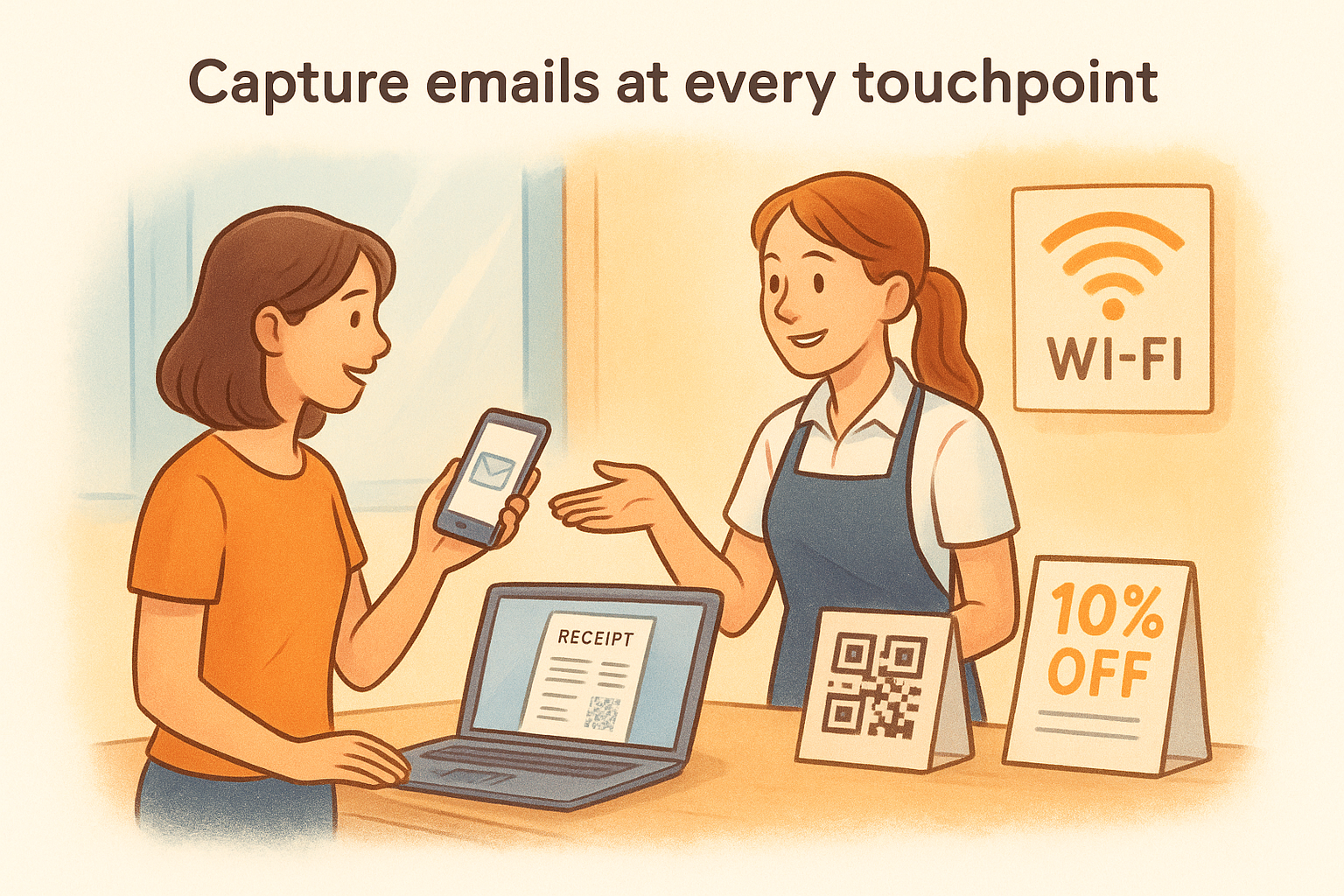
Beyond checkout, here are the touchpoints worth activating:
- Receipt follow-up: Include a short URL or QR code on printed receipts that links directly to a signup form
- Wi-Fi login: Require an email address to access your restaurant's network
- Table cards or tent signs: A card with a QR code and "Get 10% off your next order" drives in-person signups
- Social media link in bio: Direct followers to a landing page where they can subscribe
The best list-building tactic is always the one closest to the moment a customer decides they love your food.
Give subscribers a reason to sign up
Nobody hands over their email address without a reason. A clear incentive tied to your signup form removes the hesitation and sets the tone for the relationship from day one. The most effective offers in email marketing for restaurants are simple and immediate: a discount on the next order, a free side item, or early access to a seasonal menu before it goes public.
Here is a signup incentive template you can use on any platform:
| Element | Example |
|---|---|
| Headline | "Get $5 off your first online order" |
| Body copy | "Join our list and receive your discount code instantly." |
| CTA button | "Claim My Deal" |
| Delivery method | Automated welcome email with promo code |
Send the promo code immediately through an automated welcome email so the subscriber gets instant value, and your first message lands while your restaurant is still on their mind.
Step 3. Send campaigns diners act on
Getting emails into inboxes is only half the battle. What you write inside each message determines whether a subscriber clicks "Order Now" or sends your email straight to the trash. The campaigns that consistently drive results for restaurants share three things: a compelling subject line, a single clear offer, and a send time that meets your customer where they already are.
Write subject lines that get opened
Your subject line is the first and sometimes only thing a subscriber reads. A strong subject line creates urgency, mentions a specific benefit, and stays under 50 characters so it renders cleanly on mobile screens. Avoid vague openers like "Check out our new menu" and instead lead with the value: what does the reader get by opening this email right now?
Here are subject line formulas that perform well in email marketing for restaurants:
| Formula | Example |
|---|---|
| Urgency + offer | "Today only: free garlic bread with any order" |
| New item launch | "Our new birria tacos are here. Order tonight." |
| Re-engagement | "It's been a while. Here's $5 to come back." |
| Seasonal hook | "Weekend special: short rib pasta, limited plates" |
Your subject line's only job is to get the email opened. Save the selling for the body copy.
Match your campaign to the moment
Not every email needs a discount attached to it. Different moments in your customer relationship call for different campaign types, and rotating through them keeps your list engaged without training subscribers to wait for a coupon before they place an order.
Here are four campaign types worth cycling through each month:
- New menu item: Announce a limited-time dish with a photo and a direct link to order
- Slow day push: Send a same-day offer for a Tuesday or Wednesday to fill order gaps
- Loyalty reward: Recognize customers who have ordered five or more times with an exclusive deal
- Seasonal promotion: Tie an offer to a local event, holiday, or a seasonal ingredient that just came in
Send at the right time
Timing turns a solid email into actual orders. Send campaigns when your customers are already thinking about food: late morning for lunch targeting (around 10:30-11 a.m.) and late afternoon for dinner (around 4-5 p.m.). Track which time slot pulls more clicks by splitting a campaign across two send windows and comparing order volume afterward. A small timing adjustment can move your open rate meaningfully without changing a single word inside the email.
Step 4. Automate and personalize at scale
Manual one-off emails work, but automation multiplies your effort without multiplying your time. Once you build a sequence, it runs in the background while you focus on running your restaurant. The goal of automation in email marketing for restaurants is simple: deliver the right message to the right customer at the right moment, based on what they actually did rather than a batch-and-blast calendar.
Set up a welcome sequence
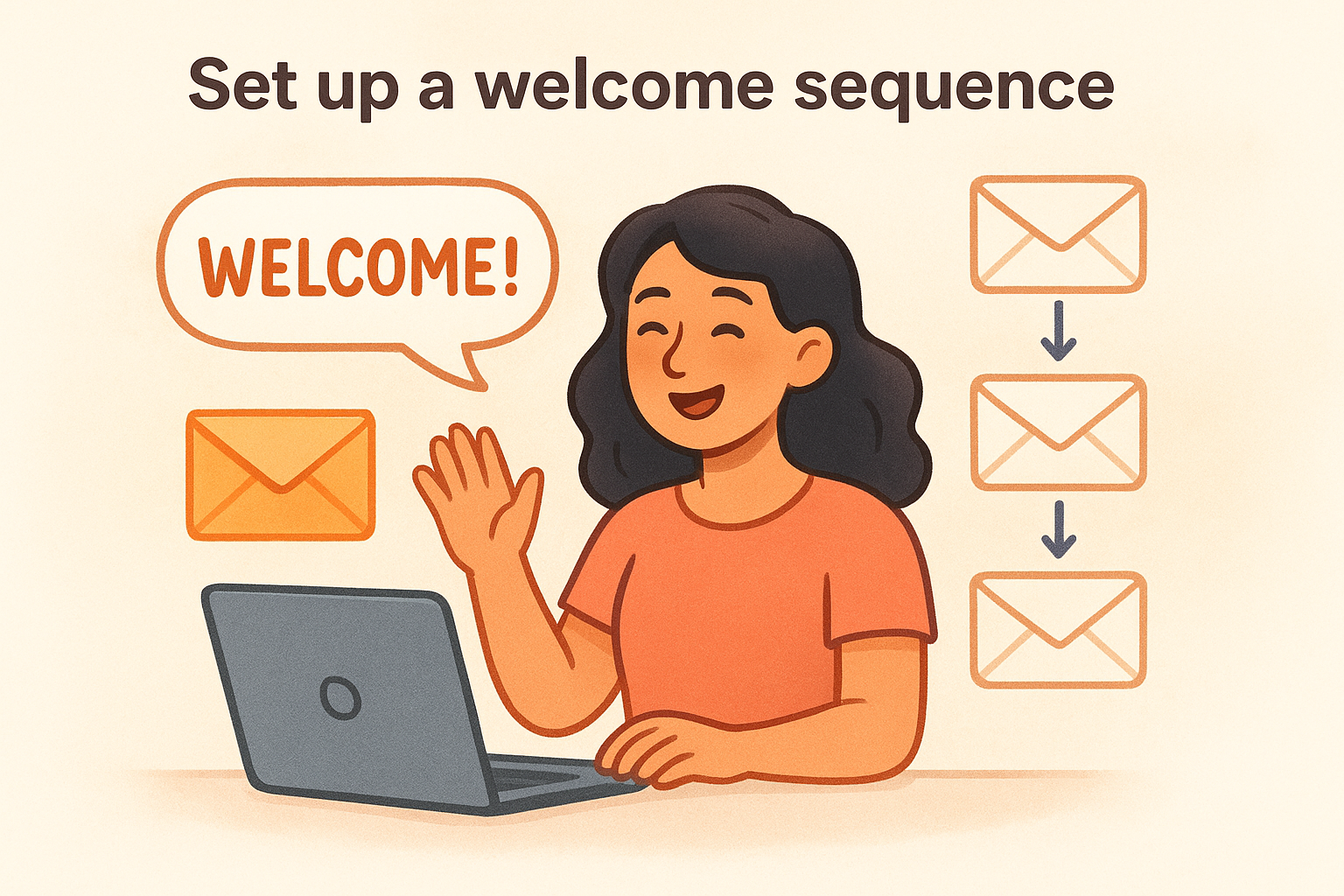
Your welcome sequence is the most important automation you will build, because it reaches subscribers at peak engagement, right after they sign up. A three-email welcome series consistently outperforms a single welcome message in both open rates and order conversion. Here is a sequence template that works:
| Timing | Content | |
|---|---|---|
| Email 1 | Immediately after signup | Promo code delivery + your restaurant story in two sentences |
| Email 2 | 3 days after signup | Best-selling menu items + direct link to order |
| Email 3 | 7 days after signup | Customer favorites framing + secondary offer |
Keep each email focused on one action so subscribers always know exactly what to do next. If you give readers three things to click, most will click nothing.
Trigger emails based on customer behavior
Behavior-based emails outperform broadcast campaigns because they respond to what a customer actually did. Set up a re-engagement trigger for any subscriber who has not placed an order in 60 days. A short email with a subject line like "We miss you, here's $4 back" paired with a single promo code is enough to bring a percentage of those customers back into your ordering flow.
A re-engagement sequence running automatically year-round will recover more lapsed customers than any manually timed campaign you send.
Two other triggers worth building immediately: a post-order thank-you email sent one hour after delivery or pickup confirms, and a birthday email with a small reward sent one week before a subscriber's birthday. Both require minimal setup and generate strong returns relative to the effort involved.
Personalize with the data you already have
You do not need a complicated system to make emails feel personal. Use your customer's first name in the subject line and reference their last order when your platform supports it, something like "Ready to order your usual?" Your ordering system already stores this data. Segment your list by order frequency so high-value regulars receive different messages than first-time buyers, and your click rates will climb without you sending a single extra email.
Bring it all together and start sending
You now have everything you need to run a complete email marketing system for your restaurant. Start with one goal, one list-building tactic, and one campaign before you layer in automation. Getting your first email out the door matters more than getting everything perfect on day one. Email marketing for restaurants works because it compounds: each subscriber you add, each campaign you send, and each sequence you automate builds on the last.
Pick one action from this guide and execute it this week. Set up your online ordering page with an email opt-in, write a welcome email with a promo code, and schedule your first campaign for a slow weekday. Those three steps alone put you ahead of most independent restaurants still relying on third-party platforms.
When you're ready to own your customer relationships completely, see our commission-free ordering plans that put your customer data in your hands from order one.