


7 Social Media Marketing for Restaurants Strategies to Use
Your restaurant's Instagram, Facebook, or TikTok page is often the first impression a potential customer gets, before they ever walk through your door or place an order. That makes social media marketing for restaurants more than just posting food photos. It's a direct line to the people most likely to become regulars, and most restaurant owners aren't using it to its full potential.
The real power of social media kicks in when you connect it to a system you actually own. Posting great content that sends hungry customers to a third-party app, where you lose 30% per order, defeats the purpose. That's exactly why we built The Foody Gram: a commission-free online ordering platform that gives restaurants their own branded website. Pair that with a strong social media strategy, and you're driving orders directly to your business, not someone else's.
This article breaks down seven practical strategies you can start using right now to grow your restaurant's reach, engage your local community, and turn followers into paying customers. No fluff, no generic advice, just tactics that work for restaurant owners who want real results from their social channels.
1. Drive direct orders with The Foody Gram
Social media marketing for restaurants works best when every post sends your audience somewhere useful. If your bio link points to a third-party delivery app, you're paying 30% commission on every order that follows. The Foody Gram gives you a branded, commission-free ordering page you own, so your social content drives revenue directly to your pocket.
Why it works
When a customer taps the link in your bio after seeing your food, where they land matters. A custom-branded ordering page feels consistent with your restaurant's identity and keeps customers focused on your menu, not your competitors. Third-party apps show rival restaurants on the same screen and take a cut of every sale.
The moment you own your ordering link, you own the full customer relationship from first click to checkout.
Direct ordering removes the friction that causes people to abandon a purchase, and it puts the full order value in your hands instead of a platform's.
Steps to implement
Setting up The Foody Gram and connecting it to your social channels takes days, not weeks. Follow these four steps to get your direct ordering link live and working:
- Sign up and get your branded restaurant website live within 48-72 hours.
- Add your ordering link to every social profile bio.
- Update your Google Business Profile with the same direct link.
- Pin a post on each platform telling followers they can order directly from you.
Post ideas that move people to order
Your captions need to do more than describe the dish. Every post requires a clear call to action that tells followers exactly where to go. Instead of "Check out our new pasta," write "Our lobster pasta is live. Order at the link in bio tonight."
Run a limited-time offer tied exclusively to your direct ordering page to give followers a specific reason to click. A discount code that only works through your Foody Gram link builds urgency and trains your audience to skip the third-party apps entirely.
Measure results
Track which posts generate the most traffic to your ordering page each week. Your Foody Gram order dashboard shows exactly when orders come in, so you can connect spikes to specific posts or offers.
Review three numbers consistently: link click rate, order volume by day, and average order value. When one post format drives the most orders, build more of your weekly content around it.
2. Pick one primary platform and post consistently
Trying to maintain an active presence on every platform at once splits your time and produces average content everywhere. Consistent, quality posts on a single platform outperform scattered posts across five. Pick the one where your target customers already spend time and commit to it fully.
Why it works
Algorithms reward accounts that post regularly. When you show up on the same platform week after week, the platform pushes your content to more people over time. Spreading thin across multiple channels means none of them get enough attention to actually grow.
Consistency beats frequency on any platform: two strong posts per week on one channel outperform daily mediocre posts spread across several.
Steps to implement
Choose your platform based on where your local audience is most active. Instagram and TikTok work well for visual food content, while Facebook still reaches older demographics effectively. Once you pick one, build a simple weekly posting schedule and stick to it.
- Post 2-3 times per week minimum
- Batch-create content on one day to stay ahead
- Keep captions short and direct with a clear call to action
Post ideas that fit the platform
Each platform favors different formats. Instagram rewards high-quality photos and Reels, while TikTok favors raw, behind-the-scenes clips. Match your content style to what that platform's users already engage with most, not what looks easiest to produce.
Measure results
Check your platform analytics every two weeks to see which posts get the most reach and saves. Effective social media marketing for restaurants improves when you track what your specific audience responds to and build more of that content going forward.
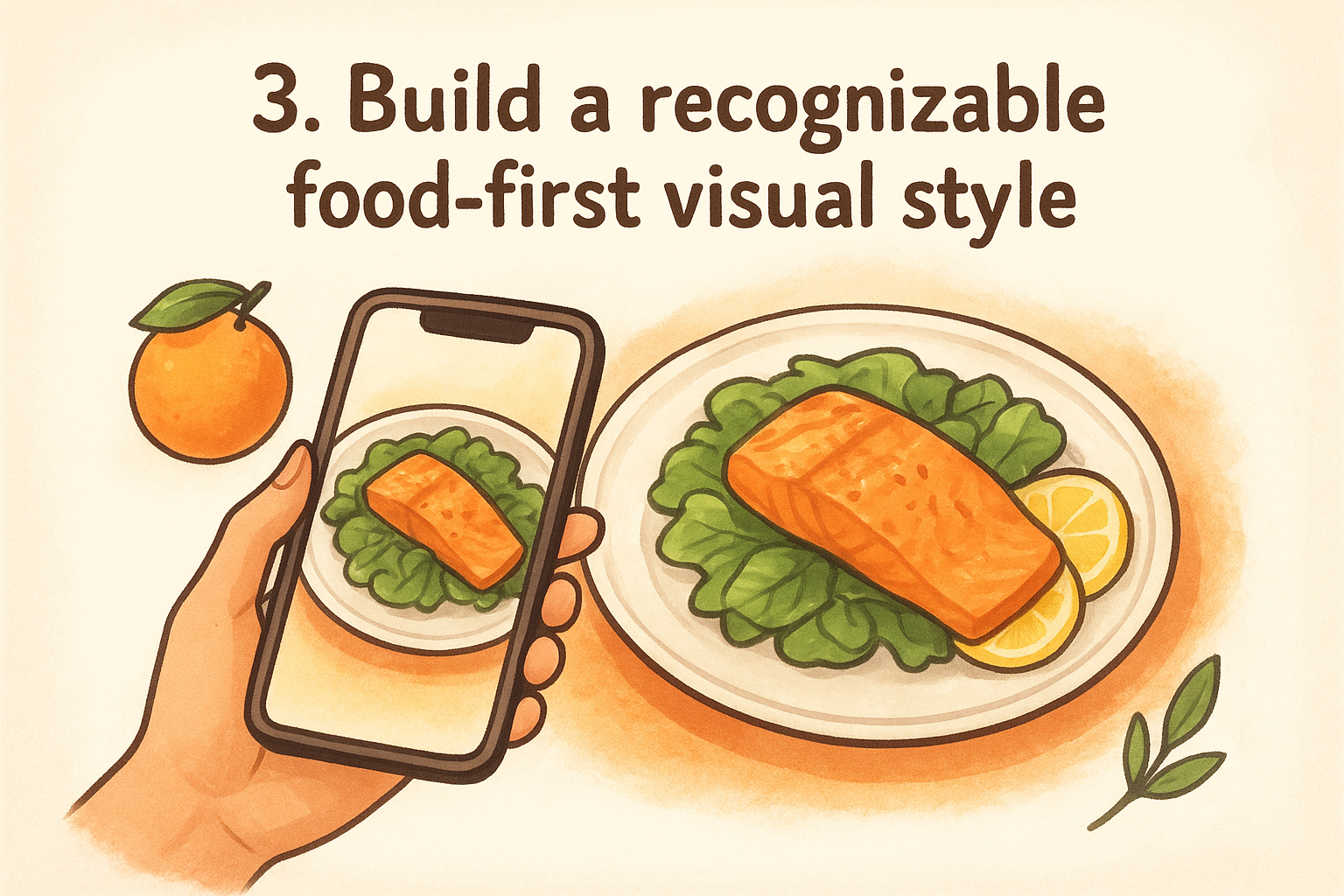
3. Build a recognizable food-first visual style
Your content needs to look like yours before anyone reads a single word. A consistent visual identity makes your restaurant instantly recognizable in a crowded feed and builds the kind of trust that turns a casual scroller into a loyal customer.
Why it works
People scroll fast. A cohesive look stops them mid-scroll because it feels familiar, even if they're seeing your post for the first time. Strong visuals also signal quality: if your photos look professional and consistent, customers assume your food and service are, too.
Your visual style is the silent first impression that either earns a tap or loses one.
Steps to implement
You don't need a professional photographer to build a polished visual identity. A smartphone with good lighting and a few intentional choices gets you most of the way there. Pick two or three consistent elements and apply them to every post.
- Shoot food near a window for natural light
- Choose one filter or editing preset and stick to it
- Use the same color palette in backgrounds and props
- Keep your logo placement consistent across all graphics
Post ideas that look on-brand
Social media marketing for restaurants works best when your feed tells a visual story. Post a weekly "hero shot" of your most popular dish using your signature style. Mix in overhead flat-lay photos with detail close-ups to keep variety without breaking your overall look.
Measure results
Track saves and shares on your visual posts every two weeks. Saves signal that someone found your content compelling enough to return to, which tells you your visual style is resonating with the right audience.
4. Film short vertical videos that show the experience
Short vertical videos have become the dominant format on every major social platform. TikTok, Instagram Reels, and YouTube Shorts all prioritize this content type in their algorithms, which means filming vertically gives your restaurant an organic reach advantage that static photos simply cannot match.
Why it works
Platforms push video content to non-followers far more aggressively than photos or text posts. A 30-second clip of your kitchen in action or a cheese pull on your best pizza can reach thousands of local viewers who have never heard of your restaurant before.
Short video is the most cost-effective way to show potential customers exactly what walking through your door feels like.
Steps to implement
You do not need a film crew or a production budget to produce effective restaurant video content. Your phone, decent lighting, and a clear focus on the food or the team are all you need to start.
- Film vertically at 1080x1920 resolution
- Keep clips between 15 and 45 seconds
- Add text overlays with a clear call to action at the end
- Film in batches to build a content bank for the week ahead
Video formats to rotate each week
Repeating the same style of video loses viewers fast. Rotating formats keeps your feed interesting and gives you consistent data on what your specific audience responds to most. Strong formats include behind-the-scenes kitchen prep, order assembly close-ups, and staff introductions.
Measure results
Watch time and shares are the two metrics that matter most for video. Social media marketing for restaurants improves when you double down on the video formats that hold viewers past the 50% mark and generate the most shares each week.
5. Turn content into recurring series and weekly themes
One of the biggest reasons restaurants run out of content ideas is that they treat every post as a one-off. Recurring series and weekly themes solve that problem by giving you a repeatable content structure that your audience begins to expect and look forward to each week.
Why it works
Familiar patterns build habit. When followers know "Taco Tuesday" content drops every week, they check for it. That repeat engagement trains the algorithm to show your posts to a wider audience over time, which makes social media marketing for restaurants far more effective than random posting.
Predictable content builds an audience that shows up on purpose, not by accident.
Steps to implement
You need a simple framework, not a complex calendar. Pick two or three recurring themes and assign them to specific days of the week. Then produce that content in batches so you're never scrambling at the last minute.
- Assign one theme per posting day
- Film or photograph a full week's content in one session
- Write captions in advance and schedule posts the night before
Series ideas restaurants can steal
Strong series formats are specific, repeatable, and easy to produce week after week. Build your content plan around ideas that showcase your food, team, and story on a rotating basis.
- "Behind the Recipe" - show how a signature dish is made
- "Meet the Team" - one staff member spotlight per week
- "Fan Favorite Friday" - feature the dish customers order most
Measure results
Track follower growth and post saves week over week on your series content. When one series consistently outperforms the others, increase its frequency and build new content variations around that same format.
6. Use UGC and community replies to build trust fast
User-generated content (UGC) and active community engagement turn your social channels into a two-way conversation. When real customers post photos of your food and you respond publicly, new visitors see social proof in action instead of just polished brand content.
Why it works
People trust other people more than they trust brands. A photo posted by a satisfied customer carries more weight than any promotional image your team produces. Replying to those posts publicly shows your restaurant values its community, which attracts more of the same kind of engagement over time.
UGC works because it proves real people choose your restaurant, not just that your marketing team knows how to use a camera.
Steps to implement
Start by monitoring your tagged posts and location tags daily. Reply to every comment and share customer photos to your story with credit. This simple habit signals to your audience that you pay attention and creates a loop where more customers want to be featured.
- Repost tagged customer photos in your stories weekly
- Reply to every comment within 24 hours
- Pin strong UGC posts to your profile highlights
Prompts that generate tags, shares, and saves
Getting customers to post about your restaurant requires a direct nudge. Add a table card or receipt message asking customers to tag your account for a chance to be featured. Social media marketing for restaurants gains momentum fast when your real customers do the posting for you.

Measure results
Track tagged posts and story shares each week to measure how much organic UGC your restaurant generates. When engagement spikes after a repost, that tells you your audience responds to community content and wants more of it.
7. Boost proven posts with local ads and tracking
Organic reach only goes so far. Once you identify a post that already performs well with your existing audience, putting a small ad budget behind it amplifies that same content to local people who have never seen your restaurant before. You're not guessing what works; you're scaling what already does.
Why it works
Boosting a post that earned strong organic engagement removes the guesswork from paid advertising. Your audience already validated the content, so you're spending money on a proven winner rather than a polished ad that might not connect. Local targeting puts that content in front of people within a few miles of your restaurant, which is exactly where your next customers live.
Paid reach works best when it accelerates organic momentum rather than replacing it.
Steps to implement
Start with your two or three best-performing posts from the past 30 days and boost them with a modest daily budget. Set your audience targeting by zip code or a specific radius around your location. Run each boost for five to seven days, then compare results before deciding where to increase spend.
- Set location targeting within 5 miles of your restaurant
- Choose an audience based on interests like dining out or local events
- Run one boosted post at a time to isolate what drives results
Ad angles that work for restaurants
Strong social media marketing for restaurants ad content focuses on appetite and action. Feature your most photogenic dish, pair it with a short caption, and end with a direct link to your commission-free ordering page.
Measure results
Track cost per click and new order volume during each boosted period. When a specific dish or offer consistently drives clicks and orders, build your next ad campaign around that same angle.
Put the plan on the calendar
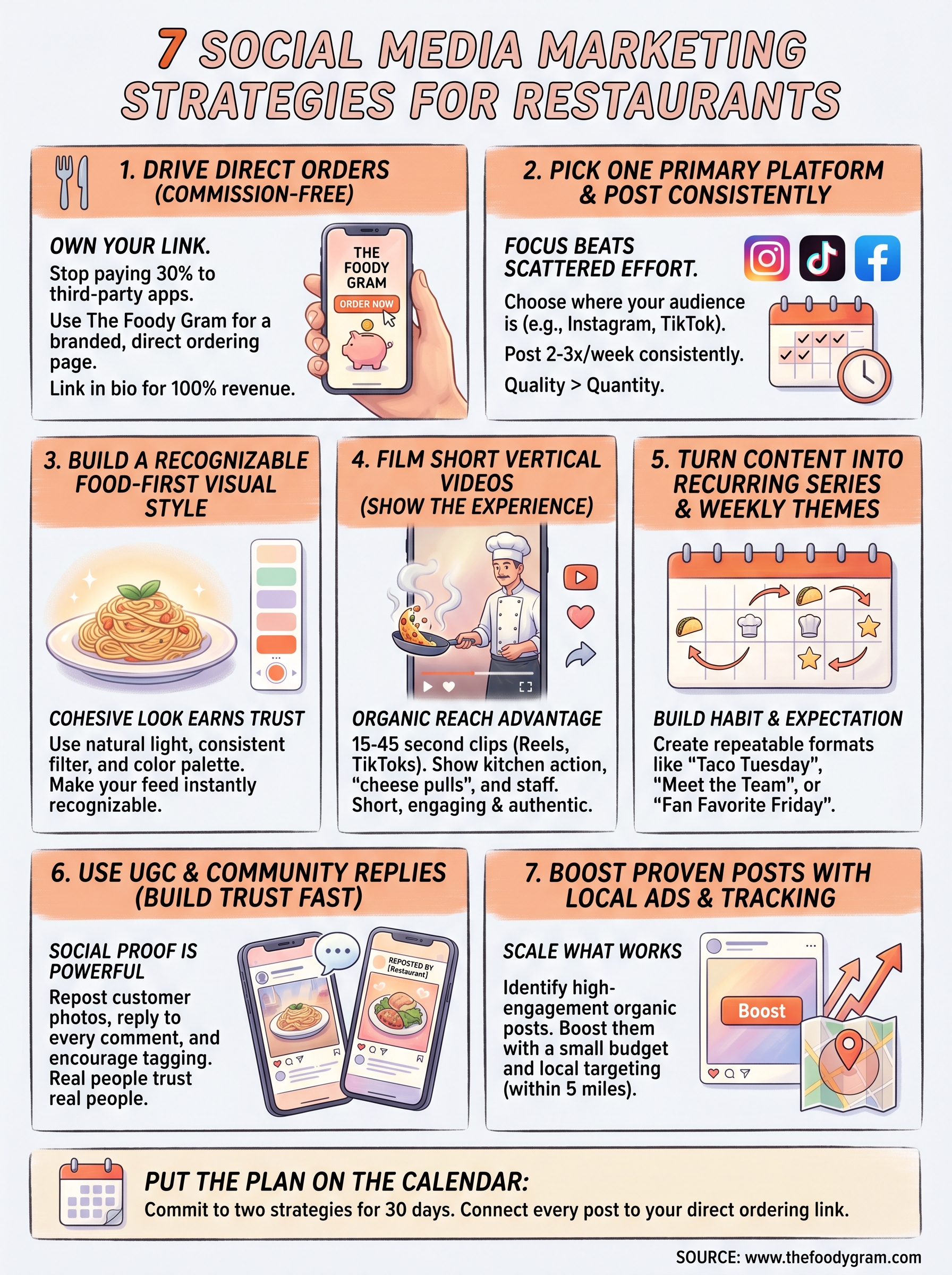
Social media marketing for restaurants only produces results when you actually execute it on a schedule. Pick two of the seven strategies from this list, assign specific posting days, and commit to running that system for 30 days before adding anything else. Trying to launch all seven at once leads to burnout and inconsistent output.
Once your content routine is solid, connect every post to a direct ordering link so your effort converts followers into paying customers instead of just building engagement for a third-party app. That single change is where most restaurants leave the most money on the table. If you are ready to own your ordering page and stop splitting revenue with delivery platforms, see what The Foody Gram costs each month and get your branded restaurant website live within 48-72 hours.