


Best Restaurant Marketing Tools: 6 Platforms To Grow Sales
Running a restaurant means you're already juggling staff, inventory, and a hundred daily fires. Marketing often gets pushed to the back burner, but it's the one thing that actually brings customers through the door. Finding the best restaurant marketing tools can mean the difference between a packed dining room and empty tables, especially when you're competing against chains with big budgets.
The good news? You don't need a big budget. The right platforms help you build direct relationships with customers, manage your online reputation, and drive repeat orders without draining your margins. At The Foody Gram, we've seen firsthand how independent restaurants grow when they stop relying solely on third-party apps and start owning their marketing channels.
This article breaks down six platforms that handle different pieces of the marketing puzzle, from social media and email campaigns to online ordering and customer loyalty. Each one earns its spot based on real value for restaurant owners, not hype.
1. The Foody Gram
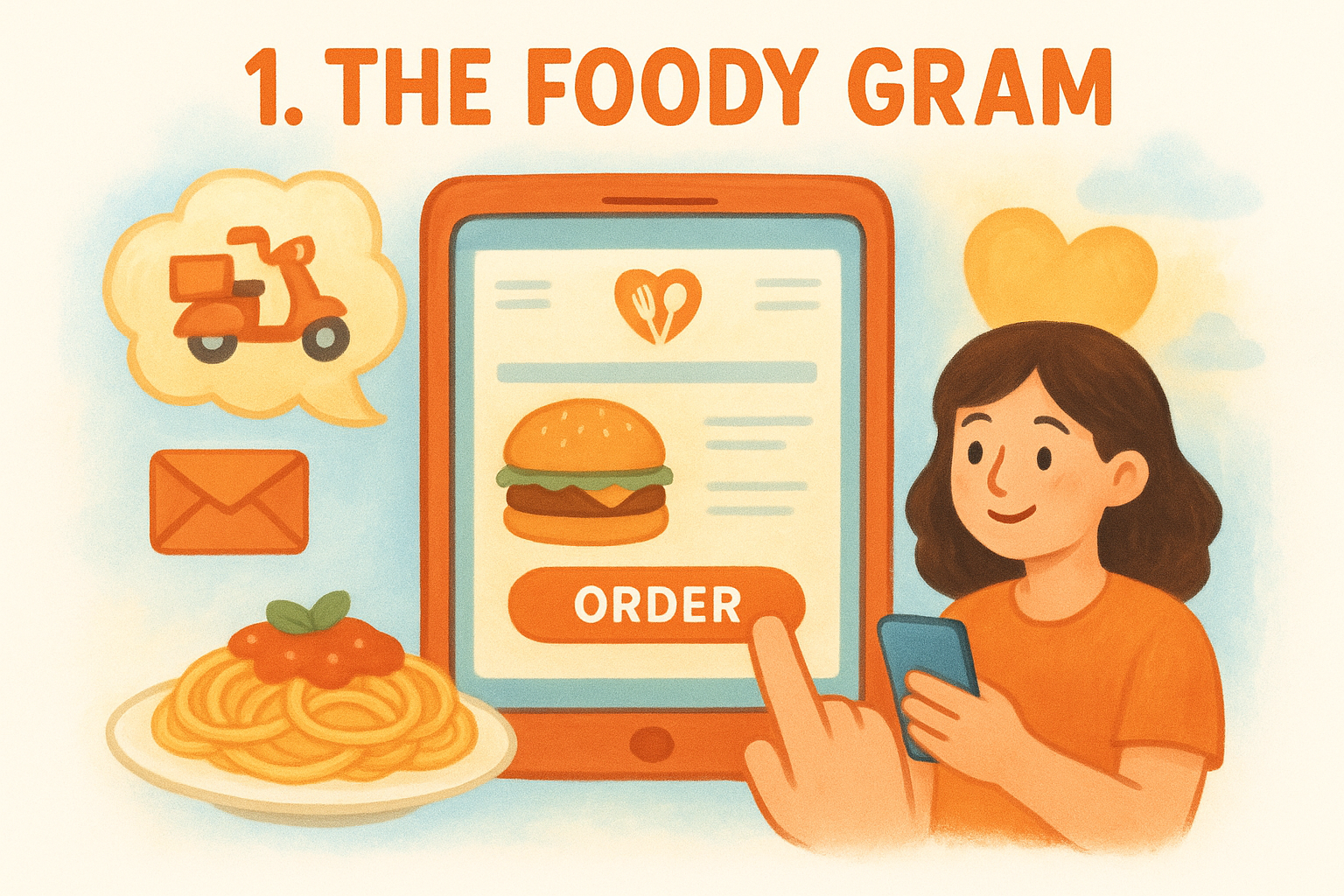
The Foody Gram sits at the center of a restaurant's direct marketing strategy because it gives you the one thing third-party apps never will: ownership of your customer relationships. When a customer orders through DoorDash or Uber Eats, that platform keeps the data. When they order through your own branded website, that customer belongs to you, and you can market to them directly from that point forward.
What it helps you do
Among the best restaurant marketing tools available today, The Foody Gram focuses on what actually drives revenue: commission-free direct ordering through your own branded website. Instead of handing 30% of every order to a delivery app, you keep that margin and build a direct channel between you and your customers. Running your own promotions, collecting customer contact data, and marketing to your audience becomes straightforward when you own the platform your orders flow through.
Restaurants that own their ordering channel control pricing, promotions, and customer data without negotiating terms with a third party.
Key features to evaluate
The platform handles custom branded website design with full mobile optimization, which matters because most customers browse and order from their phones. You also get pickup and delivery order management, real-time order dashboards, kitchen ticket printing, pre-orders, and reservation support. Multi-location operators can manage everything from a single dashboard on the Growth and Enterprise plans.
- Commission-free ordering with direct deposit payments
- Managed menu uploads and ongoing updates
- 24/7 customer support team
- Mobile-optimized branded website built for your brand
- Pre-orders and reservations functionality
Setup time and learning curve
Unlike platforms that drop you into a complicated self-setup process, The Foody Gram operates as a fully managed service. Their team builds your website and uploads your menu, so your site goes live in 48 to 72 hours after onboarding. No technical skills are required to run it day-to-day; the dashboard is designed for restaurant operators, not developers.
Pricing
Plans start at $159 per month for standard tiers, with higher-tier options for multi-location operators. There are no setup fees, no per-order commissions, and no long-term contracts required. A 45-day money-back guarantee lets you test the platform without putting your budget at risk.
2. Mailchimp
Mailchimp is one of the best restaurant marketing tools for staying in front of customers between visits. It's an email marketing platform that lets you build lists, send campaigns, and automate messages based on customer behavior, all from a single dashboard.
What it helps you do
Staying top-of-mind with your customers matters, and Mailchimp gives you the tools to do it. The platform helps you turn one-time visitors into repeat customers by keeping your restaurant in their inbox. You can send promotions, announce new menu items, or reward loyal customers with exclusive offers and automated follow-up sequences.
Email marketing consistently delivers one of the highest returns on investment of any digital marketing channel.
Key features to evaluate
The platform gives you drag-and-drop email builders, audience segmentation, and pre-built automation workflows. You can set up a welcome email for new subscribers or trigger a re-engagement campaign for customers who haven't ordered recently.
- Audience segmentation and tagging
- Pre-built automation workflows
- Email performance analytics
- Landing page and signup form builder
Setup time and learning curve
Basic features are straightforward to use, but setting up automations and segmenting your list properly takes a few hours to learn. Most restaurant owners get functional campaigns running within a few days of signing up, especially with Mailchimp's guided onboarding resources.
Pricing
The free plan supports up to 500 contacts, which works well for small restaurants just getting started. Paid plans begin at around $13 per month and scale with your list size and the features you need.
3. SevenRooms
SevenRooms is a guest experience and retention platform built specifically for restaurants. It connects reservations, waitlists, and customer data into one system, giving you a clearer picture of who your guests are and how to bring them back more often.
What it helps you do
SevenRooms helps you turn one-time diners into regulars by tracking guest preferences and visit history automatically. When a customer books a table, you capture data you can use to personalize their next visit and trigger targeted marketing campaigns based on real behavior. Among the best restaurant marketing tools focused on loyalty and retention, SevenRooms stands out for the depth of its customer profiling.
Restaurants that personalize guest experiences see significantly higher return visit rates compared to those relying on generic outreach.
Key features to evaluate
The platform combines reservations management, waitlist tools, and automated email marketing in one place. You can segment guests by visit frequency, spending habits, or dietary preferences and send campaigns that actually match what each group wants.
- Reservation and waitlist management
- Guest profiles with visit and preference tracking
- Automated marketing campaigns
- POS and delivery platform integrations
Setup time and learning curve
SevenRooms requires a dedicated onboarding session to connect your existing systems and configure guest profiles correctly. Most restaurant teams take two to four weeks to get fully comfortable with the platform's full feature set.
Pricing
SevenRooms uses custom pricing based on your restaurant's size and specific needs. You need to contact their sales team directly to get a quote.
4. Birdeye
Birdeye is an online reputation management platform that helps restaurants monitor and respond to customer reviews across multiple platforms from a single dashboard. Your Google and Yelp ratings directly influence whether new customers choose your restaurant over the one down the street, which makes reputation management one of the most practical best restaurant marketing tools you can add to your stack.
What it helps you do
Birdeye helps you collect more reviews automatically and stay on top of what customers are saying without manually checking a dozen different sites. The platform sends automated review requests to customers after their visit, which steadily increases your review count and improves your average rating over time without requiring daily effort from you.
Restaurants with higher review counts and stronger ratings consistently appear higher in local search results, driving more organic traffic without any ad spend.
Key features to evaluate
Birdeye pulls reviews from Google, Facebook, Yelp, and other platforms into one inbox. You can respond to reviews, track sentiment trends, and receive alerts when new feedback comes in.
- Automated review request campaigns
- Centralized review inbox across all major platforms
- Sentiment analysis and performance reporting
- Competitor review benchmarking
Setup time and learning curve
Most restaurants get fully connected within a day or two. Linking your existing review profiles is simple, and the interface is built for non-technical users who just need the core reputation tools to work reliably.
Pricing
Birdeye uses custom pricing based on your number of locations and the features you need. You'll need to contact their sales team directly for a quote.
5. Hootsuite
Hootsuite is a social media management platform that lets you schedule, publish, and monitor content across multiple channels from one dashboard. For restaurants, consistent social media presence directly affects how often potential customers see your brand, and Hootsuite makes that consistency manageable without requiring you to post in real time.
What it helps you do
Among the best restaurant marketing tools focused on social media, Hootsuite helps you plan and schedule content in advance so you're not scrambling to post something between lunch and dinner rushes. You can manage Facebook, Instagram, TikTok, and other platforms from a single place, which keeps your messaging consistent across every channel.
Restaurants that post consistently on social media see stronger brand recognition and higher engagement compared to those that post sporadically.
Key features to evaluate
The platform gives you a visual content calendar, bulk scheduling, and performance analytics that show which posts actually drive engagement. You can also monitor brand mentions and comments without jumping between multiple apps throughout the day.
- Visual content calendar and bulk scheduling
- Multi-platform management from one dashboard
- Performance analytics and engagement tracking
- Team collaboration and approval workflows
Setup time and learning curve
Connecting your social accounts is quick, and most restaurant owners get basic scheduling running within an hour. Mastering the analytics and team collaboration features takes additional time, but the platform includes solid tutorial resources that cover the essentials without requiring any technical background.
Pricing
Plans start at $99 per month. Hootsuite also offers a 30-day free trial so you can test the full feature set before committing to a paid plan.
6. Canva
Canva is a visual design platform that lets you create professional-looking graphics without any design experience. For restaurants, this means you can produce social media posts, menu boards, promotional flyers, and branded content quickly without relying on a professional designer or waiting for someone else to deliver the assets you need.
What it helps you do
Among the best restaurant marketing tools for content creation, Canva gives you a library of restaurant-specific templates you can customize to match your brand. You can design Instagram posts, digital menus, loyalty card graphics, and event announcements in minutes, which keeps your marketing output consistent even when you're short on time.
Consistent visual branding across your marketing materials builds recognition faster and makes your restaurant look more established than competitors who skip it.
Key features to evaluate
The platform includes thousands of customizable templates, a brand kit that stores your logo and brand colors, and a drag-and-drop editor that requires no technical skills. Your team can collaborate in real time and export finished files in formats that work for both print and digital use.
- Drag-and-drop editor with restaurant-specific templates
- Brand kit for consistent colors, fonts, and logos
- Team collaboration and sharing tools
- Print and digital export options
Setup time and learning curve
Most restaurant owners get comfortable with the basics within an hour. The interface is intuitive, and the template library significantly cuts down the time you spend building designs from scratch.
Pricing
The free plan covers most basic design needs. The Pro plan runs $15 per month and unlocks the full template library, brand kit, and background remover tool.
Wrap-up
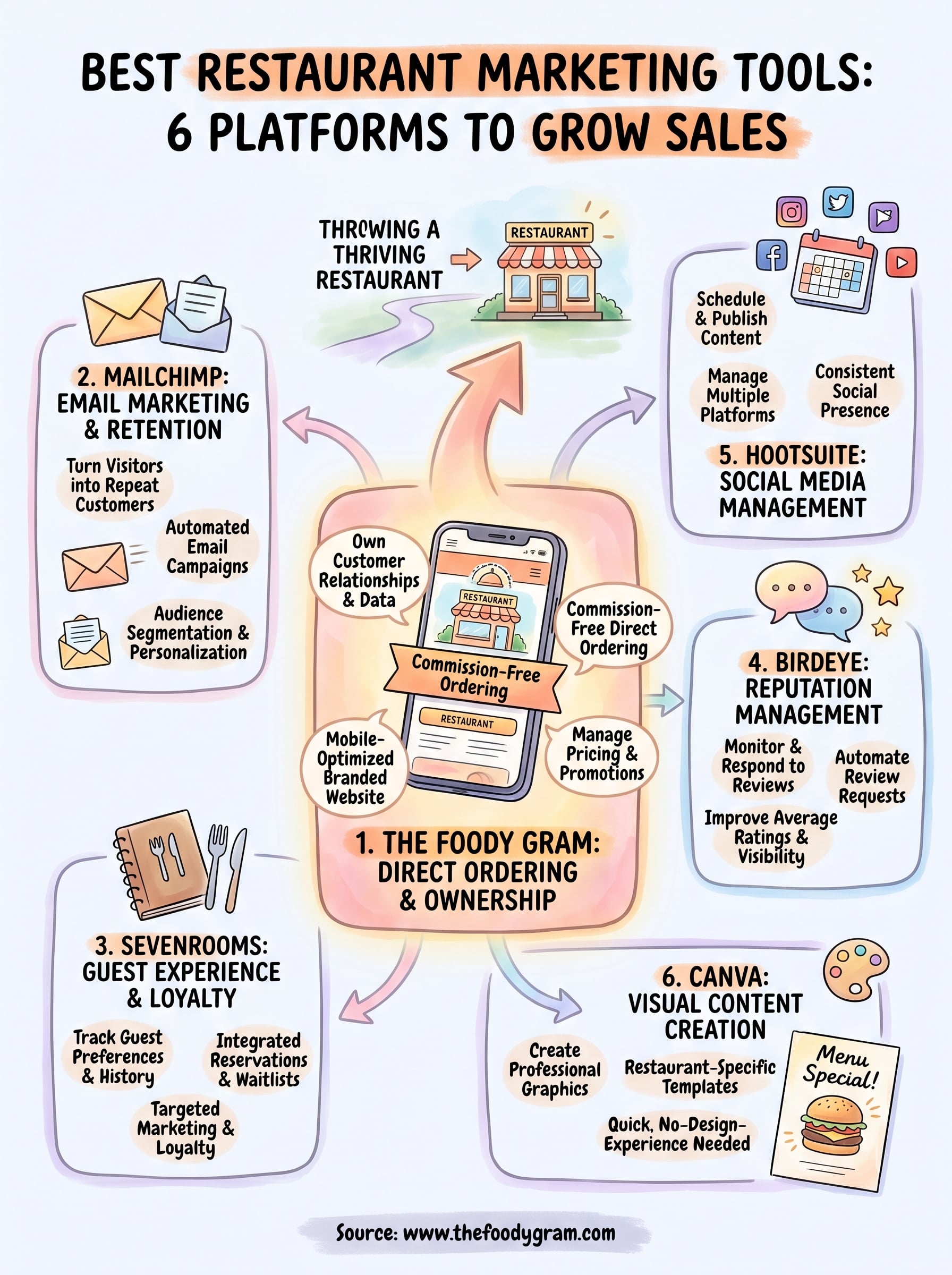
Each of these best restaurant marketing tools covers a specific part of your growth strategy, from building your owned ordering channel to managing reviews, email lists, and social content. No single platform does everything, but the right combination gives you full control over how customers find, experience, and return to your restaurant.
The most important shift you can make is owning your direct ordering channel. Every other marketing effort, whether email campaigns, social posts, or reputation management, works harder when customers can order straight from your branded website instead of a third-party app that keeps their data. That's exactly what The Foody Gram is built to do, with no setup fees, no commissions, and a 45-day money-back guarantee. If you're ready to stop paying 30% per order and start building a marketing foundation you actually own, take a look at our commission-free online ordering plans and see which tier fits your restaurant.