


12 Best Restaurant Point Of Sale Systems: 2026 Reviews
Choosing the best restaurant point of sale system can either streamline your entire operation or slowly drain your profits through clunky workflows, hidden fees, and poor integrations. It's one of the most consequential tech decisions a restaurant owner makes, and getting it wrong is expensive.
A strong POS does more than process payments. It connects your front-of-house and back-of-house operations, manages inventory, tracks labor, and, critically, integrates with online ordering platforms. At The Foody Gram, we build commission-free online ordering systems for restaurants, so we see firsthand how the right POS pairing can maximize revenue while the wrong one creates bottlenecks.
We evaluated 12 POS systems based on what actually matters to restaurant owners: pricing transparency, ease of use, integration capabilities, hardware flexibility, and real-world reliability. Whether you run a single pizzeria or manage multiple locations, this guide breaks down each option so you can make a confident, informed decision without the sales pitch.
1. The Foody Gram
The Foody Gram is not a traditional point of sale system, but it belongs on this list because it solves a problem that most restaurant POS platforms leave unaddressed: commission-free online ordering with full ownership of your customer relationship. Most POS systems handle in-house transactions well, but they either lack a direct ordering channel or push you toward third-party apps that take a 30% cut per order. The Foody Gram fills that gap.
What it does for restaurants
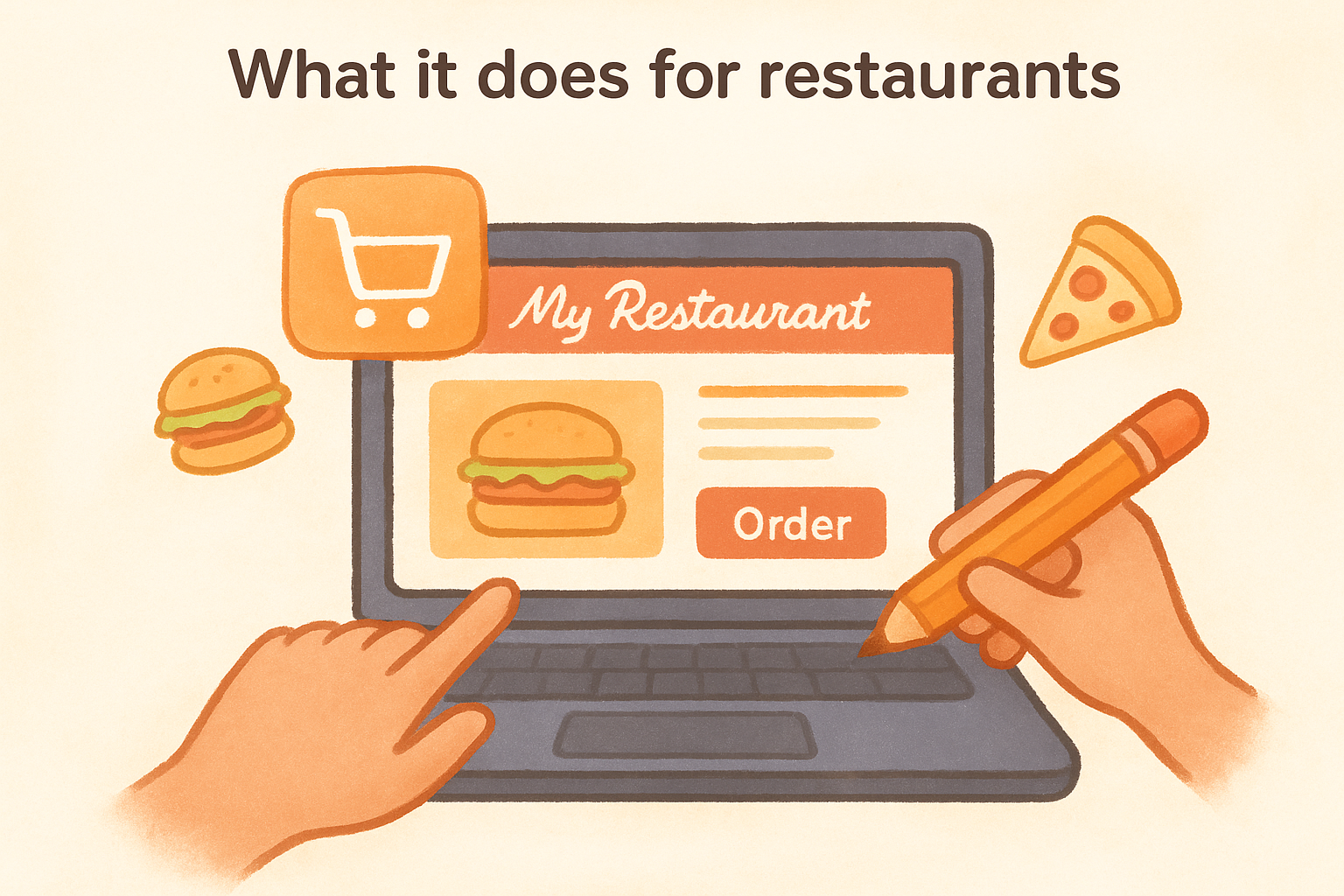
The Foody Gram builds you a custom-branded restaurant website with a fully integrated online ordering system. Customers order directly from your site, and payments land in your account with no per-order fees attached. The platform handles pickup, delivery, pre-orders, and reservations, giving you a complete digital front-of-house without relying on platforms like Uber Eats or DoorDash.
Restaurants that shift even a portion of their delivery orders away from third-party apps to a commission-free channel often recover their subscription cost within the first week.
Your menu management is handled as part of the service, so you do not need to log into a complex backend to make updates. The Foody Gram's team processes those changes for you, which is a real advantage if your technical resources are limited.
Who it fits best
The Foody Gram works best for independent restaurant owners and small restaurant groups who want to cut dependency on commission-heavy delivery apps. Pizzerias, casual dining spots, fast-casual concepts, and ethnic cuisine restaurants are the core users. If you already have a loyal customer base and want to move them toward direct ordering, this platform is built for exactly that scenario.
Multi-location operators on the Growth or Enterprise plans also benefit, since you can manage multiple properties from one dashboard without paying for separate systems at each site.
How it works with your POS and in-store workflow
The Foody Gram is designed to run alongside your existing POS, not replace it. When evaluating the best restaurant point of sale system setup for your business, this kind of complementary pairing matters. Online orders flow through a real-time order dashboard and print directly to your kitchen via integrated ticket printing. Your in-house staff sees online orders the same way they see table orders, which keeps the workflow clean and reduces errors during busy service.
Full ownership of your customer data means you can run promotions, loyalty campaigns, and direct marketing without paying a third party for access to your own customers.
Pricing and what's included
The Foody Gram charges a flat monthly subscription with no setup fees, no contracts, and no per-order commissions. Standard plans run between $159 and $199 per month depending on your tier. Every plan includes the branded website build, online ordering, payment processing with direct deposit, menu management support, and 24/7 customer service. The platform also backs the service with a 45-day money-back guarantee, and most restaurants have their site live within 48 to 72 hours of signing up.
2. Square for Restaurants
Square for Restaurants is one of the most accessible POS options on the market, built specifically for food service businesses that want a clean, intuitive interface without a steep learning curve. It runs on iPads and Square's own hardware, making it easy to get up and running without a lengthy implementation process.
Best for
Square for Restaurants fits small to mid-sized restaurants that want a low-cost entry point into a dedicated food service POS. Counter-service spots, cafes, bakeries, and fast-casual concepts get the most out of it. If you are evaluating the best restaurant point of sale system for a business that does not need complex table management or enterprise-level reporting, Square is worth serious consideration.
Key restaurant features
Square for Restaurants includes coursing and seat management, a kitchen display system, online ordering through Square Online, and a floor plan builder. You can split checks, apply modifiers, and route items to different prep stations without extra configuration.
The built-in online ordering through Square Online connects directly to your in-house workflow, which reduces duplicate entry during busy service.
The platform also offers real-time sales reporting and shift management, so you can track labor costs and revenue from the same dashboard without switching tools.
Hardware and payment processing
Square sells its own countertop terminals, handheld devices, and kitchen display screens, all designed to work natively with the software. Payment processing runs through Square's in-house processor at a flat rate, which means no separate merchant account is required. The trade-off is that you cannot use a third-party processor with Square, so you are locked into their rates.
Pricing and fees
Square for Restaurants offers a free plan for single-location restaurants with basic features. The Plus plan runs $69 per month per location and unlocks advanced floor plans, multi-location reporting, and deeper kitchen tools. Payment processing fees sit at 2.6% plus $0.10 per in-person transaction, with higher rates for manual entry.
3. Toast
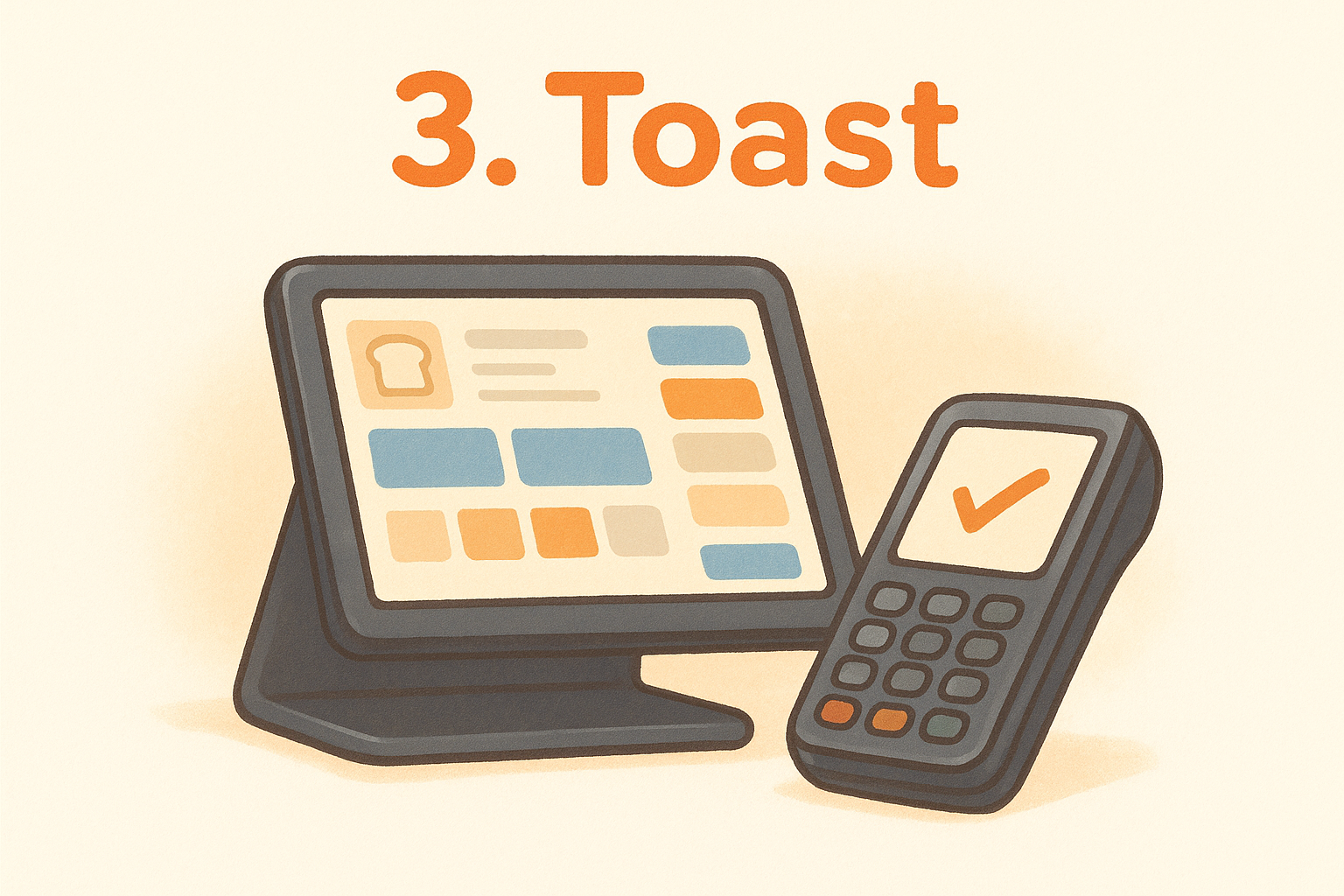
Toast is one of the most widely used restaurant-specific POS platforms in the United States, built from the ground up for food service rather than adapted from a general retail system. It runs on Android-based hardware and gives restaurant owners a tightly integrated ecosystem covering everything from order entry to payroll.
Best for
Toast fits full-service restaurants, fast-casual concepts, and multi-location groups that want a purpose-built system with deep customization options. If you are running a higher-volume operation and need a reliable best restaurant point of sale system that scales with your business, Toast is a strong contender. It also works well for restaurants that want staff management and online ordering under one roof.
Key restaurant features
Toast includes table management, online ordering through Toast TakeOut, a kitchen display system, menu management, and built-in loyalty and gift card programs. You can configure modifiers, set up timed menus for different dayparts, and route items to multiple prep stations without needing third-party add-ons.
Toast's reporting tools give you a granular look at item-level sales, labor costs, and voids, which makes it easier to spot margin problems before they compound.
The platform also includes catering and events management on higher tiers, which is useful if your restaurant handles private bookings regularly.
Hardware and payment processing
Toast uses proprietary Android terminals, handhelds, and kitchen displays that are built to handle spills and heat, which matters in a real kitchen environment. Payment processing runs exclusively through Toast Payments, meaning you cannot bring your own processor. Rates are not published openly and depend on your volume and plan.
Pricing and fees
Toast offers a free Starter Kit plan for single-location restaurants with basic POS functionality. The Point of Sale plan starts at $69 per month, and more advanced tiers with scheduling, payroll, and marketing tools are priced through a custom quote. Hardware costs are separate and can add up quickly depending on your setup size.
4. Clover
Clover is a flexible POS platform built by Fiserv that serves both retail and restaurant businesses. Its strength lies in modular hardware design and a wide app marketplace that lets you extend the system's functionality without switching platforms entirely. It is a practical choice if you want a system that adapts to your operation rather than forcing your operation to adapt to it.
Best for
Clover fits quick-service restaurants, food trucks, bars, and counter-service concepts that want reliable in-person processing with room to grow. If you are looking for the best restaurant point of sale system that works across a range of business sizes without locking you into a rigid software structure, Clover gives you that flexibility. Smaller restaurants that process a moderate volume of transactions will get the most value out of the platform.
Key restaurant features
Clover includes order management, menu customization, and tip tracking as standard features across its restaurant-focused plans. The app marketplace adds options like loyalty programs, online ordering integrations, and staff scheduling tools, though many of these require separate subscriptions on top of your base plan. You can build a reasonably complete restaurant tech stack through Clover, but you need to account for those additional costs when comparing it to all-in-one platforms.
The app marketplace approach gives you customization, but it also means your total monthly cost can climb fast if you activate several add-ons.
Hardware and payment processing
Clover offers a full line of proprietary hardware, including countertop stations, a compact Mini terminal, a handheld Flex device, and a kitchen-facing display. Payment processing runs through Fiserv or an approved Clover reseller, so processing rates vary depending on where and how you purchase the system. Some resellers offer better rates than others, so it is worth shopping your options before committing.
Pricing and fees
Clover's software plans start around $14.95 per month for the most basic tier, with restaurant-specific plans running higher depending on your feature needs. Hardware is purchased separately, and costs range from roughly $49 for a card reader to over $1,600 for a full countertop setup.
5. Lightspeed Restaurant
Lightspeed Restaurant is a cloud-based POS platform built for operators who want detailed reporting and granular control over their menu and floor plan. It targets restaurants that have outgrown entry-level systems and need something more robust without jumping to enterprise pricing. The platform has a strong international presence but is fully equipped for U.S. restaurant operations across multiple service formats.
Best for
Lightspeed Restaurant fits full-service dining establishments, multi-concept operators, and restaurants with complex menus that need detailed item-level tracking. If you are evaluating the best restaurant point of sale system for a higher-volume business where reporting accuracy drives purchasing and staffing decisions, Lightspeed gives you the analytical depth to make those calls with real data rather than guesswork.
Key restaurant features
Lightspeed includes table management, course-by-course ordering, and a kitchen display system as core features rather than paid add-ons. The menu builder lets you set up modifiers, combo rules, and time-specific pricing with a level of precision that most mid-market systems cannot match. You also get integrated inventory management that tracks ingredient-level depletion, which helps you reduce waste and catch shrinkage before it damages your margins.
The ingredient-level inventory tracking sets Lightspeed apart from most POS platforms in this price range, especially if food cost control is a priority for your operation.
Hardware and payment processing
Lightspeed works on iPad-based hardware and is compatible with a range of receipt printers, cash drawers, and kitchen displays from standard peripheral brands. Payment processing runs through Lightspeed Payments, though some plans allow integration with third-party processors depending on your region and plan tier.
Pricing and fees
Lightspeed Restaurant's plans start at $189 per month for the Essential tier when billed annually, with higher tiers running into custom pricing territory for larger operations. Hardware is not bundled into the software subscription, so you need to factor in terminal and peripheral costs separately when building your total budget.
6. TouchBistro
TouchBistro is an iPad-based POS built exclusively for restaurants, which means every feature in the platform is designed around food service workflows rather than adapted from a retail system. It has been deployed in thousands of restaurants across North America and focuses on making tableside ordering and floor management straightforward for front-of-house staff.
Best for
TouchBistro works best for full-service restaurants, bars, and nightclubs that rely heavily on tableside service and need a system their staff can learn quickly without long training sessions.
If you are searching for the best restaurant point of sale system that keeps your servers moving without fumbling through complicated screens during a dinner rush, TouchBistro's interface is built with that specific pressure in mind.
Key restaurant features
TouchBistro includes table management, menu management, and staff performance reporting as core features within the base plan. You can set up floor plans, manage reservations, track server sections, and push menu updates without leaving the POS interface. The platform also offers loyalty programs, gift cards, and online ordering as separate add-on modules, so you build out the system as your needs grow rather than paying for features you do not use from day one.
Because TouchBistro runs locally on iPad rather than purely in the cloud, it continues processing orders even when your internet connection drops, which matters during high-volume service.
Hardware and payment processing
TouchBistro runs on iPad hardware, which keeps your upfront equipment costs lower than systems that require proprietary terminals. The software integrates with standard receipt printers, cash drawers, and kitchen display screens from common peripheral brands.
TouchBistro Payments handles in-house processing, but the platform also supports select third-party payment processors, giving you more flexibility on rates than systems that lock you into a single processor with no negotiating room.
Pricing and fees
TouchBistro's base plan starts at $69 per month for a single license. Add-on modules for online ordering, reservations, and loyalty programs each carry their own monthly fees, so your total cost depends on which features you activate.
Hardware is not included in the subscription, and you need to factor in iPad purchases and peripheral costs when building your full setup budget.
7. SpotOn Restaurant
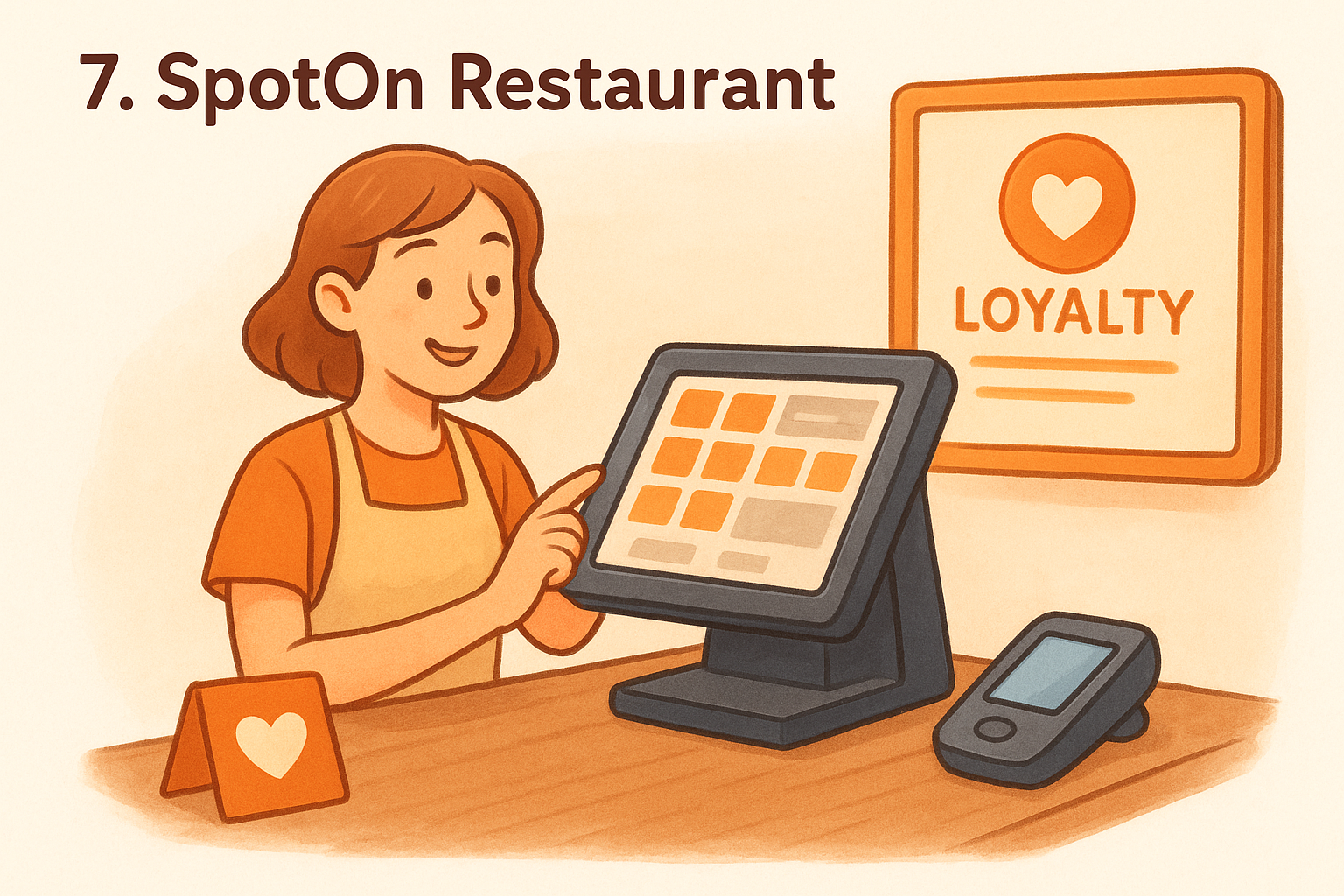
SpotOn Restaurant is a cloud-based POS platform that combines point of sale tools with built-in [marketing and loyalty features](https://www.thefoodygram.com/blogs/restaurant-resources/best-restaurant-marketing-tools), giving independent restaurants a more complete technology package than most standalone POS systems offer. It targets operators who want in-person ordering, online ordering, and customer retention tools managed from a single dashboard without stitching together multiple vendors.
Best for
SpotOn fits full-service and fast-casual restaurants that want more than a transaction processor from their POS investment. If you are searching for the best restaurant point of sale system that includes customer-facing marketing tools without paying for a separate platform, SpotOn bundles those capabilities into its core offering. It works especially well for independent operators who compete directly with chain restaurants and want loyalty programs that drive repeat visits.
Key restaurant features
SpotOn includes tableside ordering, table management, online ordering, and a kitchen display system as part of its restaurant-specific plans. The platform also offers built-in reporting tools that connect sales data to labor and menu performance, so you can identify your highest-margin items without exporting data to a separate analytics tool.
SpotOn's integrated loyalty program lets you reward repeat customers directly through the POS without requiring a third-party integration, which reduces setup time and monthly costs.
The reserve and waitlist management features are available as add-ons and integrate with the core POS, making SpotOn a reasonable all-in-one option for restaurants that handle a consistent walk-in volume.
Hardware and payment processing
SpotOn works with its own line of countertop terminals and handheld devices, along with kitchen display screens. Payment processing runs through SpotOn's in-house processor, and the company is known for transparent, flat-rate pricing rather than the tiered models some processors use to obscure your true cost per transaction.
Pricing and fees
SpotOn does not publish a standard pricing page, so your monthly software cost depends on your restaurant's size and feature selections. Hardware is quoted separately, and the company offers custom packages for multi-location operators. Expect to negotiate your rate directly with a SpotOn sales representative.
8. Revel Systems
Revel Systems is an iPad-based POS platform designed for restaurants that need enterprise-level reliability without the complexity of legacy systems like Oracle MICROS or NCR Aloha. It runs on a hybrid cloud architecture, meaning your data syncs to the cloud while core functions continue operating locally if your internet drops. That combination makes it a strong option for high-volume operations that cannot afford system downtime during peak service.
Best for
This platform fits full-service restaurants, enterprise groups, and high-volume quick-service concepts that have outgrown basic POS tools but do not want to commit to a traditional enterprise system. If you are looking for the best restaurant point of sale system that bridges the gap between mid-market and enterprise without requiring a dedicated IT team, Revel is worth a close look. It also works well for multi-location operators who need centralized menu management and consolidated reporting across several properties from one login.
Key restaurant features
Revel includes table management, online ordering, loyalty programs, and a kitchen display system as part of its core platform. You can push menu updates across all locations simultaneously, which saves significant time if you run multiple sites with overlapping menu items. Inventory tracking and employee scheduling are also built in, reducing your need for separate tools to manage those functions day to day.
The simultaneous multi-location menu update capability is one of Revel's most practical features for operators who need consistency without manual repetition at each site.
Hardware and payment processing
Revel runs on standard iPad hardware and supports a wide range of peripherals including kitchen displays, receipt printers, and customer-facing screens. Unlike systems that lock you into a proprietary processor, Revel works with multiple payment processors, giving you the ability to negotiate your own rates based on your transaction volume.
Pricing and fees
Revel's software starts at $99 per month per terminal, billed annually. An annual contract is required, which is a commitment some operators prefer to avoid before fully evaluating the system. Implementation fees apply separately, and your hardware costs depend on the number of terminals and peripherals your setup requires.
9. NCR Aloha
NCR Aloha is one of the most established names in restaurant technology, with a history spanning several decades in the food service industry. It is built for high-volume, enterprise-level operations and remains a reliable choice for large chain restaurants and multi-location groups that need a proven, stable system with deep feature sets and strong industry support.
Best for
NCR Aloha fits large chain restaurants, multi-location operators, and enterprise food service groups that need a battle-tested POS with extensive customization options. If you are evaluating the best restaurant point of sale system at a scale where system reliability and long-term vendor support matter as much as individual features, Aloha's track record in the industry carries real weight. Independent single-location operators will likely find the cost and implementation complexity hard to justify relative to what mid-market platforms offer at a fraction of the price.
Key restaurant features
NCR Aloha includes table management, loyalty program integration, kitchen display systems, and detailed reporting across its core platform. The system handles split checks, complex modifier structures, and multi-course ordering without requiring workarounds. Labor management and scheduling tools are also available, giving larger operations a way to control staffing costs alongside sales data from the same interface.
Aloha's reporting depth is one of its strongest assets, giving enterprise operators granular visibility into sales performance across every location and every service period.
Hardware and payment processing
NCR Aloha runs on NCR's own proprietary terminals as well as select third-party hardware depending on your specific configuration and deployment needs. Payment processing integrates with multiple processors, meaning you are not locked into a single payment provider and can negotiate rates that reflect your actual transaction volume.
Pricing and fees
NCR Aloha uses custom enterprise pricing, so you need to contact NCR directly for a quote based on your location count and feature requirements. Implementation costs, hardware, and ongoing support contracts all factor into the total investment, which makes Aloha a significant financial commitment compared to most mid-market alternatives on this list.
10. Oracle MICROS
Oracle MICROS is the enterprise standard for large-scale restaurant and hospitality operations. It has been deployed across major hotel chains, stadium food service operations, and large restaurant groups worldwide, and its reputation for stability and scale is well-earned. If you run a complex, high-volume operation and need a system that can handle thousands of transactions across multiple venues simultaneously, Oracle MICROS operates at that level consistently.
Best for
Oracle MICROS fits enterprise restaurant groups, hotel food service operations, and large multi-location chains that have the budget and internal IT resources to support a system of this complexity. Smaller independent operators looking for the best restaurant point of sale system will find that Oracle MICROS is overbuilt and overpriced for their needs. This platform rewards organizations with dedicated technology staff who can manage implementation, customization, and ongoing maintenance at scale.
Key restaurant features
Oracle MICROS offers comprehensive table management, kitchen display integration, and detailed sales reporting built to function across dozens or hundreds of locations from a centralized management console. The platform supports complex modifier structures, multi-concept menu configurations, and granular labor tracking that connects staffing costs directly to sales performance by service period and location.
The centralized multi-location management capability is where Oracle MICROS genuinely separates itself from mid-market competitors, giving large operators real-time visibility across their entire portfolio from one interface.
Hardware and payment processing
Oracle MICROS runs on its own proprietary terminal hardware, which is built for the physical demands of high-volume restaurant environments. The system integrates with multiple payment processors, so you are not forced into a single provider and can negotiate processing rates based on your transaction volume across all locations.
Pricing and fees
Oracle MICROS uses custom enterprise pricing exclusively, so you need to contact Oracle directly for a quote tailored to your location count and configuration. Implementation, hardware, licensing, and ongoing support are all priced separately, making the total investment substantial and best suited for organizations with a dedicated technology budget.
11. Shift4 SkyTab
Shift4 SkyTab is a cloud-based POS platform backed by Shift4 Payments, one of the largest payment processors in the United States. The system combines point of sale software with integrated payment processing under one roof, which simplifies vendor management and reduces the number of monthly invoices your operation needs to track.
Best for
SkyTab fits independent restaurants, bars, and casual dining concepts that want a modern POS with built-in payment processing and do not want to manage a separate merchant account. If you are comparing the best restaurant point of sale system options and cost-per-transaction matters as much as software features, SkyTab's pricing structure is worth running the numbers on. It works particularly well for table-service restaurants that need tableside ordering and tipping without paying extra for mobile hardware add-ons.
Key restaurant features
SkyTab includes tableside ordering, a kitchen display system, and online ordering as core features rather than premium upgrades. The platform offers real-time reporting that breaks down sales by item, server, and time period, giving you the data you need to make menu and staffing decisions without exporting to a separate analytics tool.
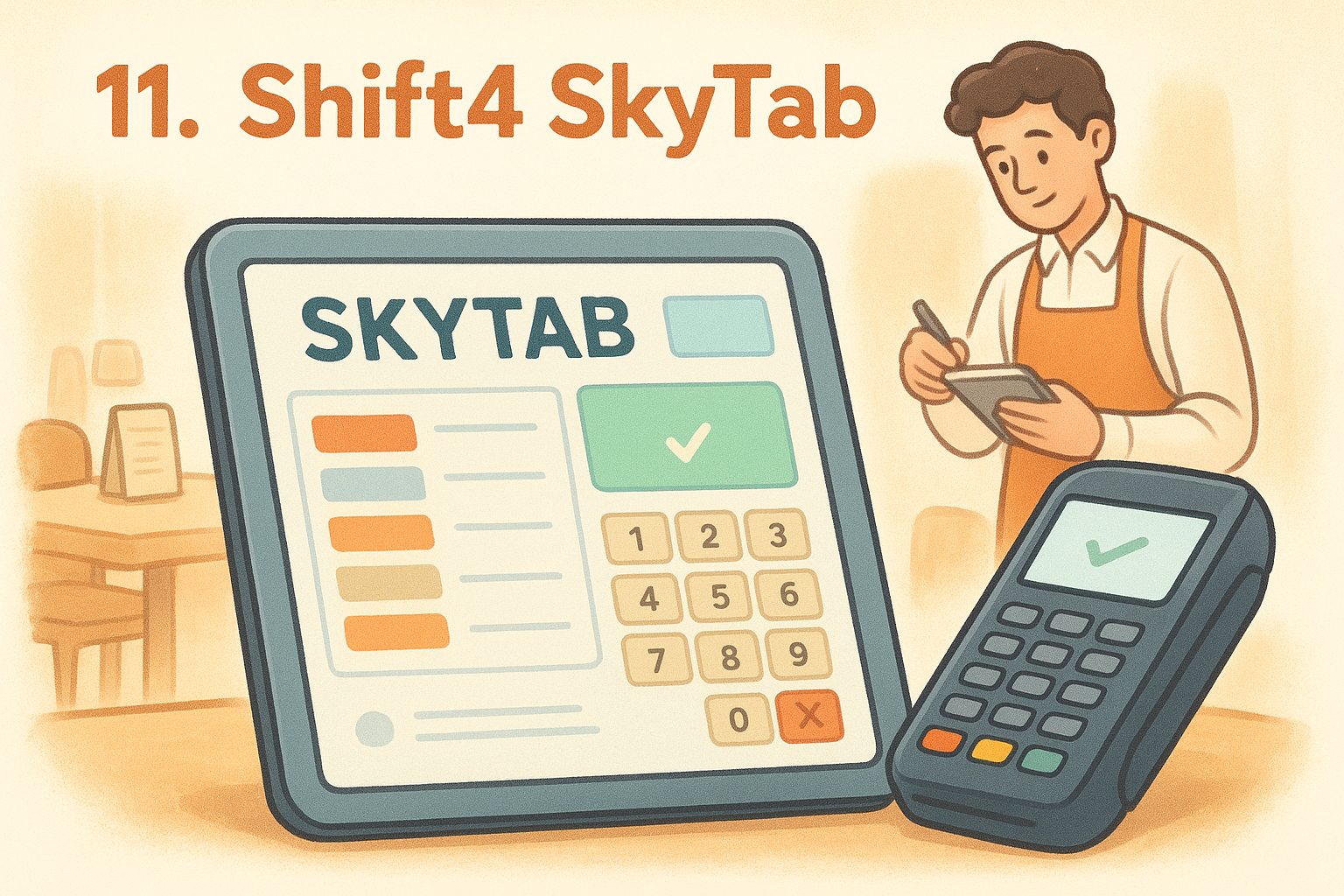
The tableside ordering capability comes standard with SkyTab hardware at no additional charge, which keeps your per-table technology cost lower than platforms that charge separately for mobile devices.
Hardware and payment processing
SkyTab provides its own mobile handheld terminals that handle tableside ordering and payment acceptance in one device. The system also supports countertop terminals and kitchen displays. Payment processing runs exclusively through Shift4 Payments, which is both a benefit and a constraint. The upside is that Shift4 offers competitive processing rates for higher-volume restaurants, but you cannot bring your own processor if you already have a preferred provider.
Pricing and fees
SkyTab's software is available at no monthly fee for qualifying restaurants, with costs offset through Shift4's payment processing revenue. If you prefer a lower processing rate with a standard monthly software fee, custom pricing options are available through a direct conversation with a Shift4 representative.
12. Epos Now
Epos Now is a cloud-based POS platform with a strong presence in both the U.S. and international markets, targeting small to mid-sized restaurant and retail businesses. It focuses on giving operators straightforward reporting and fast setup at a price point that works without a large technology budget behind it.
Best for
Epos Now fits independent restaurants, cafes, and quick-service concepts that want a simple cloud-based system they can access from any device. If you are comparing the best restaurant point of sale system options and need something operational quickly without a complicated implementation process, Epos Now delivers a low-friction onboarding experience suited for operators with limited technical resources.
Business types that get the most value from the platform include:
- Counter-service restaurants and cafes
- Small independent dining establishments
- Food businesses that need basic inventory and sales tracking without enterprise complexity
Key restaurant features
Epos Now includes order management, menu customization, and real-time sales reporting as part of its core offering. The system tracks inventory at the product level and generates end-of-day reports showing exactly where your revenue came from during each service period.
The cloud-based reporting dashboard lets you check your sales data from any browser-connected device, which is useful if you manage your restaurant remotely or across shifts.
The platform also connects with a range of third-party integrations for delivery apps and accounting tools through its app marketplace, giving you flexibility to expand your tech stack without switching systems as your needs grow.
Hardware and payment processing
Epos Now sells its own countertop terminals and receipt printers directly through its store, designed to work natively with the software. Payment processing integrates with multiple providers, so you are not locked into a single processor and can select rates that match your actual transaction volume.
Pricing and fees
Epos Now offers plans starting at $39 per month for basic functionality, scaling up depending on your feature needs and terminal count. Hardware bundles are available for upfront purchase or through financing, and the platform regularly runs promotions that reduce initial equipment costs for new customers signing up.
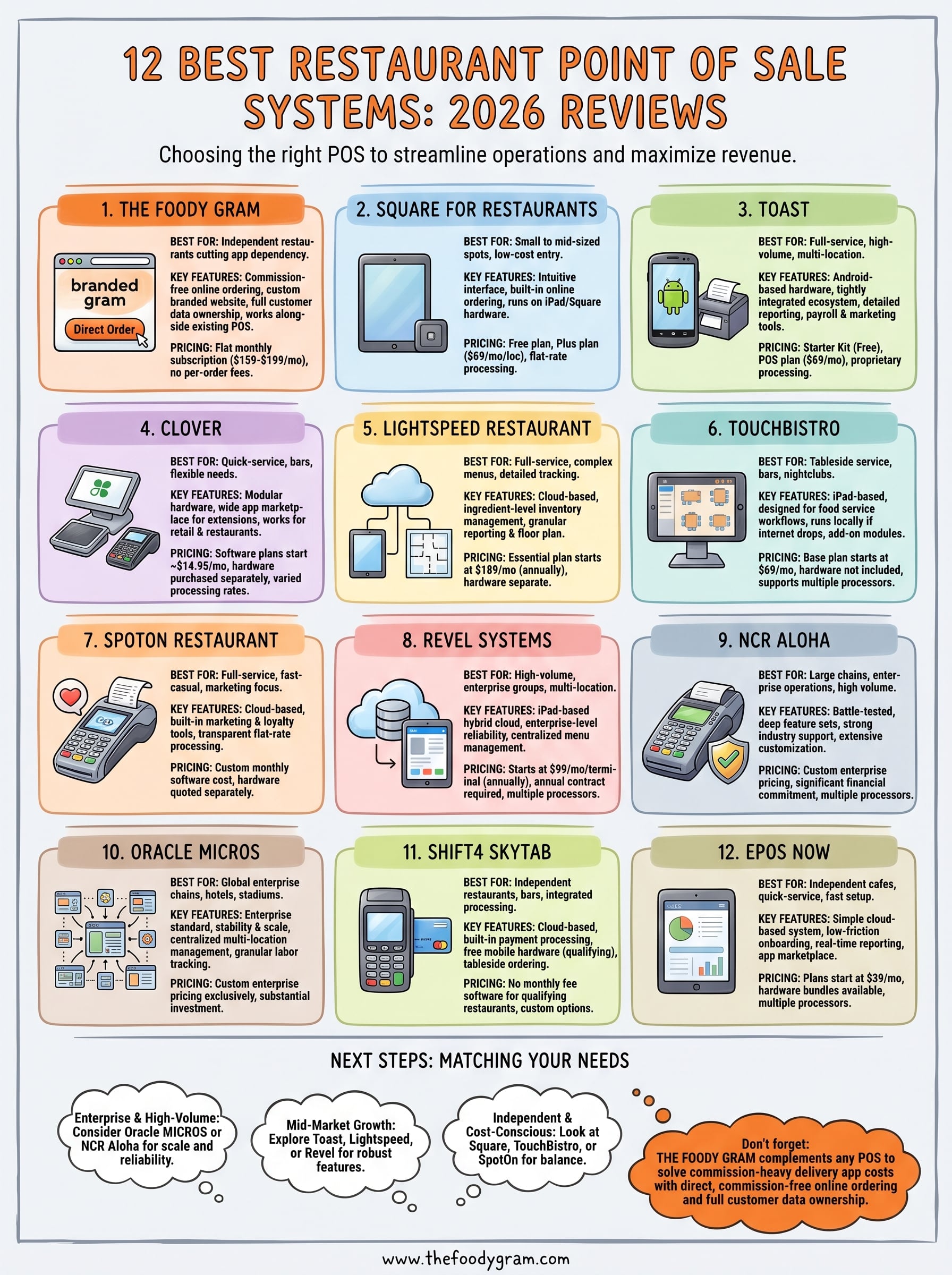
Next Steps
Every restaurant on this list serves a different type of operator, and the best restaurant point of sale system for your business depends on your service format, volume, and budget. If you run a high-volume enterprise operation, Oracle MICROS or NCR Aloha give you the scale you need. If you want a solid mid-market option, Toast, Lightspeed, or Revel are worth a close look. Independent operators who want to reduce costs without sacrificing reliability will find Square for Restaurants, TouchBistro, or SpotOn hit that balance well.
What most POS systems will not solve is your dependency on commission-heavy delivery apps eating into your margins on every order. That is where The Foody Gram fits in. Your branded website, direct ordering channel, and full customer data ownership work alongside whatever POS you choose. Check our commission-free online ordering plans and see what the numbers look like for your restaurant.