


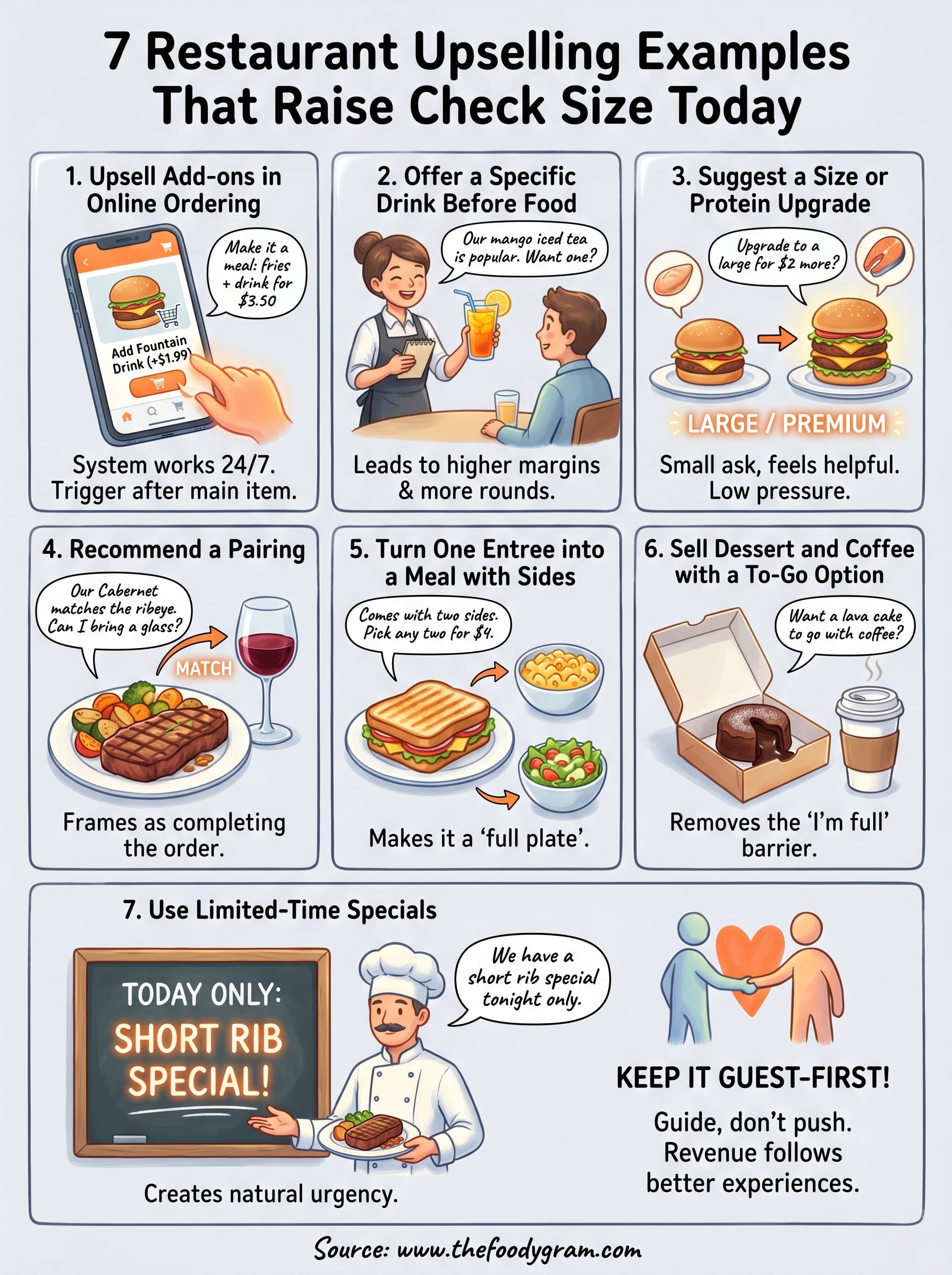
7 Restaurant Upselling Examples That Raise Check Size Today
A $2 add-on doesn't sound like much until you multiply it across 50 tickets a day, seven days a week. That's over $700 in extra weekly revenue from a single restaurant upselling examples technique done right. The difference between restaurants that grow their margins and those that stay flat often comes down to how well the staff (or the ordering system) suggests the next item.
Most upselling advice out there is vague, "just recommend appetizers." That's not helpful. What actually works is having specific, tested approaches your team can use during a lunch rush and your online ordering system can automate at midnight. At The Foody Gram, we build commission-free online ordering websites for restaurants, and we see firsthand which upsell strategies translate into real revenue, both at the counter and on screen. Restaurants keeping 100% of their order revenue have even more reason to get this right.
Below are seven proven upselling examples you can put to work immediately, with scripts, digital menu tactics, and practical tips that raise your average check size without making customers feel pressured. Each one is built for real restaurant operations, not theory.
1. Upsell add-ons in online ordering with The Foody Gram
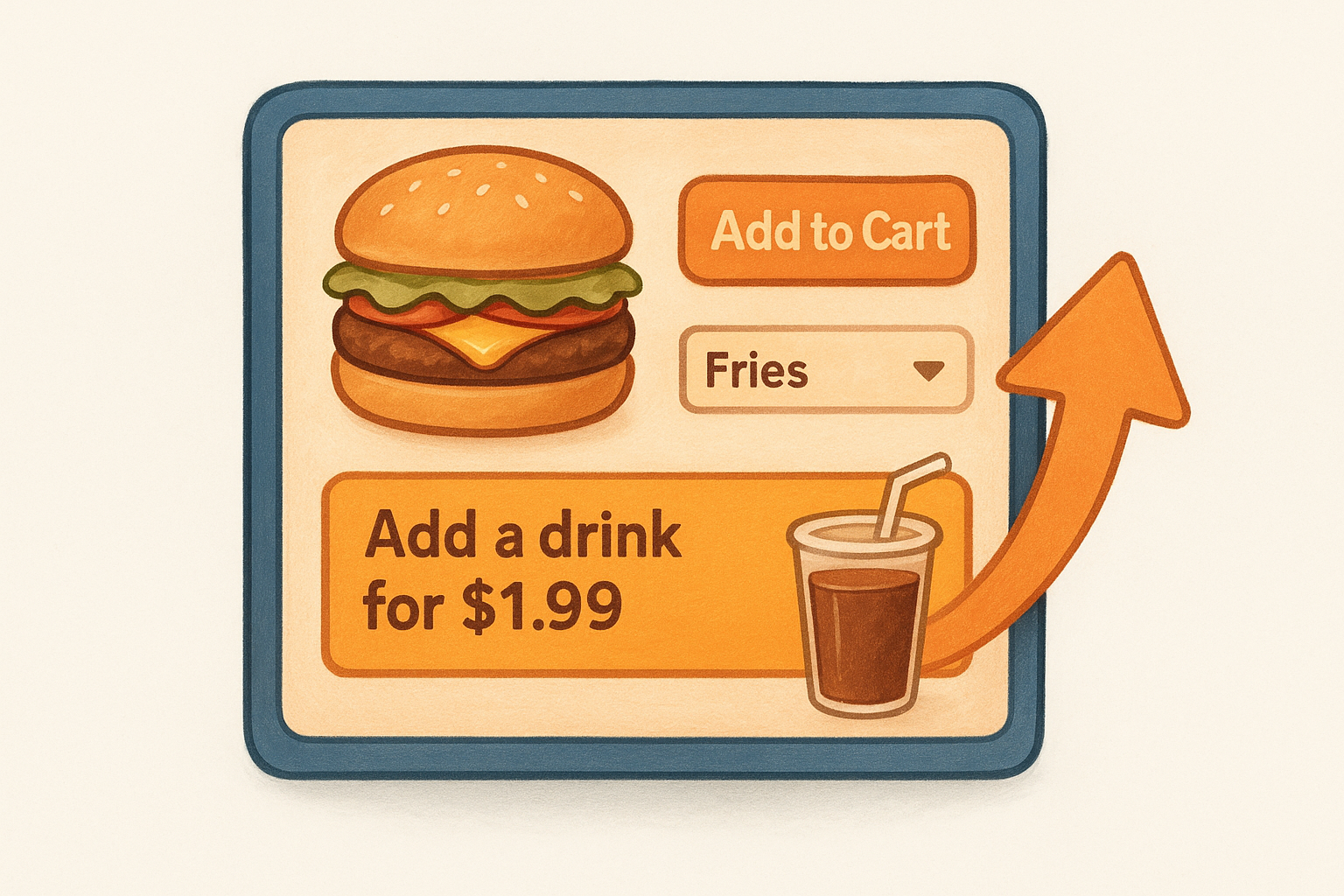
Online ordering is one of the most consistent restaurant upselling examples available to you, because the system works every single order without fatigue or forgetting. When a customer builds their cart on your branded ordering website, a well-placed add-on prompt appears at exactly the right moment. The Foody Gram builds this capability directly into your ordering flow so you capture revenue around the clock.
Why this upsell works
Customers who order online are already in a buying mindset. They've browsed your menu, selected an item, and are moving through the process. A well-timed modifier prompt catches them when the decision is low-stakes, like adding extra sauce for $0.99 or upgrading to a combo. The friction is near zero because they tap a button rather than respond to a person, which removes any hesitation about the interaction.
The add-on prompt converts best when it appears immediately after a customer adds a main item to their cart, not at checkout when they just want to finish.
Best time to use it
The ideal trigger point is right after a customer selects their main course. Lunch rushes, late-night orders, and catering pre-orders all show strong conversion because the customer is already committed to spending. Your online ordering system surfaces these prompts 24 hours a day without any staff involvement or training required.
Exact scripts to use
Online prompts don't need to be clever. They need to be clear and specific. Use short copy that tells the customer exactly what they get and what it costs:
- "Add a fountain drink for $1.99"
- "Make it a meal: fries + drink for $3.50"
- "Customers who order this also add garlic bread"
- "Double your protein for $2.50 more"
Menu items that fit best
Focus your add-on prompts on high-margin, low-prep items that your kitchen turns around fast. Strong performers include fountain drinks, sauces, extra protein portions, chips, and single-serve desserts. Avoid prompting items that add significant ticket time during a busy service window.
How to measure success
Pull your average order value (AOV) from your dashboard before enabling add-on prompts, then check it again after 30 days. Even a $2 average lift across 50 daily online orders adds $3,000 per month in revenue you were leaving on the table.
2. Offer a specific drink before taking food orders
Asking "What can I get you to drink?" is a weak opener. Naming a specific drink is one of the most practical restaurant upselling examples your front-of-house team can deploy, and it sets the spending tone before the customer has even opened the menu.
Why this upsell works
When a server leads with a specific recommendation, the customer defaults to evaluating that one option rather than defaulting to water. Drink sales carry some of the highest margins on any menu, so winning this moment early has an outsized effect on your overall check average.
Customers who order a beverage before food are significantly more likely to order a second round during the meal.
Best time to use it
Use this immediately when guests are seated, before menus are opened. Catching the customer in that first 30 seconds locks in a beverage order before they shift their focus entirely to food decisions.
Exact scripts to use
- "We just tapped a local IPA and our house lemonade is fresh today. Can I start you with one of those?"
- "Our mango iced tea is popular right now. Want to try one while you look over the menu?"
Menu items that fit best
Seasonal cocktails, craft sodas, fresh-squeezed juices, and specialty lemonades perform best here because they carry a story your server can deliver in one sentence.
How to measure success
Track your beverage attachment rate, the percentage of tables that order at least one non-water drink. Aim to move this number up by 10 points within the first month.
3. Suggest a size or protein upgrade on the main
One of the most effective restaurant upselling examples is the upgrade offer on the main item. When a customer has already chosen their dish, suggesting a bigger portion or a premium protein is a small ask that feels helpful rather than pushy, and it rarely gets turned down.
Why this upsell works
Customers who name a specific dish have already committed to the category. A simple size or protein upgrade adds value to something they already want, which makes the decision easy. The price gap between regular and large feels smaller once someone is already spending $14 on a plate.
Framing the upgrade as the more popular choice rather than an upsell removes the sales pressure entirely.
Best time to use it
Offer the upgrade the moment the customer names their main, before moving to sides or drinks. That window is brief, so your staff needs to make it a consistent habit on every order.
Exact scripts to use
Keep the language direct and specific:
- "Want to upgrade that to a large for $2 more?"
- "We can swap chicken for grilled salmon for $3. Want to go that route?"
- "The half-pound is our most popular. Want that size?"
Menu items that fit best
Burgers, pasta dishes, grain bowls, and protein-forward entrees are your best candidates. Items where portion size or protein type is already a variable give your staff a natural, low-pressure opening.
- Burgers: regular to double patty
- Pasta: chicken to shrimp
- Tacos: chicken to steak
- Bowls: small to large
How to measure success
Track the upgrade attachment rate by having staff note how often they offer it versus how often the customer says yes. A target of one upgrade per five tables is realistic within the first two weeks.
4. Recommend a pairing that completes the order
Among the most natural restaurant upselling examples, the pairing suggestion works because it frames the second item as something that belongs with the first, not as an add-on you're pushing for profit. Done well, it reads as helpful advice rather than a sales move.
Why this upsell works
A pairing recommendation puts your server in the role of a helpful guide rather than a salesperson. When someone orders a burger and your staff mentions that the sweet potato fries go perfectly with it, the customer feels taken care of. That trust transfer is what drives the sale.
The best pairings are ones your team genuinely enjoys, because authentic recommendations are far harder to resist than scripted ones.
Best time to use it
Recommend the pairing immediately after the customer confirms their main item, before they close the menu or hand it back. This window lasts about five seconds, so training your staff to act on it consistently is the key to converting it regularly.
Exact scripts to use
Keep the language short and grounded:
- "That pairs really well with our roasted garlic soup. Want to add a cup?"
- "Most people get our house salad with that. Want one?"
- "Our Cabernet is a strong match for the ribeye. Can I bring a glass?"
Menu items that fit best
Wine and entrees, soup and sandwiches, salads and grilled proteins, and craft beer and burgers are your strongest pairing combinations. Focus on items with high margin and quick prep times to protect kitchen flow.
How to measure success
Track your attachment rate on paired items by running a 30-day comparison on the specific menu combinations you train staff to suggest. A 5-10% lift on those items signals the approach is working.
5. Turn one entree into a meal with sides
A solo entree order is an open door. Among the most reliable restaurant upselling examples, converting a single item into a full meal is something your staff can do on every single ticket without any awkwardness, because most customers genuinely haven't decided on sides yet.
Why this upsell works
Customers often order the main they want and mentally pause on everything else. When your server closes that gap immediately, the customer doesn't have to think hard. Adding two sides feels like completing something, not spending extra.
The bundle framing matters here. "Comes with two sides" lands better than "Want to add sides?" because it positions the full meal as the natural default.
Best time to use it
Offer the meal bundle the moment the customer finishes naming their entree, before they hand back the menu. That transition point is where the decision is still open and your staff has the most influence.
Exact scripts to use
Keep the language short and confident:
- "That comes with two sides. We have roasted potatoes, slaw, or mac and cheese tonight."
- "Want to make it a full plate? Pick any two sides for $4."
Menu items that fit best
Grilled proteins, sandwiches, and fried entrees are your best candidates because sides are already expected with them. Strong side options include:
- Roasted vegetables
- Mac and cheese
- House salad
- Seasoned fries
How to measure success
Track your sides-per-ticket ratio weekly. A measurable increase within two to three weeks tells you the habit is sticking.
6. Sell dessert and coffee with a to-go option
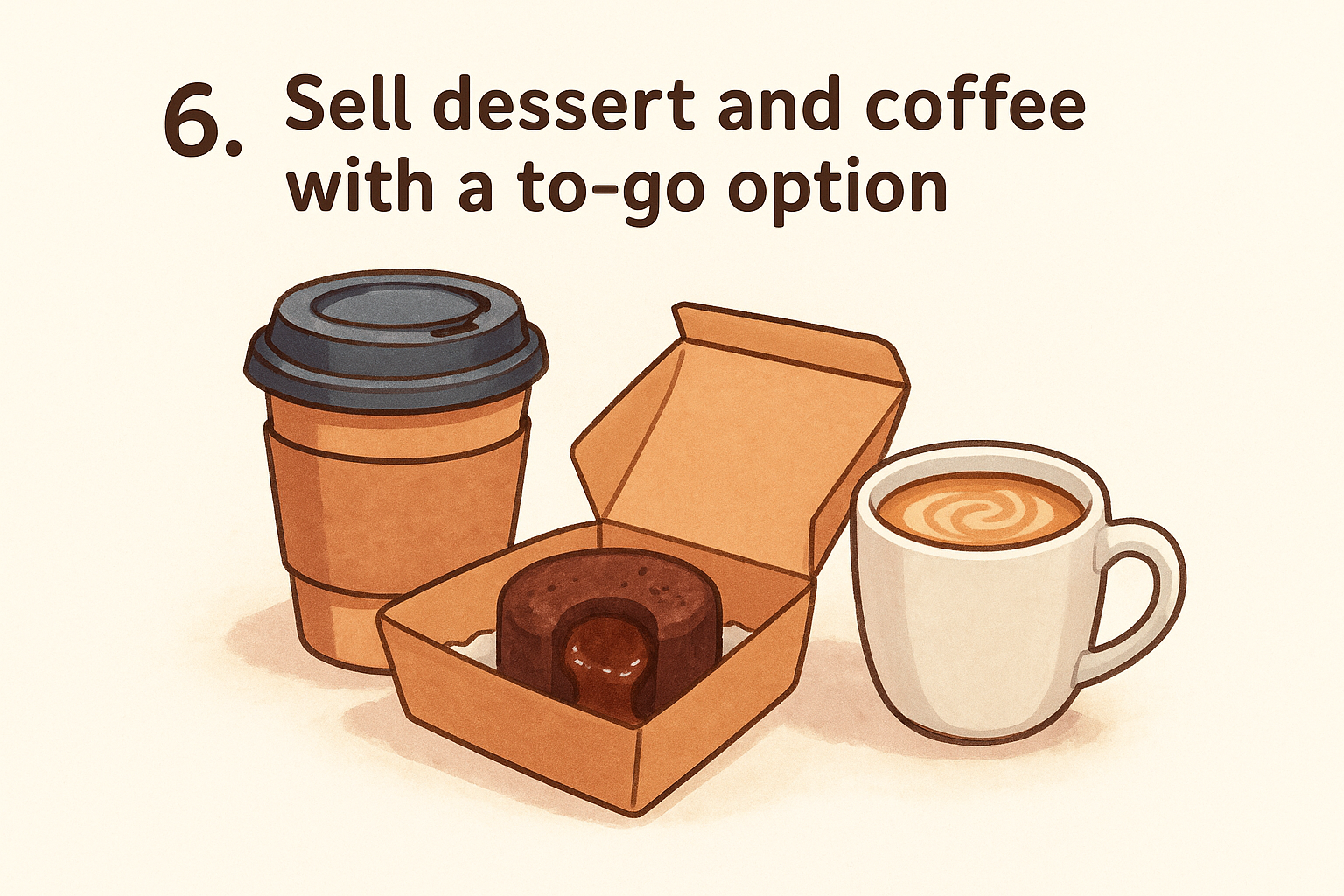
Dessert upsells fail most often because the server asks too late, when the customer is already full and ready for the check. This restaurant upselling example works differently: you offer dessert and coffee together, and you give guests the option to take it home. That one shift removes the biggest objection before it even comes up.
Why this upsell works
Customers who say no to eating dessert at the table often say yes when they can take it home for later. The to-go framing separates the purchase decision from the immediate physical feeling of being full. Adding a hot coffee or specialty drink alongside the dessert offer also raises the dollar value of the upsell significantly.
Pairing a to-go dessert with a signature coffee drink is one of the highest-margin moves your staff can make at the end of a meal.
Best time to use it
Bring this up when you clear the main plates, not after you drop the check. That window is your last real opportunity to influence the ticket before the customer mentally closes the meal.
Exact scripts to use
- "Our chocolate lava cake travels well. Want one to go with a coffee for the road?"
- "Can I box up a slice of cheesecake for you? It pairs well with our house espresso."
Menu items that fit best
Lava cakes, cheesecake slices, brownies, and cookies box easily and hold well. Pair them with drip coffee, lattes, or specialty hot drinks to lift the ticket further.
How to measure success
Track your dessert attachment rate weekly and compare it against your baseline before you introduced the to-go framing. A consistent uptick of even 8-10% shows the approach is converting.
7. Use limited-time specials to create urgency
Among the most underused restaurant upselling examples, the limited-time special works because it does something no standard menu item can: it gives the customer a real reason to decide now. Scarcity and time limits are two of the strongest natural motivators in any buying situation, and you can apply both without any hard sell.
Why this upsell works
When a customer hears that something is only available tonight or this week, their frame shifts from "should I add this?" to "I'll miss it if I don't." That mental shift does the selling for you. Your staff simply has to present the special clearly and early in the interaction.
The special only creates urgency if your staff mentions it before the customer has already committed to their full order.
Best time to use it
Introduce the special at the very start of the table interaction, before the customer has built a mental picture of what they want. Mentioning it at the end of the order rarely converts because the customer is already set on their choices.
Exact scripts to use
- "We have a short rib special tonight only. Want me to tell you about it?"
- "This weekend we're running a half-price dessert with any entree."
Menu items that fit best
Seasonal proteins, limited-batch desserts, and weekly pasta dishes carry the most credibility as genuine specials. Rotating these items regularly keeps the approach from feeling stale.
How to measure success
Track special item sales per service weekly. A consistent sell-through rate above 20% confirms your staff is presenting it early and effectively.
Wrap it up and keep it guest-first
Every restaurant upselling example in this list shares one common thread: the suggestion serves the guest first. You are not pushing items to hit a number. You are guiding customers toward a better experience, and the revenue follows naturally from that approach.
Your staff and your online ordering system both play a role here. Train your team on the specific scripts above, and build add-on prompts into your digital ordering flow so upsells happen automatically on every ticket. Consistency across both channels is what moves your average check size in a meaningful and lasting way.
If you want a commission-free ordering platform that puts these upsell tools directly into your website, see what The Foody Gram offers on our restaurant online ordering pricing page. You keep every dollar your upsells generate, with no per-order fees cutting into your margin.