


9 Ways To Increase Restaurant Revenue Without Price Hikes
Raising menu prices feels like the obvious move when margins get tight. But customers notice, and they don't always stick around. The good news: figuring out how to increase restaurant revenue doesn't require charging more for the same plate of food. Some of the most effective strategies involve rethinking how you sell, not what you sell.
Most independent restaurants leave money on the table through inefficient ordering systems, missed upsell opportunities, and heavy commission fees paid to third-party delivery apps. These are problems that eat into profit quietly, month after month. At The Foody Gram, we help restaurants take back control with commission-free online ordering and branded websites, because keeping more of what you already earn is the fastest path to higher revenue.
This article breaks down nine practical ways to grow your restaurant's revenue without touching your prices. Each strategy is something you can start working on this week, whether you run a single location or manage multiple spots.
1. Move orders to commission-free direct ordering
Third-party delivery apps like Uber Eats and DoorDash charge commission fees between 15% and 30% on every order. For a restaurant doing $10,000 a month in delivery sales, that's up to $3,000 leaving your pocket before you've covered a single food or labor cost. Moving to direct online ordering is one of the most immediate ways to understand how to increase restaurant revenue without raising a single price.
What changes when you stop paying marketplace commissions
When you cut out the middleman, every order that comes through your own website hits your bottom line differently. A $50 order that previously cost you $12.50 in fees now keeps that money in your account. Your profit margin on that order jumps significantly, and you also gain something the apps never give you: the customer's contact information. That data lets you market directly, run loyalty programs, and bring people back on your terms.
Shifting even 30% of your delivery volume to direct ordering can recover thousands of dollars per month for a typical independent restaurant.
How to set up direct ordering on your website and social
You don't need a technical background to get this running. Platforms like The Foody Gram set up a branded ordering website within 48 to 72 hours, and the ordering link works across your website, Instagram bio, and Facebook page. Customers click, order, and pay directly to you. No commission is deducted per transaction since you pay a flat monthly fee instead of a percentage of every sale.
How to shift customers from delivery apps to direct
The transition works best when you make ordering direct feel like a benefit to the customer, not just a favor to you. Include a small card in every takeout bag explaining that ordering through your site gets them faster service or a loyalty perk. Train your staff to mention it at the counter. A short SMS or email to your existing customer list with a direct ordering link moves a surprising number of regulars away from the apps quickly.
Numbers to track weekly
Watch your direct order volume as a percentage of total orders and the average commission you pay per week. Set a concrete goal to shift 10% of your current app orders to direct within your first month, then build from there.
2. Engineer your menu for profit, not just popularity
Your menu is one of your most powerful revenue tools, and most restaurants never fully use it. Understanding how to increase restaurant revenue often starts with analyzing what you're already selling, which items actually make money, and which ones quietly drain your margins.
How to spot winners, sleepers, and money pits
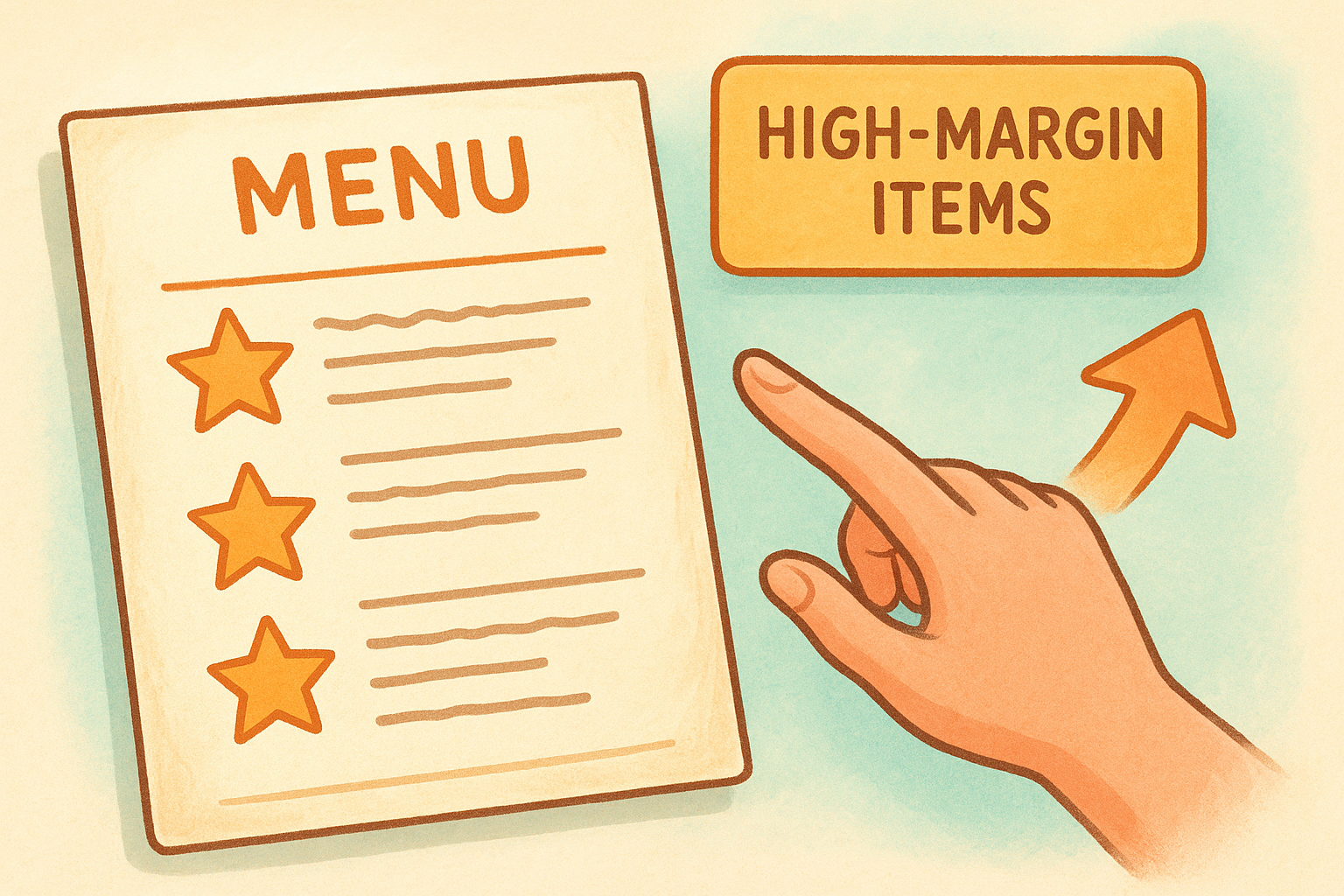
Pull your sales data from the last 30 to 90 days and sort every item by two metrics: sales volume and profit margin. High-volume, high-margin items are your stars. High-volume, low-margin items are traps that keep your kitchen busy without paying you back. Low-volume, high-margin items are sleepers worth promoting. Cut anything that scores low on both.
A menu engineering audit typically takes two hours and can reveal several items that cost you more to sell than they return in profit.
Menu layout tactics that increase high-margin sales
Your guests' eyes move to specific zones first on a physical or digital menu, typically the top-right and top-left areas. Place your highest-margin items there. Use short, descriptive names and avoid dollar signs, which research shows increases price sensitivity. Grouping premium add-ons near those anchor items naturally lifts attachment rates without any extra selling.
How to tighten menu size without upsetting regulars
Removing items feels risky, but a smaller, focused menu reduces food waste, speeds up kitchen tickets, and sharpens your brand identity. Quietly phase out your lowest performers by pulling them from your digital menu first. Most customers adapt without noticing, and your team will thank you for the simplification.
Numbers to track weekly
Monitor gross profit per item sold and your overall menu mix percentage. Set a concrete goal to shift at least 5% more orders toward your highest-margin items each month by adjusting placement and descriptions.
3. Increase average ticket with smarter add-ons
Raising your average ticket size is one of the clearest answers to how to increase restaurant revenue without touching prices. When a customer adds a drink, side, or dessert, your revenue per transaction climbs without any extra marketing spend.
Add-ons that feel helpful, not pushy
The best add-ons solve a problem the customer already has. Frame each suggestion around the specific order, and acceptance rates improve significantly. On digital ordering platforms, a prompt like "Add a side for $3?" at checkout converts far better than a generic question.
Strong performers to consider:
- Drinks paired with any food order
- Sauce or condiment upgrades
- Desserts displayed at the checkout step
Restaurants that prompt one targeted add-on per order typically see average ticket size climb 10% to 15% within the first month.
Bundles and meal deals that protect margin
Bundles give customers a sense of value while directing them toward higher-margin combinations you control. Build bundles around strong-margin items, not your most expensive ingredients.
A combo pairing a high-margin drink with a moderate-cost entree costs less to fulfill while delivering strong value perception to the guest.
How to use modifiers without slowing the kitchen
Keep your modifier list short and specific for each item. Three to five options per item keeps decision time low and ticket accuracy high.
Longer modifier screens overwhelm customers and drive up kitchen errors. Trim your options aggressively and test changes over two-week periods.
Numbers to track weekly
Watch average ticket size and the add-on attachment rate on your top three prompts each week. Set a goal to move both metrics up by 5% over the next 30 days.
Key metrics to log:
- Average order value by daypart
- Add-on conversion rate by item
4. Train staff to sell more without longer check times
Your front-of-house team directly influences how much each customer spends, yet most staff never get clear guidance on how to sell. Understanding how to increase restaurant revenue through your team comes down to giving people specific, repeatable tools that fit naturally into the existing service flow.
A simple suggestive-selling script for every role
Every role needs a one-sentence prompt tied to whatever the customer ordered. Specificity matters because a named item suggestion converts far better than a vague open-ended question. Equip each position with its own go-to line:
- Cashier: "Want to add a brownie for $2?"
- Server: "Our most popular side with that is the garlic bread."
- Counter staff: "Can I get you a drink with that order?"
Server and counter prompts that work in real life
The best prompts feel like a recommendation from someone who knows the menu, not a rehearsed pitch.
Post a laminated cheat sheet at the counter listing three high-margin items your team should mention each shift. Rotate the list weekly based on which items carry the strongest margin that week so the habit stays fresh.
Incentives that drive behavior without killing morale
Small, frequent rewards outperform large quarterly bonuses for front-of-house staff. Run a weekly contest where the team member with the highest average ticket size earns a gift card or preferred shift choice. Keep the bar achievable so it builds real momentum rather than creating resentment.
Numbers to track weekly
Watch average ticket size per staff member and the conversion rate on your top two prompts each week. Set a clear 5% improvement target per person as a starting benchmark and adjust scripts when a prompt stops converting.
5. Improve table turns and throughput without rushing guests
Understanding how to increase restaurant revenue through throughput means serving more covers during the same hours you're already open. The goal is not to push guests out the door faster but to eliminate the dead time that pads a table's total visit without adding value to anyone's experience.
Fix the biggest service bottlenecks by daypart
Bottlenecks shift depending on the meal period, so track where service slows down during lunch, dinner, and weekend rushes separately. Common culprits include slow payment processing at the end of a meal, delayed drink refills that stall table readiness, and menu confusion that extends order time. Map your slowest 20-minute window for each daypart and target that one first before moving on to the next.
Reservation, waitlist, and pacing moves that add covers
Staggering reservations in 15-minute intervals instead of large blocks keeps your kitchen from getting slammed and your floor from bottlenecking all at once.
A digital waitlist system lets guests wait outside or nearby, which frees up your entrance and speeds the seating process. Pacing your reservation blocks so tables turn at different times also prevents simultaneous check drops that slow your server's rhythm and stack pressure on your payment process.
Kitchen and expo changes that speed tickets up
Clear ticket sequencing between your kitchen and expo station cuts the time food sits before it reaches the table. Assign a dedicated expo role during peak hours to call orders, verify plate accuracy, and push food the moment it is ready.
Numbers to track weekly
Watch your average table turn time and covers per service period. Set a target to cut five minutes off your slowest daypart within 30 days and measure it against the same period the prior week.
6. Turn one-time buyers into repeat customers
A customer who orders once and never returns is one of the most expensive patterns in the restaurant business. Understanding how to increase restaurant revenue without constantly chasing new customers means building systems that bring your existing buyers back on a regular cycle.
Loyalty that rewards frequency instead of discounts
Discount-based loyalty programs train customers to wait for deals rather than ordering at full price. Frequency-based rewards work better because they reinforce the habit of ordering without cutting into your margin each time. A simple "order five times, get a free side" structure costs you one low-cost item while locking in five full-price transactions.
Customers enrolled in a frequency-based loyalty program visit up to three times more often than non-members, without requiring a discount on every visit.
SMS and email flows that bring people back
A short re-engagement message sent 10 to 14 days after a customer's last order is one of the highest-converting tools available to restaurants. Keep the message direct: remind them of a specific item they ordered before or highlight something new on your menu. Automated flows through your ordering platform handle this without manual effort once they are set up.
How to collect customer data ethically and consistently
Every direct order placed through your website captures a name, email, and phone number automatically. Make it a consistent practice to prompt in-person and phone customers to opt into your list at checkout by offering a simple incentive like a future reward or early access to specials.
Numbers to track weekly
Watch your repeat customer rate and the open rate on your SMS and email campaigns each week. Set a target to move your repeat percentage up by 5% over 60 days.
Key metrics to log:
- Repeat order rate by week
- SMS and email open rates
7. Capture more local demand with Google and SEO basics
Most restaurants focus all their energy on keeping existing customers happy while ignoring the people actively searching for food nearby right now. Knowing how to increase restaurant revenue through local search means showing up when someone types "pizza near me" or "best tacos in [your city]" and clicking your link instead of a competitor's.
Google Business Profile fixes that lift calls and clicks
Your Google Business Profile is the single highest-leverage free tool available to local restaurants. Make sure your hours, phone number, address, and website link are accurate, then add high-quality photos of your food and dining room at least twice a month. Profiles with current photos receive significantly more clicks and direction requests than those left untouched for months.
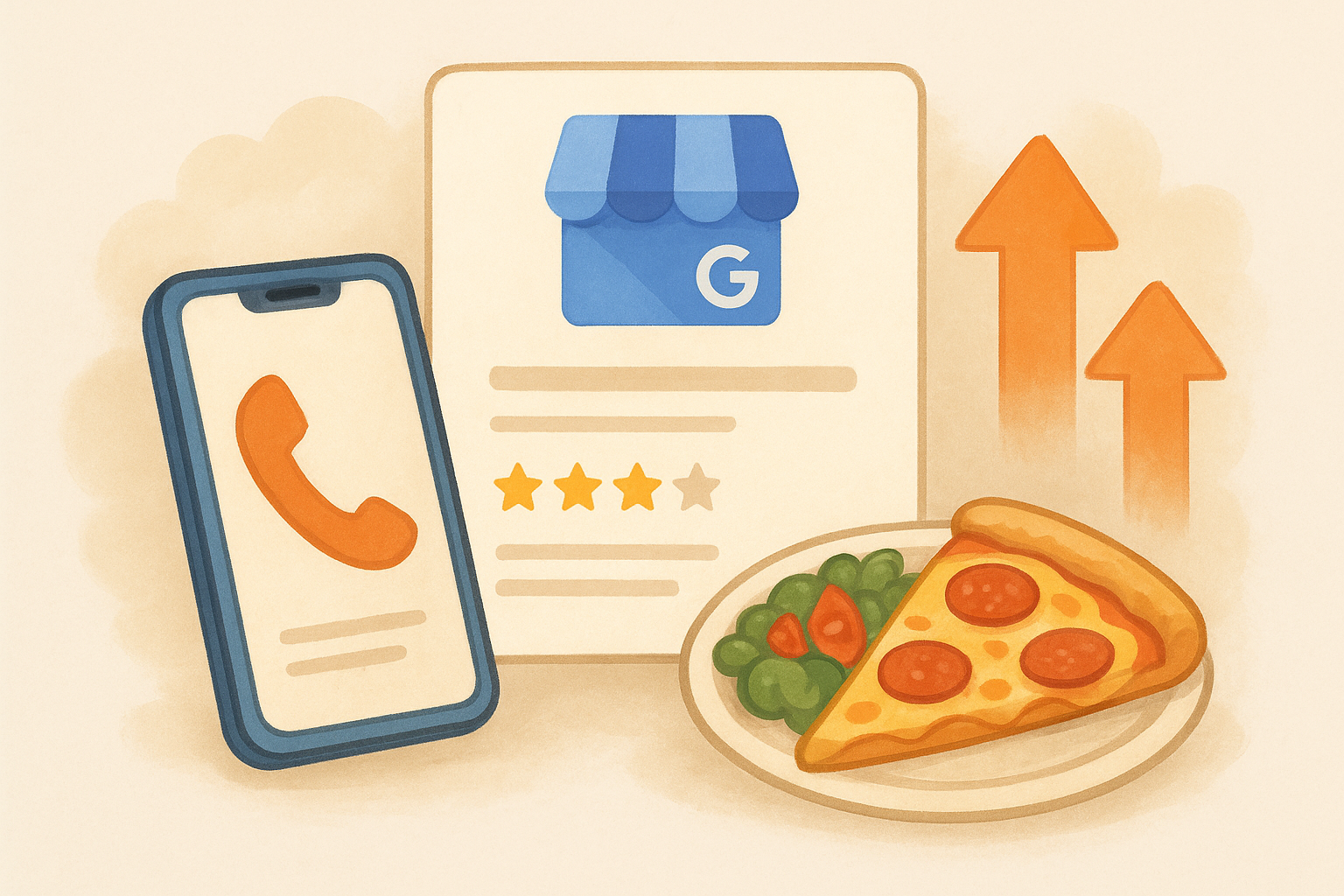
An incomplete or outdated Google Business Profile is one of the most common reasons a restaurant loses clicks to a competitor with weaker food but a better-maintained listing.
Website and menu SEO that ranks in your neighborhood
Your website's page titles and menu descriptions should include the type of food you serve and the city or neighborhood you operate in. A page titled "Order Italian Food in Austin" ranks more effectively for local searches than a generic one. Upload your full menu as text, not just a PDF, so search engines can read and index every item.
How to earn more reviews and respond the right way
Ask for a review at the moment of highest satisfaction, which is right after a guest compliments the food or finishes a strong meal. A short, direct ask like "Would you mind leaving us a Google review?" converts far better than a printed card handed at checkout. Respond to every review within 48 hours, positive or negative, to signal that you are active and engaged.
Numbers to track weekly
Watch your Google Business Profile search impressions and the number of new reviews posted each week. Set a target to earn at least four new reviews per month and measure whether your profile clicks trend upward each 30-day period.
8. Add two new revenue streams with what you already have
One of the most practical answers to how to increase restaurant revenue is using your existing kitchen, staff, and menu to serve customers you currently miss. Catering and private events require no new real estate and very little startup cost when you build them around what your operation already does well.
Way 8: Catering and large pickup orders that fit your menu
Large catering orders for offices, corporate lunches, and family events generate significant revenue in a single transaction without extra marketing. Focus your catering offer on items your kitchen already executes at volume to avoid new ingredient costs or training gaps. Start with three to five set packages listed directly on your website and ordering platform:
- Family meal packs (feeds four to six)
- Office lunch trays with individual portions
- Bulk item orders built from your top-margin dishes
Way 9: Private events, buyouts, and pre-sold set menus
Private dining buyouts and pre-sold set menus give you guaranteed revenue before service even starts. A buyout locks in a minimum spend commitment from the group, removing the unpredictability of a normal shift. Keep set menus to three or four courses so your kitchen executes cleanly under volume pressure.
A private buyout on a slow Tuesday generates more predictable revenue than three average dinner services combined.
Packaging, staffing, and ops guardrails to stay profitable
Catering and events only stay profitable when you price in packaging, transport, and extra labor before quoting. Add a 15% to 20% service buffer on top of your standard food cost to cover those variables every time.
Numbers to track weekly
Watch catering revenue as a percentage of total weekly sales and profit margin per event compared to your standard dine-in average. Both numbers should trend up as you refine your packages each month.
Next steps
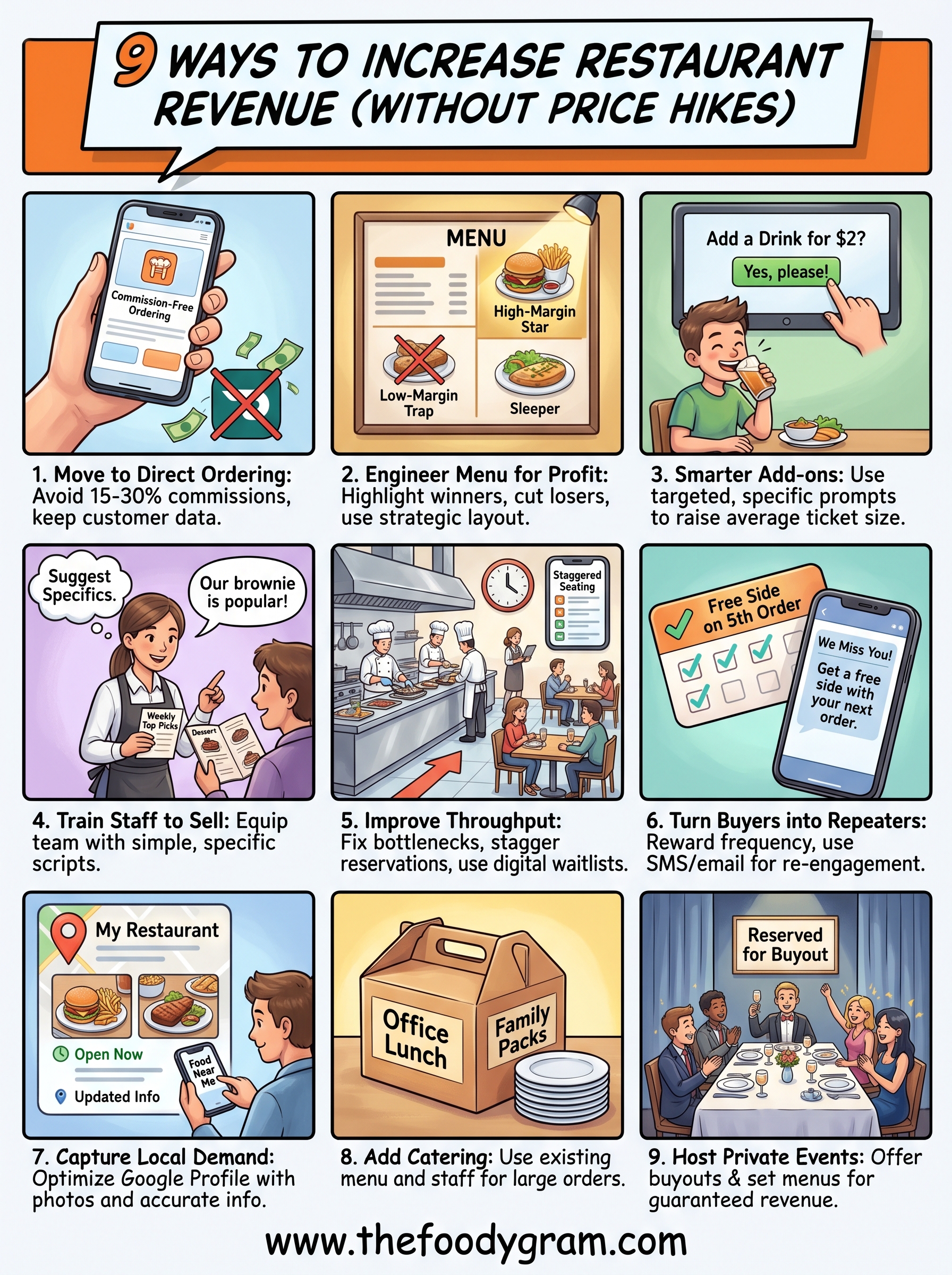
Every strategy in this article addresses how to increase restaurant revenue through changes you control directly, without raising prices or betting on foot traffic alone. You do not need to implement all nine at once. Pick the two or three that fit your current operation, execute them fully, measure the results, and then move to the next.
Start with direct ordering if you currently pay commissions to third-party apps. That single shift recovers real cash immediately and gives you the customer data you need to fuel the loyalty and re-engagement strategies covered later in this list. The other changes build on each other naturally once your foundation is solid.
If you want to stop losing revenue to delivery app fees and take your first step toward commission-free direct ordering, review The Foody Gram's pricing and platform options to see what fits your restaurant's size and volume.