


15 Restaurant Loyalty Program Examples That Fuel More Sales
Getting a customer through the door once is hard enough. Getting them back repeatedly, that's where real profit lives. Studies consistently show that repeat customers spend more per visit and cost far less to retain than new ones cost to acquire. Loyalty programs give restaurants a structured way to reward that repeat behavior, and the best restaurant loyalty program examples prove there's no single "right" way to do it.
The challenge most independent restaurant owners face isn't a lack of desire to build loyalty, it's figuring out what actually works. Points? Punch cards? Tiered rewards? App-based programs? Each model comes with trade-offs, and picking the wrong structure can waste money instead of making it. That's why looking at what successful restaurants are already doing matters more than guessing.
At The Foody Gram, we help restaurants build direct relationships with their customers through commission-free online ordering and branded websites. Loyalty programs amplify that same principle: when you own the customer relationship, you control how you reward and retain them, no middleman taking a cut.
Below, you'll find 15 proven loyalty program examples from restaurants of all sizes. Each one breaks down the reward structure, what makes it effective, and what you can borrow for your own operation. Whether you're running a single pizzeria or managing multiple locations, there's something here worth stealing.
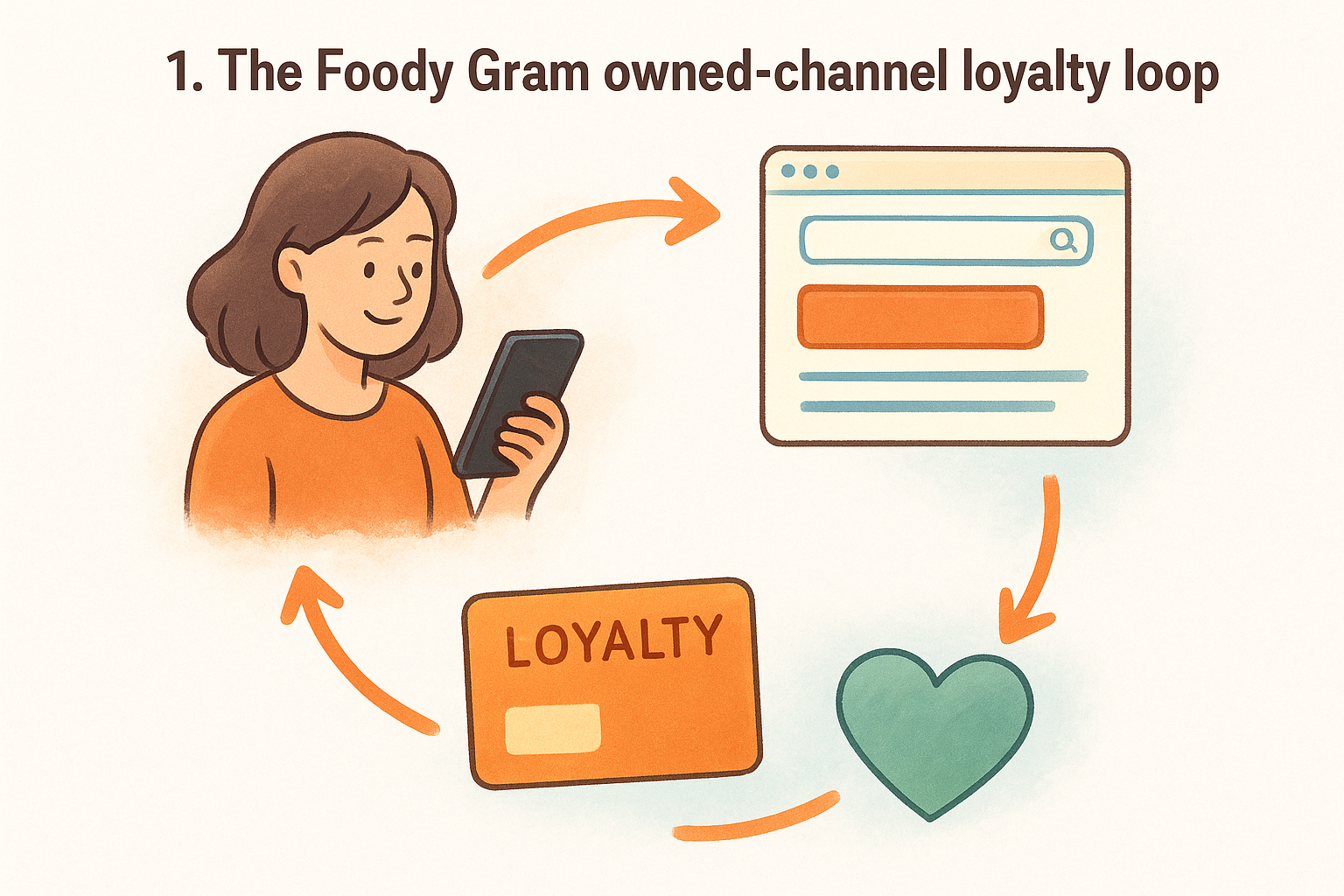
1. The Foody Gram owned-channel loyalty loop
Most restaurant loyalty program examples you'll find online involve a third-party app standing between you and your customer. The Foody Gram flips that model by building loyalty directly into your own branded ordering system, so every reward you offer strengthens your relationship with customers rather than a platform's relationship with them.
How the program works
The Foody Gram gives restaurants a commission-free, branded website where customers place orders directly. Within that system, you build a loyalty loop using customer data you actually own. When a customer orders through your site, you capture their contact information, order history, and spending patterns without sharing any of it with a third-party app. You then use that data to trigger offers, send re-engagement messages, and build repeat-visit incentives entirely on your terms.
Because no commissions are taken per order, every dollar you redirect toward a loyalty reward stays within your business model rather than going to an aggregator. That financial breathing room is what makes the program sustainable for independent operators.
Why it performs well
Third-party platforms keep your customer data locked away. When someone orders through DoorDash or Uber Eats, that customer belongs to the platform, not to you. The Foody Gram's model hands that ownership back, which is where loyalty programs actually generate returns.
When you own the customer relationship, you control the conversation, and that control is what makes loyalty programs profitable rather than just expensive.
Direct channel loyalty outperforms third-party incentives because you are not competing with every other restaurant on a marketplace app for that customer's attention. Your offer lands in their inbox or SMS feed without noise from competitors crowding the same screen.
Tactics you can steal
You do not need a large tech budget to run this kind of program. Using direct ordering and owned customer data, these three moves produce results quickly:
- Collect emails at checkout and send a timed follow-up offer at the 10-day mark if no second order has been placed.
- Segment by order frequency. Reward your top 20% of customers with early access to specials or a free add-on after every fifth order.
- Use order history to personalize. If a customer consistently orders the same dish, a discount on that specific item hits far harder than a generic coupon.
2. Starbucks Rewards
Starbucks Rewards stands as one of the most referenced restaurant loyalty program examples in the industry. With over 32 million active members in the US, it drives a significant portion of Starbucks' total revenue through repeat visits anchored to its digital ordering ecosystem.
How the program works
Customers earn Stars for every dollar spent when they pay through the Starbucks app. Those Stars accumulate and unlock free drinks, food items, and merchandise at different reward tiers. The app functions as the ordering platform, payment method, and personalization engine simultaneously, keeping the customer inside one closed loop rather than scattered across multiple touchpoints.
Why it performs well
The program works because Stars expire when members go inactive, which creates urgency and pulls lapsed customers back before they drift away permanently. Starbucks also sends personalized "Bonus Star" offers tied to a member's specific order history, so the rewards feel individual rather than generic.
The most effective loyalty programs make customers feel recognized, not just rewarded.
Tactics you can steal
You do not need a custom app to apply Starbucks' core principles to your own operation. These three moves translate directly to smaller restaurants:
- Create expiring rewards with a clear deadline. A free item that expires in 30 days drives more action than one that sits open-ended indefinitely.
- Personalize offers based on what customers already order. Sending a bonus reward tied to a favorite menu item outperforms a blanket discount every time.
- Identify lapsing customers using order frequency data, then trigger a re-engagement offer before they stop coming back entirely.
3. Chick-fil-A One
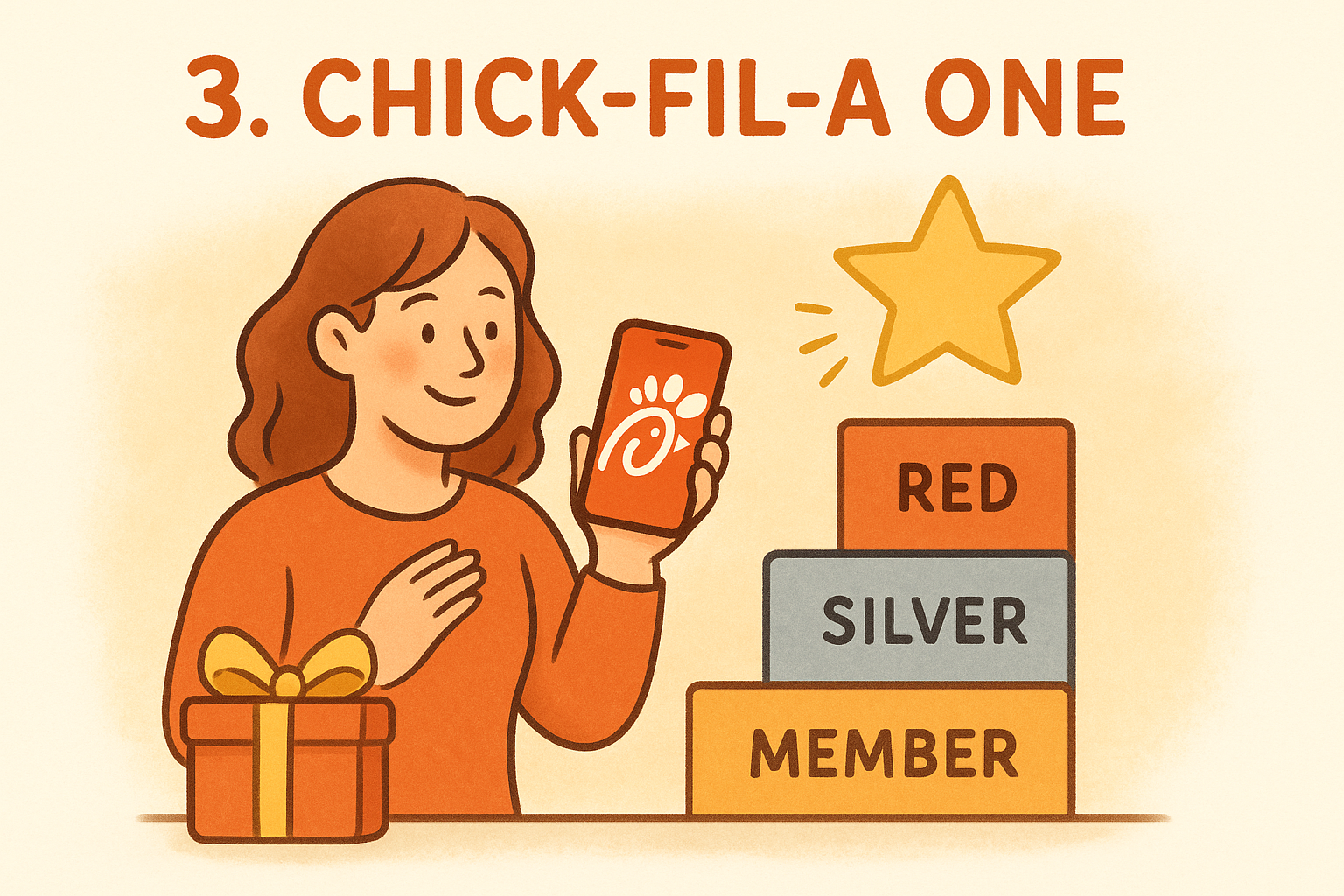
Chick-fil-A One sits among the strongest restaurant loyalty program examples from a quick-service chain, built around a tiered membership structure that rewards higher-spending customers with increasingly valuable perks. The program drives repeat visits by making status feel worth earning, not just maintaining.
How the program works
Members earn points for every dollar spent at Chick-fil-A, either through the app or in-store purchases linked to their account. The program runs on four tiers: Member, Silver, Red, and Signature, with each level unlocking better rewards, exclusive menu items, and priority treatment. Signature-tier members receive perks that feel genuinely premium, including personalized gifts and early access to new offerings before the general customer base sees them.
Why it performs well
The tiered structure works because it creates a clear progression that customers can see and actively work toward. Status-based loyalty programs consistently outperform flat point systems in driving visit frequency, since members spend more to reach and maintain a higher tier. Chick-fil-A also layers in surprise-and-delight rewards, sending members free items with no specific purchase required, which builds emotional attachment well beyond a simple earn-and-burn cycle.
When customers feel like they belong to something rather than just a points account, they return more often and spend more per visit.
Tactics you can steal
You can apply Chick-fil-A One's core mechanics without building a full app. Three moves worth replicating:
- Create two or three visible tiers so customers have a concrete reason to spend more and move up.
- Send unexpected free items to your most loyal customers a few times per year with no strings attached.
- Give top-tier members early access to new menu items or limited-time offers before anyone else.
4. MyMcDonald's Rewards
MyMcDonald's Rewards is one of the most widely adopted restaurant loyalty program examples in fast food, with millions of active members across the United States. The program ties directly to McDonald's mobile app and in-store ordering, making loyalty feel effortless for customers who already visit regularly.
How the program works
Customers earn 100 points for every dollar spent through the app, which they redeem for free menu items across different reward tiers. The app also delivers bonus point offers and limited-time deals that rotate frequently, pulling customers back to check what's new rather than treating the app as a one-time download.
Why it performs well
McDonald's built a habit loop by making ordering through the app more valuable than any other method. Customers open the app before every visit to catch rotating bonus offers, which keeps the program active in their daily routine rather than forgotten after the first reward.
When your loyalty program becomes part of a customer's habit before they even walk in the door, you've built something far more durable than a discount.
First-party purchase data collected across millions of transactions also lets McDonald's personalize offers based on what individual customers already order, which lifts redemption rates and makes rewards feel relevant rather than generic.
Tactics you can steal
You don't need McDonald's volume to apply these mechanics to your own restaurant. Shifting customers toward a direct ordering channel and keeping them engaged with rotating offers works at any scale:
- Rotate your offers on a set schedule so customers have a reason to check back after their first redemption.
- Reward direct-channel orders specifically to pull customers away from third-party platforms.
- Use order history to send deals tied to what each customer already buys most often.
5. Subway MVP Rewards
Subway MVP Rewards is one of the more flexible restaurant loyalty program examples in the quick-service space, built around a token-based system that rewards both in-store and digital purchases. The program runs across three tiers: MVP, All-Star, and Hall of Fame, giving frequent customers a clear path to better rewards as they spend more throughout the year.
How the program works
Members earn tokens for every dollar they spend on eligible orders, whether placed in-store, through the Subway app, or online. Those tokens unlock free items and exclusive discounts at each tier threshold. All-Star and Hall of Fame members receive elevated earn rates, meaning the program becomes more valuable the more loyal a customer already is.
Why it performs well
Subway structured the program so that higher-tier status resets annually, which keeps loyal customers spending consistently to protect their status rather than coasting after hitting a milestone. The app also delivers personalized deals and limited-time bonus token events that keep the program active rather than stagnant between visits.
A loyalty program that gives customers something to protect is more powerful than one that only gives them something to earn.
Tactics you can steal
You can apply Subway's core mechanics without a full tiered infrastructure. These three approaches work at any scale:
- Set annual or quarterly reset points on loyalty status to maintain consistent spending pressure across the year.
- Run short-window bonus reward events tied to specific menu items or slow days to fill visit gaps.
- Reward digital orders at a higher rate than in-person purchases to push customers toward a direct ordering channel you control.
6. Chipotle Rewards
Chipotle Rewards ranks among the fastest-growing restaurant loyalty program examples in the fast-casual segment, surpassing 35 million members within a few years of its national launch. The program builds repeat visits by keeping the earning mechanic simple and the redemption path short.
How the program works
Members earn 10 points for every dollar spent on eligible orders placed through the Chipotle app or website. Once a member reaches 1,250 points, they unlock a free entree reward. The program also features limited-time bonus point challenges, such as earning extra points for trying a specific menu item or ordering on a particular day, which keeps engagement active between standard visits.
Why it performs well
Chipotle keeps the points-to-reward ratio straightforward, which removes the friction that kills participation in more complicated programs. Customers always know exactly how far they are from a free entree, and that transparency drives consistent ordering through the app rather than through third-party channels.
When customers can see exactly how close they are to a reward, they order more often and spend slightly more per visit to close that gap faster.
Tactics you can steal
You can apply Chipotle's core approach without building a full loyalty app. These three moves translate directly to independent restaurant operations:
- Set a clear, visible redemption threshold so customers know their exact progress at all times.
- Run short-window bonus point events tied to slow days or underperforming menu items to generate targeted traffic.
- Reward direct digital orders exclusively to shift customers away from commission-heavy third-party platforms and toward a channel you control.
7. Dunkin Rewards
Dunkin Rewards is one of the more straightforward restaurant loyalty program examples in the coffee-and-quick-service category, built around a simple points system that rewards customers for buying what they already purchase every day. The program drives consistent repeat visits by removing complexity and making earning feel automatic rather than effortful.
How the program works
Members earn 10 points for every dollar spent on eligible purchases made through the Dunkin app. Once a member accumulates 200 points, they can redeem them for a free medium or large beverage. The app also delivers member-exclusive offers and limited-time bonus point opportunities tied to specific products or time windows, keeping the program active beyond a standard earn-and-redeem cycle.
Why it performs well
Dunkin targets a high-frequency customer base of daily coffee drinkers, which means points accumulate quickly and rewards feel achievable within a normal visit pattern rather than requiring unusual spending. That speed of earning keeps members engaged instead of losing interest while waiting for a distant payout.
When a loyalty program fits naturally into what a customer already does every day, participation becomes automatic rather than forced.
Tactics you can steal
You can apply Dunkin's core approach to your own restaurant without a dedicated app. Three moves worth borrowing:
- Set a low, achievable reward threshold so customers hit their first redemption quickly and build the habit early.
- Tie bonus point events to specific products you want to push rather than running blanket promotions.
- Reward app-based or direct online orders exclusively to build a customer relationship you control.
8. MyPanera Rewards and Unlimited Sip Club
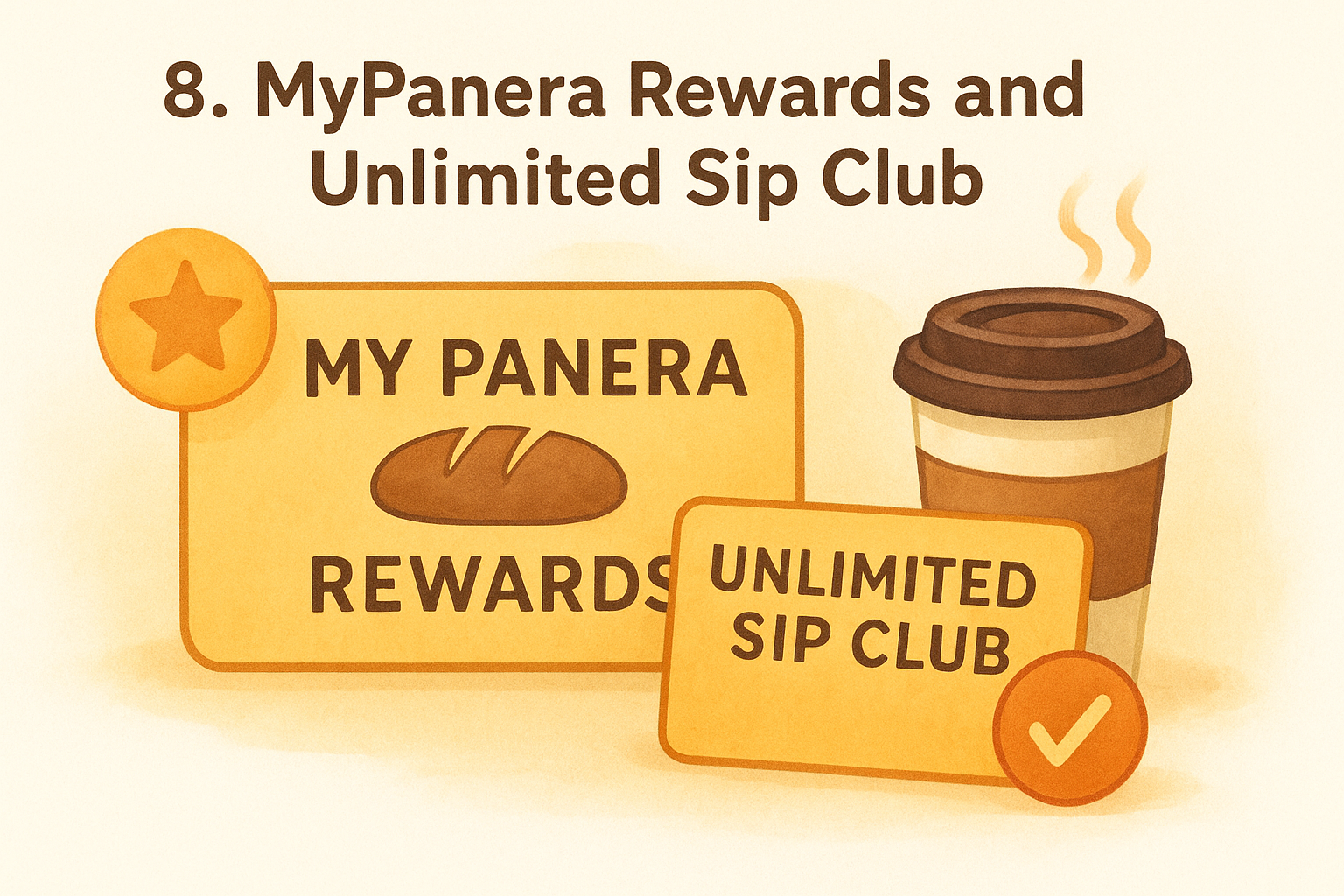
MyPanera Rewards stands out among restaurant loyalty program examples because it runs two distinct programs simultaneously: a traditional points-based system and a subscription model that locks customers into daily visits. The combination gives Panera two different levers for driving repeat business.
How the program works
Members earn points on every eligible purchase made through the Panera app or website, which they redeem for free food and drinks as they accumulate. The Unlimited Sip Club operates separately as a paid monthly subscription giving members unlimited hot and cold beverages for a flat fee. Members who subscribe have a direct financial incentive to visit daily just to extract value from what they already paid.
Why it performs well
The subscription mechanic is the more interesting half of the program. When a customer pays upfront for unlimited drinks, every visit feels like recouping money rather than spending it. That psychology drives visit frequency far beyond what a standard points program achieves on its own.
A loyalty program that makes customers feel like they're winning every time they walk in creates a completely different relationship than one that simply tracks purchases.
Tactics you can steal
You can adapt both models to your own restaurant without a large technology budget. These three approaches work for independent operators at any order volume:
- Offer a low-cost subscription for a specific high-frequency item, such as daily coffee or a weekly specialty drink.
- Combine subscription access with points earning so subscribers build rewards on top of their flat-fee benefit.
- Tie the subscription to direct ordering so every benefit flows through a channel you control rather than a third-party platform.
9. Domino's Piece of the Pie Rewards
Domino's Piece of the Pie Rewards is one of the more digitally integrated restaurant loyalty program examples in the pizza category. The program pushes customers toward direct ordering channels by making every dollar spent through Domino's own platforms count toward a reward, creating a built-in reason to skip third-party delivery apps entirely.
How the program works
Members earn 1 point for every dollar spent on eligible orders placed through the Domino's website or app. Rewards become available at multiple thresholds, starting at 20 points for a free side item and scaling up to 60 points for a free medium two-topping pizza. The tiered redemption structure means customers hit their first reward quickly, which builds the habit before they have a chance to disengage.
Why it performs well
Domino's ties every reward exclusively to orders placed through its own digital channels, which actively trains customers to bypass aggregator apps. That single design decision protects Domino's margins on every loyalty order since no third-party commission leaves the transaction.
When your loyalty program makes your own ordering channel the only path to rewards, you shift customer behavior and protect profit at the same time.
Tactics you can steal
You can apply Domino's channel-locking strategy without building a full app. These moves work for independent restaurant owners at any scale:
- Restrict loyalty rewards to direct orders only, whether placed through your website, phone, or branded ordering system.
- Set a low first-reward threshold so new members earn something quickly and return before the habit breaks.
- Offer multiple redemption tiers so customers have both short-term and long-term goals to work toward simultaneously.
10. Taco Bell Rewards
Taco Bell Rewards sits among the more gamified restaurant loyalty program examples in fast food, turning standard purchases into a points race that keeps customers engaged between visits. The program rewards customers for ordering through Taco Bell's own digital channels, which protects the brand's margins while training customers away from third-party platforms.
How the program works
Members earn points on every eligible order placed through the Taco Bell app, which they redeem for free menu items at different thresholds. The app also features rotating challenges and bonus point events tied to specific menu items, limited-time offers, and promotional periods. That rotation keeps the program fresh rather than letting it go stale after a member's first reward.
Why it performs well
Taco Bell targets a younger, app-native customer base that already lives on their phones, which makes app-based loyalty a natural fit rather than an added friction point. The program layers challenge mechanics on top of standard point earning, giving customers two ways to progress simultaneously and a reason to open the app even on days they are not actively thinking about their next meal.
When your loyalty program gives customers something to do between visits, you stay in their attention rather than drifting out of it.
Tactics you can steal
Three moves from Taco Bell's approach worth applying to your own operation:
- Add time-limited challenges to your loyalty program to drive specific behaviors, such as trying a new menu item or ordering on a slow weekday.
- Reward app or direct website orders exclusively to build a customer relationship you fully control without paying platform fees.
- Rotate your bonus offers on a regular schedule so customers have a fresh reason to engage well after their first redemption.
11. Papa Rewards by Papa John's
Papa Rewards by Papa John's is one of the more direct restaurant loyalty program examples in the pizza delivery category, built around a points-per-dollar system that rewards customers specifically for ordering through Papa John's own digital platforms rather than third-party apps.
How the program works
Members earn 75 points for every dollar spent on eligible orders placed through the Papa John's website or app. Points accumulate toward free pizza rewards at set thresholds, with members needing 2,000 points to unlock a free large pizza. The program also delivers bonus point events and limited-time promotional offers tied to specific periods, giving members extra earning opportunities beyond their standard purchase rate.
Why it performs well
Papa John's ties every point to direct digital orders, which keeps commission costs entirely off loyalty transactions. The high per-dollar earn rate makes progress feel fast and visible, which reduces the dropout rate that kills programs where rewards feel too distant to pursue after the first signup.
When customers see their points climbing quickly, they stay engaged long enough to build a real ordering habit rather than signing up once and forgetting.
Tactics you can steal
Three moves from Papa Rewards worth applying to your own operation:
- Set a generous earn rate so customers feel momentum early and stay motivated after their first order.
- Restrict point earning to direct orders placed through your own website or branded ordering system, keeping commission costs out of every loyalty transaction.
- Schedule bonus point events during slow periods to drive targeted traffic without discounting your full menu across the board.
12. Burger King Royal Perks
Burger King Royal Perks is one of the more straightforward restaurant loyalty program examples in fast food, built around a points system that rewards customers for ordering through Burger King's own digital channels rather than third-party apps. The program covers both app-based and in-store purchases linked to a member's account.
How the program works
Members earn 10 points for every dollar spent on eligible orders placed through the Burger King app. Those points accumulate toward free menu item rewards at set thresholds, starting at low enough levels that first-time members hit a redemption quickly. The app also delivers exclusive member deals and limited-time bonus offers that rotate throughout the year, giving customers a reason to open the app regularly rather than only at the point of ordering.
Why it performs well
Burger King structured Royal Perks so that app orders deliver more value than any other ordering method, which trains customers to default to the direct channel over time. That channel shift matters because every order placed through the app keeps commission costs out of the transaction entirely.
When your loyalty program makes your direct channel the most financially logical choice for customers, you change their ordering behavior without asking them to change their habits.
Tactics you can steal
Three moves from Royal Perks worth applying to your own operation:
- Make your direct ordering channel the only path to loyalty rewards so customers have a clear financial reason to skip third-party platforms.
- Set a low first-redemption threshold so new members earn something within their first two or three visits.
- Rotate bonus offers consistently to keep members checking your channel between regular purchase cycles.
13. Wendy's Rewards
Wendy's Rewards is one of the more app-centric restaurant loyalty program examples in the burger category, rewarding customers specifically for ordering through Wendy's own digital platform rather than relying on third-party delivery channels. The program gives the brand full visibility into customer behavior without sharing any data with outside platforms.
How the program works
Members earn 10 points for every dollar spent on eligible orders placed through the Wendy's app. Those points accumulate toward free menu item rewards at multiple redemption thresholds, starting low enough that new members hit their first reward within a handful of visits.
The app also delivers rotating limited-time offers and bonus point events tied to specific menu items and promotional periods, giving members a reason to check back regularly rather than only at the moment they decide to order.
Why it performs well
Wendy's keeps its program simple, which reduces friction at signup and keeps participation rates high well after the initial registration. Every reward flows exclusively through the Wendy's app, which means the brand collects first-party purchase data on every transaction without sharing it with an aggregator.
When your loyalty program routes every transaction through a channel you own, you build a customer data asset that grows in value with every single order.
Tactics you can steal
Three moves from Wendy's Rewards worth applying to your own operation:
- Keep your earn rate simple and visible so customers understand their progress without needing to read instructions.
- Restrict rewards to direct orders placed through your own website or branded ordering system.
- Schedule bonus point events around slow periods or new menu launches to drive targeted traffic without discounting broadly.
14. Pizza Hut Hut Rewards
Pizza Hut Hut Rewards is one of the more straightforward restaurant loyalty program examples in pizza delivery, rewarding customers for ordering through Pizza Hut's own digital channels while keeping the earn-and-redeem structure simple enough that casual customers stay engaged alongside frequent ones.
How the program works
Members earn 2 points for every dollar spent on eligible orders placed through the Pizza Hut website or app. Points accumulate toward free pizza and other menu item rewards at set thresholds, with the program structured so members hit their first redemption within a reasonable number of visits rather than after an unreachable spending total. The app also surfaces member-exclusive deals and limited-time offers that rotate throughout promotional periods, giving customers additional value beyond the standard point earn rate.
Why it performs well
Pizza Hut keeps the program tightly connected to its own ordering channels, which means the brand collects customer data on every transaction without routing any of it through a third-party aggregator. That data advantage compounds over time, enabling more precise targeting as a member's order history grows and patterns become clearer.
When every loyalty transaction runs through your own platform, each order makes your next marketing effort more accurate and more effective.
Tactics you can steal
Three moves from Hut Rewards worth applying to your own restaurant:
- Tie all point earning to direct orders placed through your own website or branded system to keep commission costs out of every loyalty transaction.
- Set visible redemption milestones so customers know exactly how far they are from their next reward.
- Layer rotating limited-time deals on top of standard point earning to give members a second reason to order on any given day.
15. KFC Rewards Arcade
KFC Rewards Arcade stands apart from most restaurant loyalty program examples by weaving game mechanics directly into the reward redemption process, turning a standard earn-and-redeem cycle into something customers actively want to engage with between meals.
How the program works
Members earn points on eligible orders placed through the KFC app, then spend those points playing arcade-style games that reveal free food prizes. Rather than redeeming points directly for a fixed item, customers spin, scratch, or flip to discover what they've won, adding unpredictability to what is typically a mechanical exchange. The app also surfaces exclusive member deals and limited-time offers throughout the year.
Why it performs well
The game layer replaces a predictable redemption with an unexpected reward reveal, which drives higher repeat engagement than flat earn-and-redeem programs typically achieve. Customers open the app to play, which means the brand occupies their attention on days they are not actively planning to order.
When your loyalty program gives customers a reason to engage beyond their next purchase, you stay relevant in their routine without spending extra on advertising.
Tactics you can steal
Three moves from KFC Rewards Arcade worth borrowing for your own operation:
- Add a randomized or tiered reward reveal so customers never know exactly what they'll receive, which increases repeat engagement beyond standard visit frequency.
- Reward direct digital orders exclusively through your own website or branded ordering system to eliminate commission costs from every loyalty transaction.
- Build non-purchase touchpoints into your program so customers interact with your brand even on days they are not placing an order.
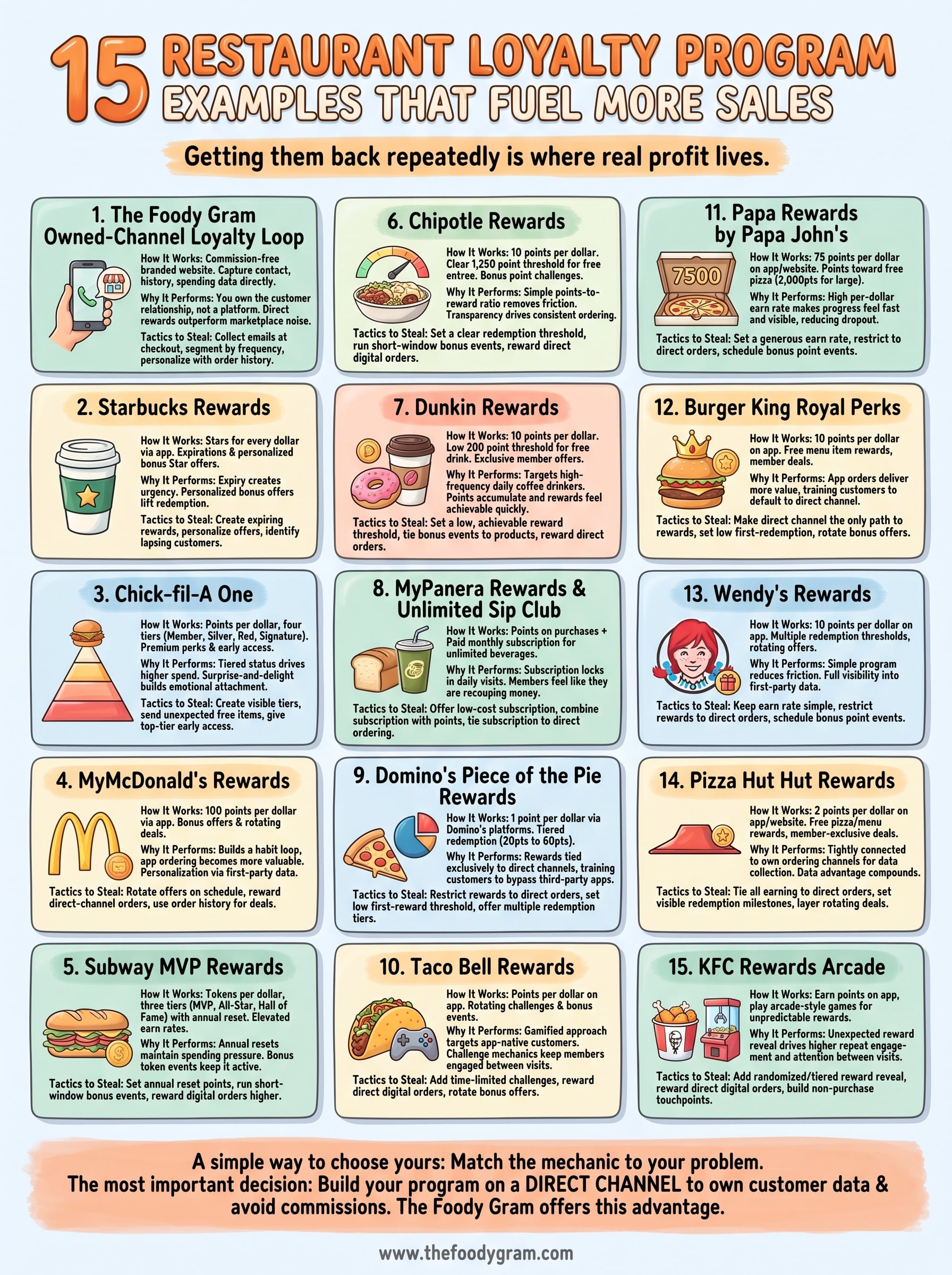
A simple way to choose yours
Every restaurant loyalty program example on this list works because it solves a specific retention problem for a specific customer base. Your job is to match the mechanic to your own situation. If you run a high-frequency operation, a simple points system with a low first-redemption threshold keeps customers engaged without overwhelming them. If you want to drive visit consistency, a subscription model gives customers a direct financial reason to return daily rather than occasionally.
The most important decision you face is not which reward structure to pick. It is which channel you build your program on. Every program above that routes rewards through a direct ordering platform keeps customer data in-house and commission costs out of the equation entirely. The Foody Gram gives independent restaurants that same advantage without the enterprise budget. See our commission-free ordering plans and pricing to understand exactly what building loyalty on your own terms costs each month.