


13 Restaurant Lunch Specials Ideas That Boost Midday Sales
Lunch service can make or break your daily revenue, yet most restaurants treat it as an afterthought stuck between breakfast prep and dinner rush. If your dining room sits half empty at noon while the lunch crowd walks past to grab fast food instead, you need restaurant lunch specials ideas that actually pull people in the door, not just a discounted version of your dinner menu.
The right lunch special does two things at once: it moves food fast during a tight window and it gives customers a reason to choose you over the sandwich shop next door. That means speed of service matters as much as price, and portion-controlled combos often outperform generic discounts because they protect your margins while still feeling like a deal.
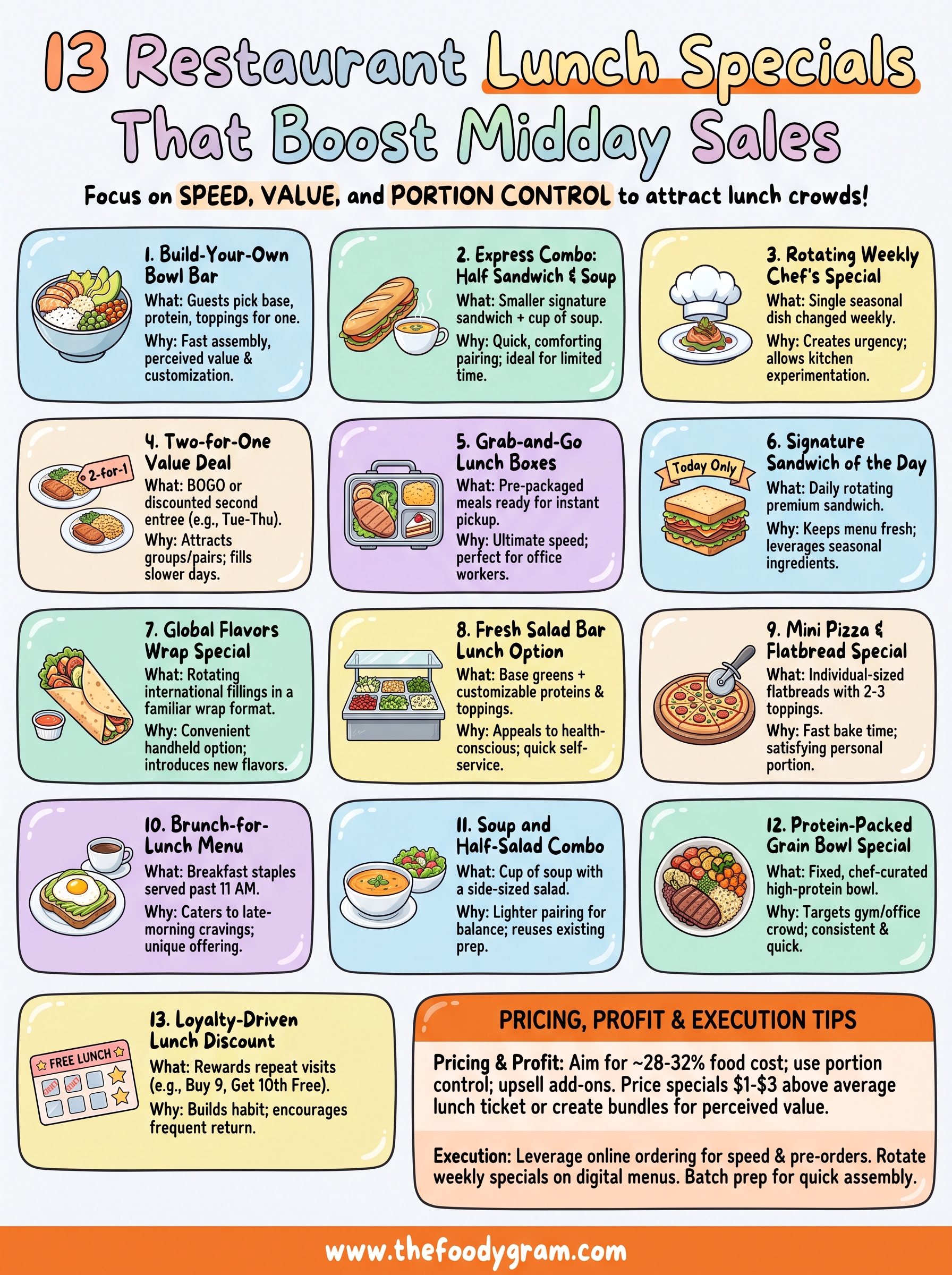
Below you'll find 13 lunch special concepts pulled from restaurants that actually grew their midday traffic, from rotating daily combos to grab-and-go bundles built for the office crowd. We'll also touch on how online ordering shapes which specials work best, since a lunch rush that runs through your own branded site fills tables faster than one bottlenecked by phone calls or third-party apps.
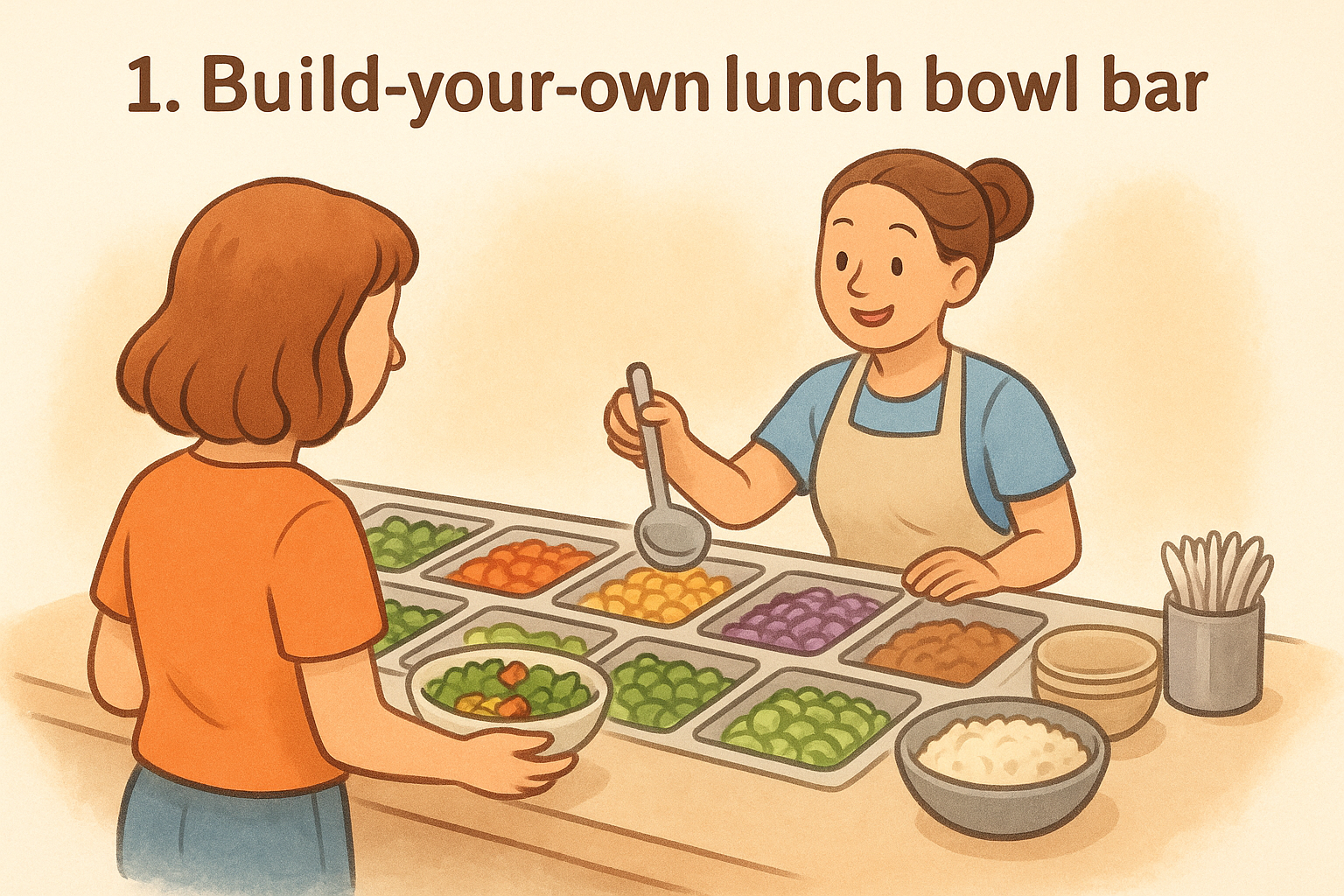
1. Build-your-own lunch bowl bar
What it is
A build-your-own bowl bar lets guests pick a base (rice, greens, noodles), a protein, and a handful of toppings and sauces for one flat price. Think Chipotle-style assembly but built around whatever cuisine your kitchen already does well, whether that's a Mediterranean grain bowl, a teriyaki rice bowl, or a Tex-Mex burrito bowl. Customer choice is the whole point here: you set the boundaries, they build the meal, and nobody feels like they're eating a smaller version of dinner.
Why it works for lunch
Office workers and lunch-break crowds want something that feels healthy and customized without waiting twenty minutes for a plate to come out of the kitchen. A bowl bar solves that because most of the prep happens before noon, so the line moves fast even during a rush. Perceived value climbs too, since customers feel like they're getting a personalized meal rather than a fixed plate, which makes them far more forgiving of a $11-$13 price point than they'd be for a static sandwich at the same cost.
A bowl bar turns speed and customization into your two biggest lunch selling points at once.
Pricing and profit tips
Price the bowl as a base rate that includes one protein and three toppings, then charge $1-$2 for extra protein or premium add-ons like avocado or extra cheese. This upsell structure quietly lifts your average ticket without making the core price feel expensive. Keep your food cost target around 28-32%, since grains and vegetables run cheap compared to proteins, giving you room to be generous with portions while still protecting margin.
| Component | Suggested Cost Share | Example Items |
|---|---|---|
| Base | 10-15% | Rice, quinoa, greens, noodles |
| Protein | 40-45% | Chicken, tofu, steak, shrimp |
| Toppings/Sauce | 20-25% | Veggies, cheese, dressings |
| Packaging | 5-8% | Bowls, lids, utensils |
How to execute it
Start with a limited menu of two or three proteins and six to eight toppings so your line cooks can assemble bowls without slowing down. Batch-cook proteins and grains in the mid-morning so everything's ready before the noon rush hits, then staff one dedicated assembly station instead of spreading the work across your whole line. If you're taking orders online, build the bowl builder directly into your ordering flow so customers customize before they arrive and your kitchen gets a clear ticket instead of a verbal order shouted across the counter. Online pre-orders also let you smooth out the noon spike, since guests can schedule pickup for 11:45 or 1:15 instead of all showing up at exactly noon.
2. Express combo: half sandwich and soup
What it is
The half sandwich and soup combo pairs a smaller version of a signature sandwich with a cup of soup for one set price, usually landing between $8 and $10. Diners get two flavors instead of committing to one full portion, and you get to move a classic comfort food pairing without the wait time of a full entree. This combo works especially well if you already run soup as a daily rotation, since it gives that soup a built-in reason to sell beyond the standalone bowl.
Why it works for lunch
Speed drives this special more than novelty does. Soup can sit warm and ready, and a half sandwich takes half the assembly time of a full one, so tickets fire fast even when three orders hit at once. Guests also perceive it as a lighter, midday-appropriate meal rather than a heavy dinner portion, which matters when they're heading back to a desk afterward.
A combo that's quick to build is a combo that survives the noon rush.
Pricing and profit tips
Bundle a $6 half sandwich with a $4 soup and sell the pair for $9, so the discount feels real while your blended food cost stays under 30%. Rotate the soup weekly to control ingredient waste and keep the sandwich half fixed so prep stays predictable.
How to execute it
Prep sandwich components and soup batches before 11 a.m. so nothing gets built to order. List the combo prominently on your online ordering menu with the soup of the day auto-updated, so returning customers check back to see what's rotating that week.
3. Rotating weekly chef's special
What it is
A rotating chef's special swaps one dish on your lunch menu every week, letting your kitchen showcase a seasonal ingredient, a test recipe, or a dish that's too labor-intensive to run daily. It's a single featured plate, not a whole new menu, so you're not rebuilding your prep list from scratch each Monday. Weekly variety gives regulars a reason to keep checking back instead of defaulting to the same three items every visit.
Why it works for lunch
This special works because it creates urgency without a discount. Customers know the dish disappears in five or six days, so they order it now instead of putting it off. It also gives your line cooks room to experiment with proteins or produce you buy in bulk, which cuts waste from ingredients that don't fit your core menu.
A dish that's only around for a week sells itself on urgency, not price.
Pricing and profit tips
Price the special slightly above your average lunch ticket, usually $2-$3 higher, since novelty justifies the premium and customers rarely price-compare a one-week item against your regular menu. Keep food cost in the 30-33% range and use the special to move surplus inventory from your walk-in before it turns.
How to execute it
Announce the special every Friday for the week ahead through email, social posts, and your online ordering homepage so customers plan their visit around it. Update the item on your ordering platform each week rather than relying on a chalkboard alone, since most lunch orders now start online before anyone walks through the door.
4. Two-for-one value lunch deal
What it is
A two-for-one lunch deal lets a customer buy one entree and get a second free or steeply discounted, usually aimed at pairs of coworkers or friends grabbing lunch together. It's not a coupon gimmick, it's a structured offer built into your menu, like "buy one sandwich, get one half-price" every weekday. Group dining is the target here, since one person orders and pays while two people eat, which raises your per-transaction total even though the per-plate margin drops.
Why it works for lunch
Offices rarely send one person out to eat alone. When two or three coworkers walk in together, a two-for-one deal turns your restaurant into the obvious choice over a place charging full price per head. The offer also fills seats during slower midweek stretches, since groups tend to plan lunch around wherever the deal is running that day.
A deal built for pairs fills more seats per order than a discount built for individuals.
Pricing and profit tips
Structure the deal so the second item is 50% off rather than fully free, which keeps your blended margin closer to 25-28% instead of tanking it. Limit the offer to specific entrees with lower food cost, like pasta or grain-based dishes, rather than your priciest steak or seafood plate, so the discount doesn't eat into your best-margin items.
How to execute it
Run the deal only on your slower days, typically Tuesday through Thursday, to smooth out weekly traffic instead of discounting an already-busy Friday. Feature it clearly on your online ordering page with a note that it applies to pickup and delivery, since group orders placed online tend to run larger than walk-in tickets.
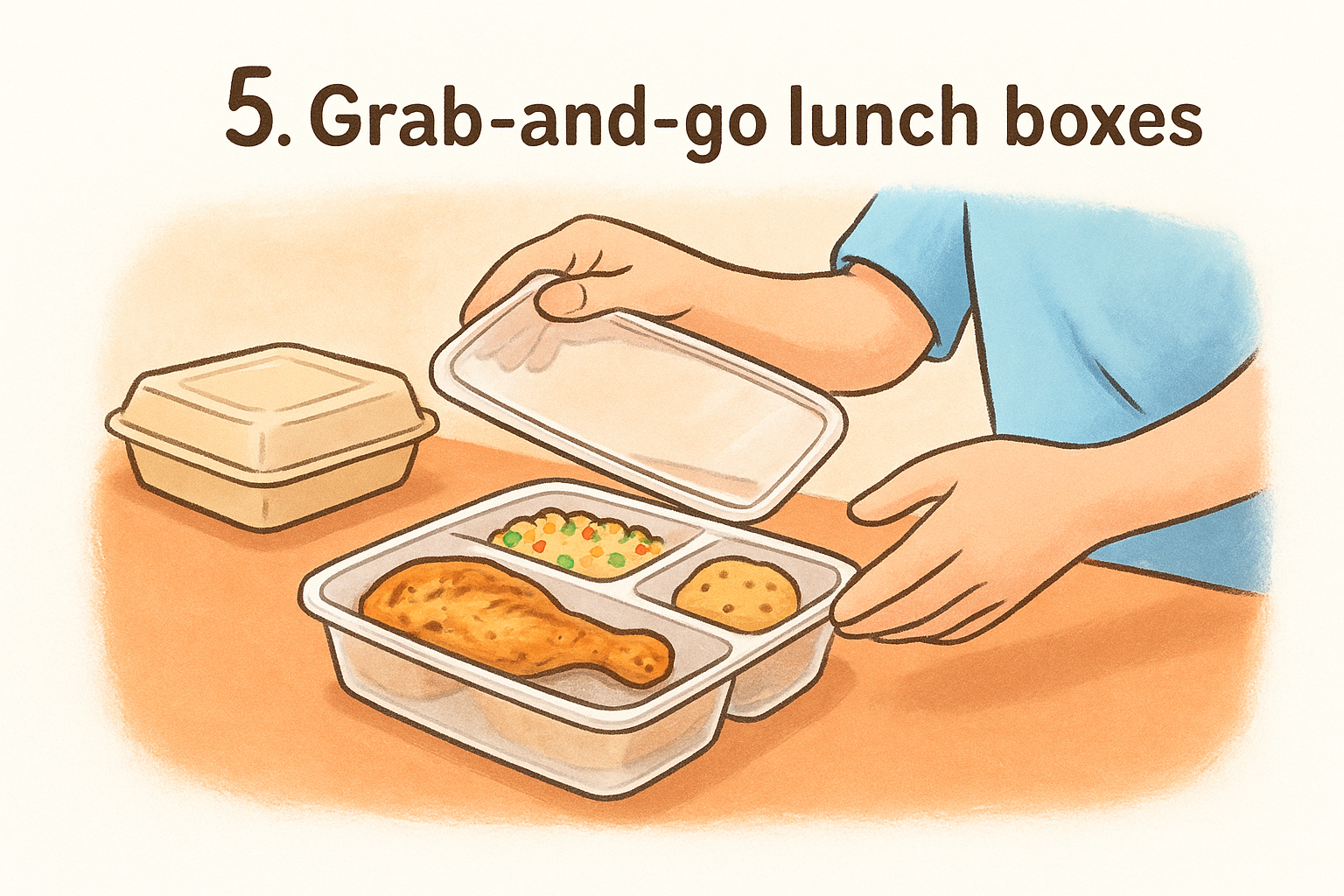
5. Grab-and-go lunch boxes
What it is
A grab-and-go lunch box is a pre-packaged meal, usually a protein, a side, and a small dessert or bread, sealed and ready for pickup without any wait at the counter. Pre-packaged meals work well for restaurants near offices, hospitals, or schools where people have twenty minutes to eat and no patience for a line. You're not building custom orders here, you're stocking a cooler or a pickup shelf with a handful of set combinations that rotate daily or weekly.
Why it works for lunch
Speed is everything with this crowd. A customer walks in, grabs a box, pays, and leaves in under two minutes, which means you can serve far more people during a tight lunch window than any made-to-order format allows. Boxed meals also travel well, so office catering orders and desk lunches become an easy add-on revenue stream beyond your regular walk-in traffic.
A meal that's already packed beats a meal that's still being made when the clock is the customer's real constraint.
Pricing and profit tips
Price boxes between $9 and $12 depending on protein, and keep food cost around 30% by leaning on sides that hold well, like grain salads or roasted vegetables, instead of anything that wilts under plastic. Batch production the morning of service cuts labor cost since one prep cook can assemble dozens of boxes in an hour.
How to execute it
Offer three or four box options daily and list them on your online ordering site with a pickup time slot, so customers reserve a box before they even leave their desk. Update the menu each morning to reflect what's actually packed and ready.
6. Signature sandwich of the day
What it is
A signature sandwich of the day features one standout sandwich built around a premium or seasonal ingredient, served alongside your regular lunch menu rather than replacing it. Think a short rib melt on Monday, a blackened fish po'boy on Wednesday, or a roasted vegetable panini on Friday. Named sandwiches give the dish personality, so customers remember it and ask for it by name instead of pointing at a laminated menu.
Why it works for lunch
Sandwiches move fast because they're handheld, mess-free at a desk, and simple to eat during a thirty-minute break. Rotating the star sandwich daily keeps your regular lunch crowd from getting bored while your core menu stays untouched, which means no extra prep list beyond one new item. It also gives your kitchen a low-risk way to test ingredients before committing them to the permanent menu.
One well-built sandwich can carry your whole lunch rush if it's fast, memorable, and different every day.
Pricing and profit tips
Price the daily sandwich $1-$2 above your standard lineup, landing around $10-$12, since the novelty and premium ingredient justify the bump. Keep food cost near 30% by rotating in proteins you're already buying in bulk for dinner service, which cuts waste and avoids ordering a specialty item for one sandwich alone.
How to execute it
Post the day's sandwich on your online ordering homepage first thing in the morning, ideally with a photo, since visuals sell sandwiches faster than a text description ever will. Train your line to build it in under three minutes, and pull it from the menu the moment you're out of the featured ingredient rather than substituting quietly.
7. Global flavors wrap special
What it is
A global flavors wrap special rotates through international fillings wrapped in a warm tortilla or flatbread, think Korean bulgogi, Mediterranean falafel, or Indian-spiced chicken tikka, each served with a matching sauce and a small side. Rotating cuisines keep the format familiar while the flavor profile changes weekly, so you're not asking your kitchen to learn a whole new cuisine, just swap the filling and sauce inside a format you already run efficiently.
Why it works for lunch
Wraps travel well, eat clean at a desk, and finish in one hand, which makes them a natural fit for anyone squeezing lunch into a short break. Introducing a new cuisine each week also taps into the same curiosity that drives food trucks and pop-ups, giving your regulars a reason to try something new without leaving their usual spot. This is one of the easier restaurant lunch specials ideas to test since it reuses existing prep and equipment.
A wrap that changes flavor weekly keeps regulars curious without ever changing your prep line.
Pricing and profit tips
Price the wrap at $9-$11 and pair it with a small side, like rice or slaw, to round out the plate without adding much labor. Keep food cost around 30% by choosing proteins and sauces you can batch-prep in advance, and rotate in cheaper cuts when the featured cuisine allows it.
How to execute it
Post the week's flavor on your online ordering site with a short description of the cuisine it draws from, since context sells unfamiliar dishes faster than a name alone. Train staff to explain the wrap in one sentence if a customer asks.
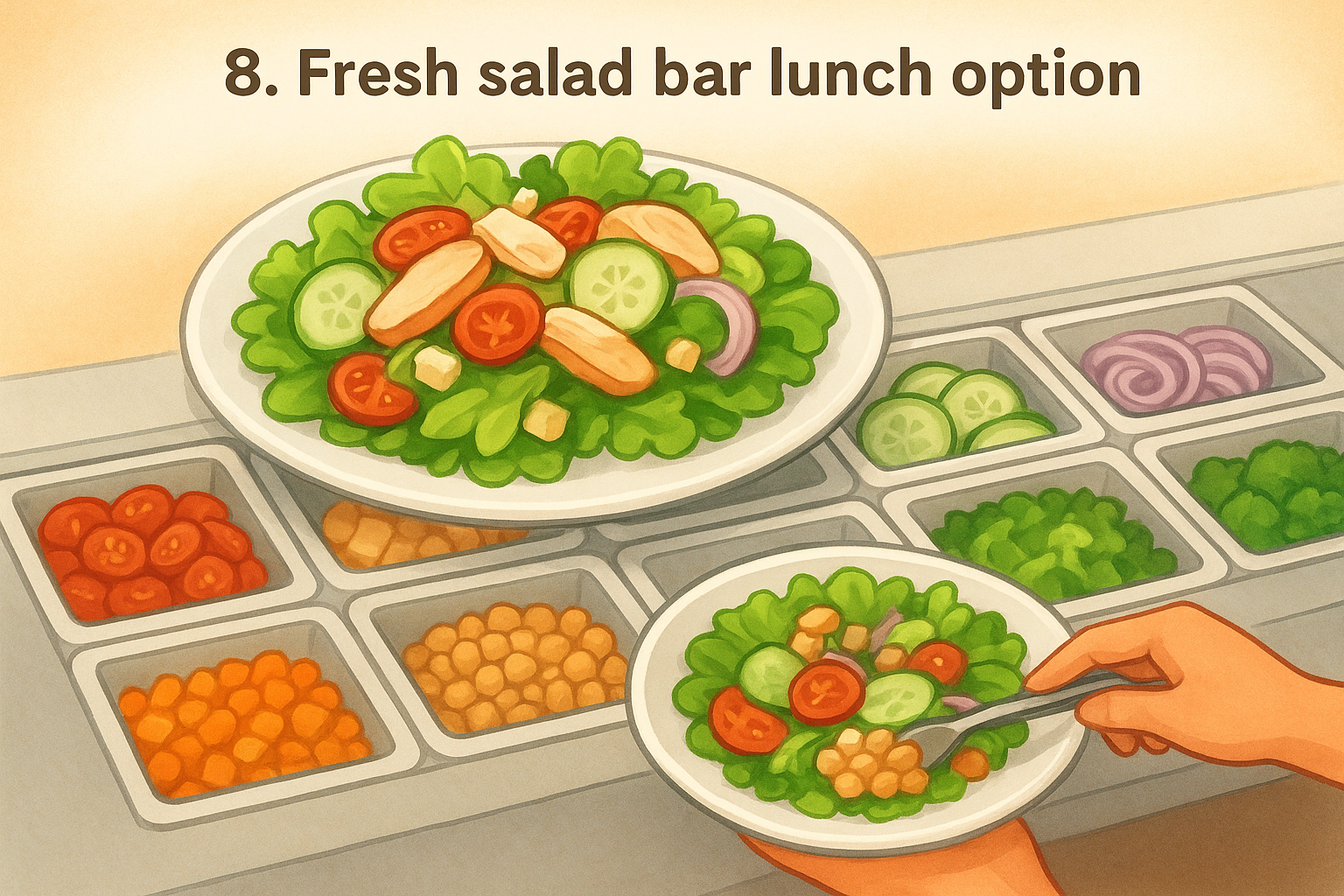
8. Fresh salad bar lunch option
What it is
A fresh salad bar lunch option gives customers a base of greens plus a lineup of proteins, cheeses, and toppings they build themselves, priced as a flat plate or by weight. Unlike a bowl bar built around grains and international flavors, this format leans into lighter fare for guests who want something crisp and simple rather than a heavier, carb-forward meal. You're stocking a cold station instead of running a hot line, which changes your labor and prep needs completely.
Why it works for lunch
Guests watching calories or just craving something fresh gravitate toward a salad bar because it feels like a healthier choice than a sandwich or a hot plate. Assembly happens fast since almost everything sits pre-chopped and ready, so a line of five people moves through in minutes rather than waiting on cooked-to-order items. This format also draws a health-conscious crowd that might otherwise skip your restaurant entirely for a chain salad shop.
A salad bar sells speed and health in the same bite, which is exactly what a midday crowd wants.
Pricing and profit tips
Charge a flat rate around $9-$11 for unlimited toppings on one base, or price by weight if your volume supports a scale at the register. Keep food cost near 28% since produce runs cheaper than proteins, and limit premium add-ons like grilled shrimp or avocado to a $1-$2 upcharge.
How to execute it
Chop and portion toppings each morning so nothing looks wilted by 1 p.m., and swap out any item that sits longer than four hours. List the build-your-own format on your online ordering page so customers select toppings ahead of arrival, cutting line time even further.
9. Mini pizza and flatbread special
What it is
A mini pizza and flatbread special shrinks your pizza offering down to a personal-size flatbread topped with two or three ingredients, sold as a fast, individual lunch item instead of a full pie meant for sharing. Personal-size portions mean one guest orders exactly what they want without splitting a large pizza with coworkers who want different toppings. You're using the same dough and oven you already run for dinner, just baking smaller and faster.
Why it works for lunch
Flatbreads bake in under six minutes, which keeps ticket times short even when your kitchen is also handling dinner prep in the background. Guests like the idea of a personal pizza because it feels indulgent without the guilt of finishing a full-size pie alone, and the format photographs well for social posts, which brings free marketing every time someone posts their lunch. Fast bake times make this one of the easier specials to run without adding a dedicated station.
A personal-size flatbread turns your pizza oven into a lunch machine instead of just a dinner tool.
Pricing and profit tips
Price each flatbread between $8 and $10 with two toppings included, then charge $1 for each extra. Keep food cost around 28-30% since dough and cheese run cheap, leaving room for a pricier topping like prosciutto or arugula without hurting margin.
How to execute it
Offer three fixed combinations plus a build-your-own option so orders move fast without overwhelming your kitchen. List the combos with photos on your online ordering menu, since flatbreads sell largely on how they look.
10. Brunch-for-lunch menu
What it is
A brunch-for-lunch menu extends breakfast staples like egg sandwiches, avocado toast, and breakfast burritos into the noon hour instead of cutting them off at 11 a.m. Late-morning cravings don't disappear just because the clock hits noon, and plenty of guests would rather order a fluffy omelet plate than another sandwich. This special works best as a scaled-down version of your breakfast menu rather than a full rebuild, so you're reusing ingredients you already stock.
Why it works for lunch
Office schedules push a lot of people's actual "morning" meal into the 11 a.m. to 1 p.m. window, especially anyone who skipped breakfast for a meeting. Keeping brunch items alive later captures that crowd before they settle for a granola bar at their desk. It also differentiates you from every lunch spot serving the same sandwiches and salads, since breakfast-style dishes rarely show up on a competitor's midday menu.
Extending brunch past noon lets you feed a crowd that every other lunch spot ignores.
Pricing and profit tips
Price brunch-for-lunch items between $9 and $13, since eggs, potatoes, and bread carry a low food cost typically under 25%. That margin gives you room to bundle a coffee or juice into the price without hurting profitability.
How to execute it
Run this special only until 2 p.m. so it doesn't compete with your regular dinner prep timeline. List it as a distinct section on your online ordering menu labeled "Brunch Hours" so customers know exactly when the window closes, and cut off online orders fifteen minutes before the kitchen actually stops serving it.
11. Soup and half-salad combo
What it is
This combo swaps the sandwich half from item two for a small salad, pairing a cup of soup with a side-size portion of greens for one set price. Lighter pairing appeals to guests who want something warm but don't want bread or heavy carbs weighing them down before an afternoon back at a desk. You're reusing your existing soup rotation and salad bar toppings, so there's no new prep list beyond portioning smaller bowls.
Why it works for lunch
Guests who skip the sandwich combo entirely because they're avoiding carbs or just want something fresher finally have an option that still feels substantial. Combining warm and cold elements in one plate also satisfies two cravings at once, which keeps people from ordering a soup alone and leaving hungry an hour later. This combo format rounds out your lunch menu so you're not only offering heavy or only offering light options.
Pairing warm and cold in one combo covers cravings a single dish never could.
Pricing and profit tips
Price the pairing at $8-$10, using a smaller salad portion than your full salad bar plate to keep food cost near 27-30%. Rotate the soup weekly while keeping the salad base consistent so prep stays predictable across the week.
How to execute it
Portion soup and salad into matching to-go containers each morning so the combo assembles in under a minute at pickup. List it on your online ordering menu right next to the sandwich combo, letting customers pick whichever pairing fits their mood that day.
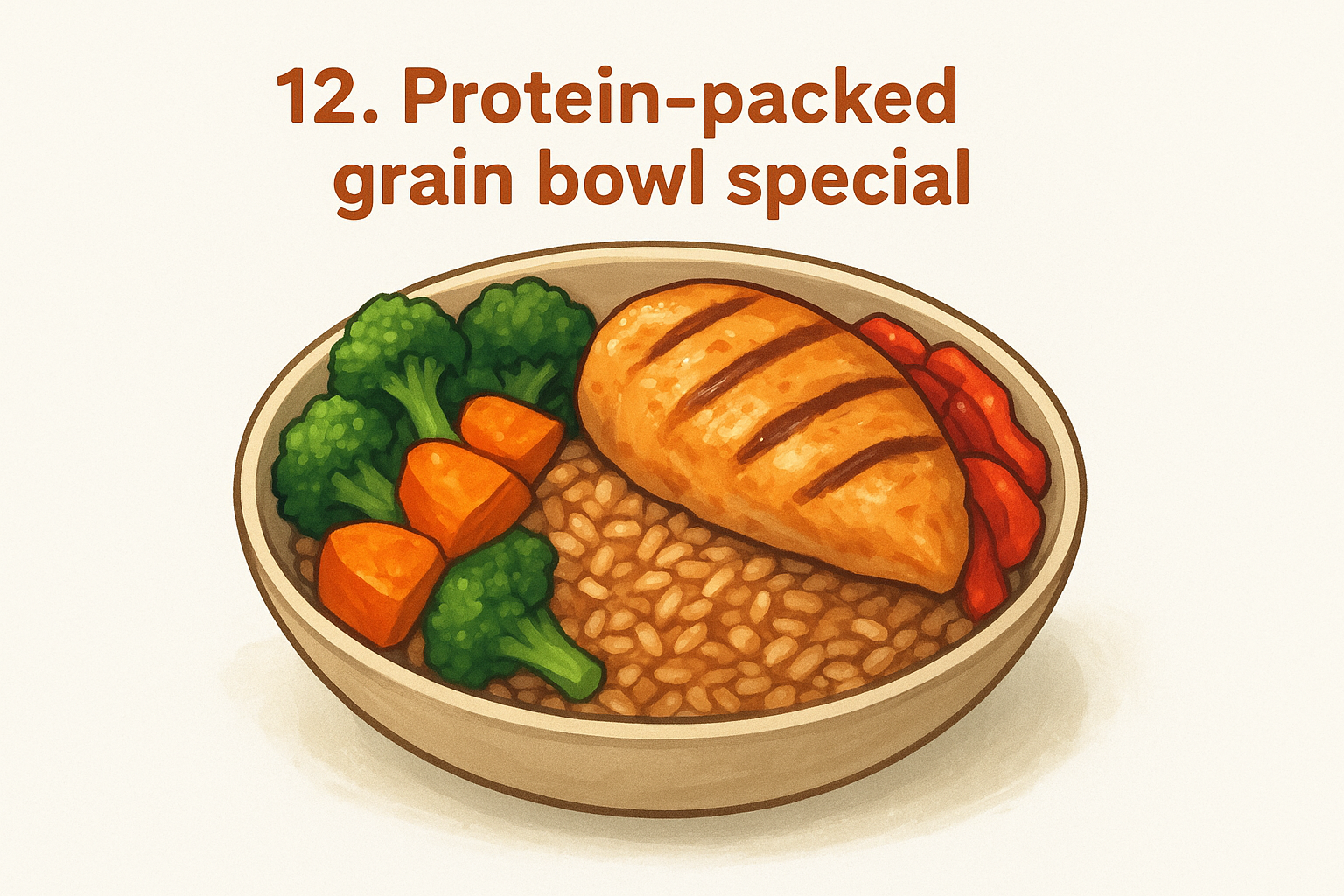
12. Protein-packed grain bowl special
What it is
This special is a fixed, chef-curated bowl built around one high-protein centerpiece, like grilled chicken thighs, seared salmon, or marinated steak, layered over a grain like farro or brown rice with roasted vegetables. Unlike the build-your-own bowl bar in item one, this version is a single set combination you design and price once, which keeps prep tighter and lets you market it as a specific, complete meal rather than a customizable option. Fixed grain bowls appeal to a slightly different guest, someone who wants a decision made for them rather than a menu of choices to sort through on a lunch break.
Why it works for lunch
Guests chasing a high-protein, lower-carb meal often struggle to find something at a typical lunch counter beyond a plain grilled chicken salad. A dedicated grain bowl fills that gap and pulls in the gym crowd, the meal-prep-minded office worker, and anyone managing a specific diet. Because the combination is fixed, kitchen consistency stays high, ticket times shrink, and you avoid the slower assembly line that a full build-your-own bar requires.
A fixed, protein-forward bowl wins guests who want a decision made for them, not another menu to sort through.
Pricing and profit tips
Price the bowl between $12 and $15 depending on the protein, since salmon and steak carry a higher food cost than chicken or tofu, typically running 32-35%. Rotate the protein weekly to manage cost and keep the grain and vegetable base fixed for predictable prep.
How to execute it
Batch-cook the grain and roasted vegetables each morning, then finish proteins to order in small runs to protect quality. List the bowl on your online ordering menu with protein and calorie counts visible, since this crowd reads labels before they order.
13. Loyalty-driven lunch discount program
What it is
A loyalty-driven lunch discount program rewards regulars with a punch card, points app, or simple "buy nine lunches, get the tenth free" deal tied specifically to your midday menu. Repeat visits matter more here than any single transaction, so the program's whole design pushes someone who already likes you to come back three or four times a week instead of once. This isn't a blanket discount, it's a structured reward that only pays off once a customer builds a habit.
Why it works for lunch
Lunch is the meal people repeat most, since the same office crowd hits the same three or four spots on rotation. A loyalty program gives you a reason to become their default choice instead of one option among several. Habit formation beats a one-time coupon because the discount only lands after real spend, so you're not giving away margin to someone who was never coming back anyway.
A loyalty program built around lunch turns a habit you already benefit from into one that's harder to break.
Pricing and profit tips
Structure the reward so the free item sits at 8-10% of total spend across the punch card cycle, keeping your effective discount far lower than a flat percentage-off deal. Cap the free reward to lower-cost menu items, like a sandwich instead of a steak bowl, to protect margin.
How to execute it
Run the program through your online ordering account so points track automatically instead of relying on paper cards that get lost. Promote it at checkout and in order confirmation emails, since that's when a customer is already thinking about their next visit.
Making lunch specials work for your restaurant
None of these 13 ideas work if customers can't order them fast. A bowl bar or a rotating chef's special only moves the needle when the ordering process itself doesn't create friction, whether that's a slow phone line or a third-party app taking a cut of every ticket. Pick two or three specials from this list that match your kitchen's strengths, price them with the margin guidance above, and give them two weeks before judging results.
The common thread across every winning special is speed, clarity, and a menu that updates itself without you standing over a chalkboard every morning. That's exactly what a branded ordering system should handle for you, letting rotating specials post automatically while you keep full ownership of customer data and margin. If commission fees have been quietly eating into your lunch profits, check our pricing and see what a flat monthly plan actually saves you at midday.