


Average Restaurant Profit Margin: Benchmarks By Type (2026)
Most restaurant owners work long hours, manage tight budgets, and still wonder if their bottom line is where it should be. Understanding the average restaurant profit margin is the first step toward answering that question, and knowing where you stand compared to others in your segment can shape every financial decision you make.
Here's the reality: margins in this industry are thin. But "thin" looks different depending on whether you're running a full-service dining room, a quick-service counter, or a food truck. Benchmarks vary significantly by restaurant type, and comparing yourself to the wrong category can give you a distorted picture of your performance. What matters is knowing your category and identifying the specific cost levers you can actually pull.
One of those levers? How you handle online ordering. Restaurants paying 30% commission fees on every third-party delivery order are handing over revenue that could go straight to their bottom line. That's exactly why we built The Foody Gram, a commission-free online ordering platform that lets restaurants collect orders directly through their own branded website for a flat monthly fee. It's one concrete way to protect margins that are already razor-thin.
This article breaks down current profit margin benchmarks by restaurant type, explains what drives those numbers, and shows you where the real opportunities for improvement are.
Why restaurant profit margins run thin
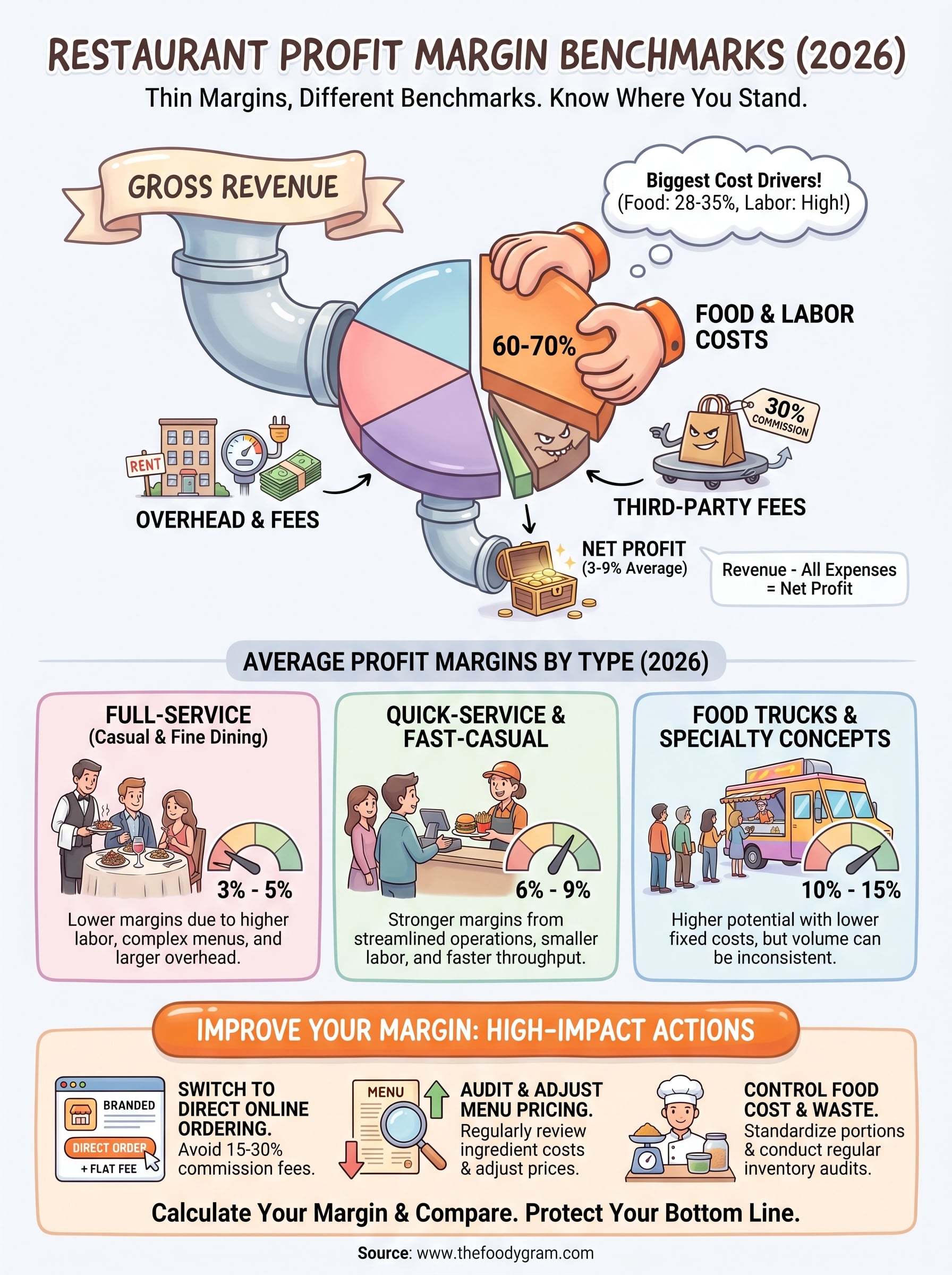
Running a restaurant means juggling multiple cost categories simultaneously, and most of them are large and non-negotiable. Before a single dollar reaches your bottom line, it passes through food costs, labor, rent, utilities, insurance, and equipment expenses. The average restaurant profit margin lands between 3% and 9% for most concepts, and that narrow range reflects how many expense categories compete for your revenue before anything becomes actual profit. Understanding where the money goes is the starting point for changing where it ends up.
Food and labor are the largest cost drivers
Food and labor are the two biggest line items on any restaurant income statement, and together they typically consume 60% to 70% of gross revenue. Food cost alone should ideally sit between 28% and 35% of sales, depending on your concept. But ingredient prices shift with supply chains, seasons, and supplier relationships, meaning that target can move against you without warning.
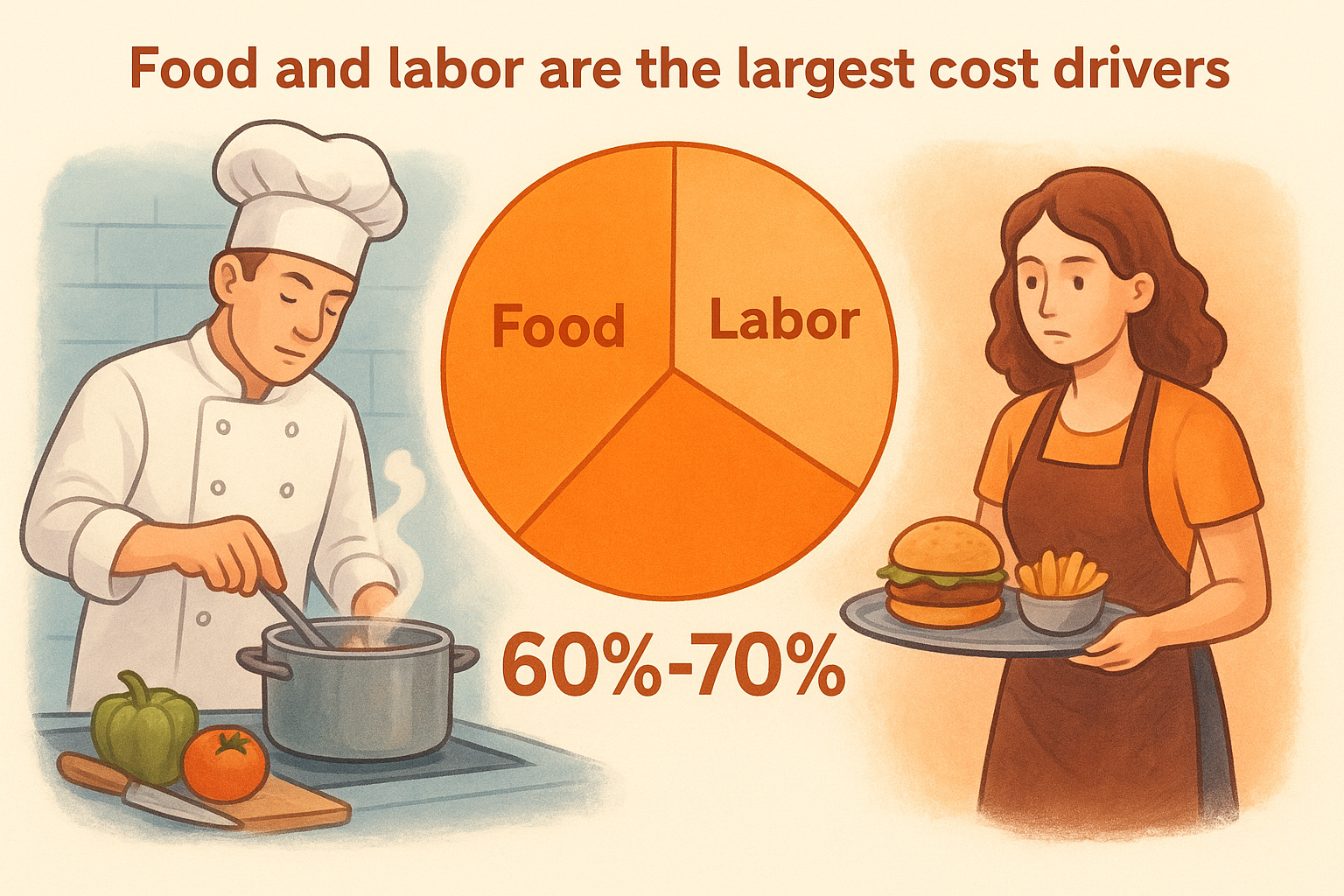
Labor adds another layer of strain, particularly with minimum wage legislation advancing in multiple states and cities over the past several years. Higher payroll costs hit even when customer volume stays flat, which means your labor percentage can climb without any change in your own staffing decisions. When food and labor together exceed 70% of revenue, nearly nothing remains for fixed costs, let alone profit.
If food and labor alone consume 70 cents of every dollar, you have less than 30 cents left to cover rent, utilities, marketing, equipment, and actual profit.
Overhead and third-party fees add up fast
Fixed costs like rent, utilities, and insurance do not shrink when business is slow. A quiet weeknight still carries the full weight of your lease, and commercial kitchen utilities run far higher than most operators expect before opening. Equipment breakdowns add unpredictable expenses on top of already stretched budgets, and in competitive markets, commercial rent has climbed steadily, putting further pressure on operators who locked in leases before rates rose.
Third-party delivery platforms compound the problem by charging commission rates between 15% and 30% on every order they process. On a $40 order, you may send $8 to $12 directly to a platform before factoring in any other expense. That revenue leaves your business entirely. For restaurants operating with margins already under 10%, paying 30% commission on delivery volume can turn what looks like a busy channel into one that actively reduces profitability rather than supporting it.
Average restaurant profit margin benchmarks for 2026
Profit margins vary widely depending on your restaurant format, and comparing your numbers to the wrong benchmark leads to poor conclusions. The average restaurant profit margin across the industry sits between 3% and 9%, but that range conceals meaningful differences between business types. Knowing where your specific concept falls gives you a far more accurate read on your financial health and helps you set realistic improvement targets.
Full-service restaurants
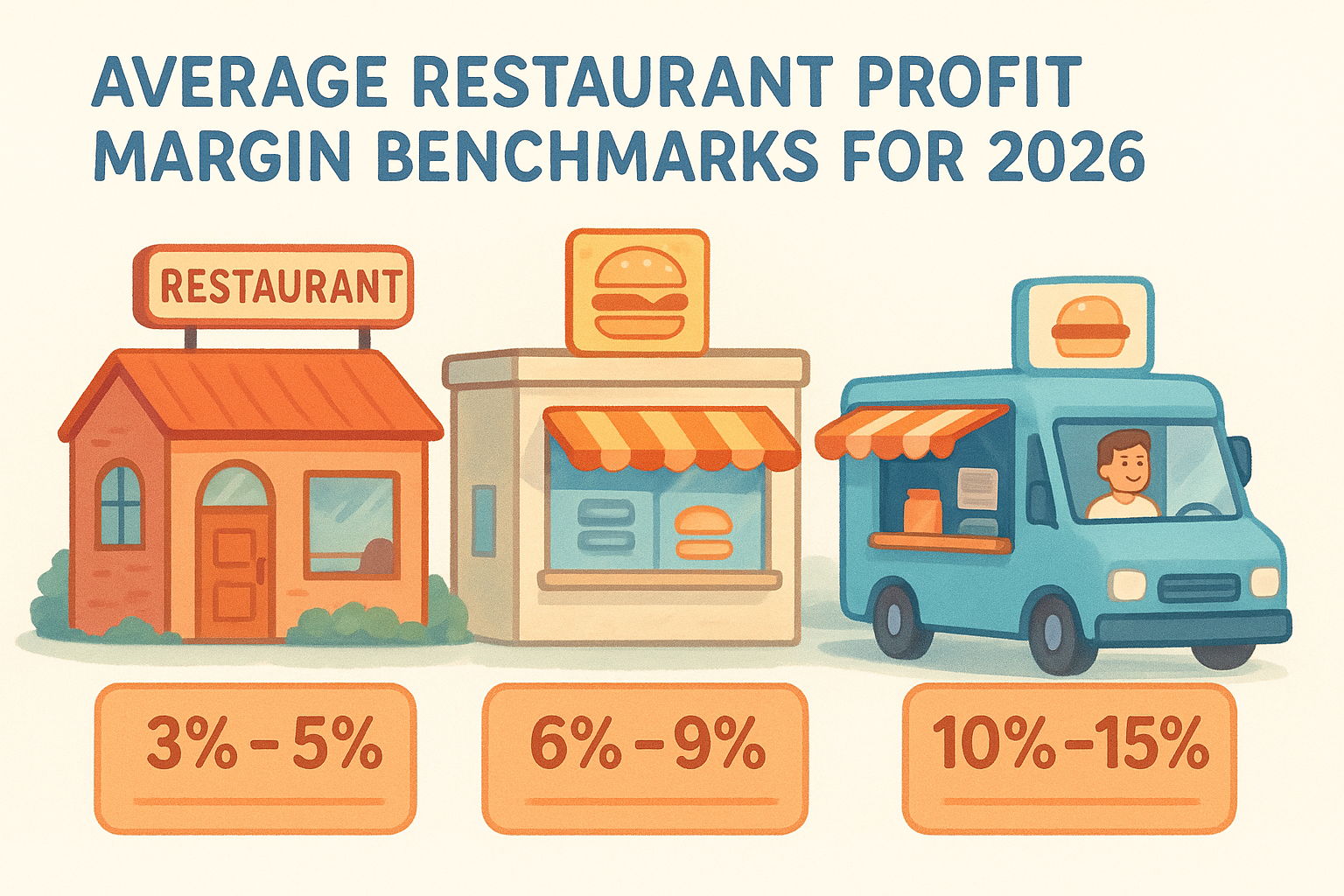
Full-service restaurants, including casual dining and fine dining, tend to operate at the lower end of the margin spectrum. Typical net profit margins for full-service concepts fall between 3% and 5%. Higher labor costs from larger front-of-house teams, more complex menus with elevated food costs, and significant overhead from larger physical spaces all compress margins before you reach profit. Fine dining specifically can dip below 3% due to premium ingredients and high staff-to-guest ratios.
The more complex your service model, the more cost categories compete for your revenue before anything becomes actual profit.
Quick-service and fast-casual restaurants
Quick-service and fast-casual concepts generally achieve stronger margins than full-service. Streamlined operations, smaller labor requirements, and faster throughput allow these restaurants to land between 6% and 9% net profit margin. Simpler menus reduce food waste and preparation costs, and lower overhead per transaction means more revenue survives each sale. These structural advantages make fast-casual one of the more financially resilient formats in the current market.
Food trucks and specialty concepts
Food trucks operate with significantly lower fixed costs, which can push margins higher, sometimes reaching 10% to 15% when managed well. Removing a commercial lease eliminates one of the heaviest overhead burdens entirely. That said, inconsistent booking volume, fuel costs, and equipment repairs can compress those margins quickly. Ghost kitchens and virtual brands follow a similar logic, with strong margin potential when operators avoid heavy reliance on third-party delivery commissions.
How to calculate your restaurant profit margin
Knowing the average restaurant profit margin for your segment only helps if you can compare it accurately to your own numbers. Calculating your margin is straightforward, and you only need two figures to get started: your total revenue and your total expenses for a given period.
The basic profit margin formula
Your net profit margin is the percentage of revenue that remains after you subtract all costs. The formula looks like this:
Net Profit Margin (%) = (Net Profit / Total Revenue) x 100
Net profit is simply your total revenue minus all expenses, including food costs, labor, rent, utilities, marketing, equipment, and any platform fees. For example, if your restaurant brings in $80,000 in monthly revenue and your total expenses are $74,400, your net profit is $5,600. Dividing $5,600 by $80,000 and multiplying by 100 gives you a 7% net profit margin.
Running this calculation monthly rather than annually catches cost shifts early, before they compound into a larger problem.
What counts as revenue and expenses
Revenue includes all income your restaurant generates, covering dine-in sales, takeout, delivery, catering, and any additional income streams. Do not subtract fees before recording revenue. Instead, track those platform commissions and payment processing fees as separate expense line items so you can see exactly what each channel costs you.
Your expense list should be exhaustive. Include food and beverage costs, labor and payroll taxes, rent and utilities, insurance, equipment maintenance, marketing spend, software subscriptions, and any third-party delivery commissions. Leaving out expense categories inflates your calculated margin and gives you a false read on your actual financial position. Accurate inputs produce accurate numbers, and accurate numbers lead to better decisions.
What impacts restaurant profit margin most
Several variables shape your average restaurant profit margin, and some carry far more weight than others. Identifying which factors affect your numbers most directly lets you focus your energy on changes that actually move the needle rather than adjustments that produce minimal returns.
Menu pricing and food cost control
Your menu is one of the most powerful tools you have for protecting margin. Underpriced menu items quietly drain profit on every single sale, and many operators avoid raising prices out of fear of losing customers. But a strategic, incremental price adjustment on high-volume items often goes unnoticed by guests while meaningfully improving your margins. You also need to track your food cost percentage for each menu item individually, not just as a blended average, because a few poorly priced dishes can distort your overall numbers significantly.
Ingredient waste compounds the problem. Portion inconsistency and over-ordering both push food costs above your target range without any corresponding increase in sales. Regular inventory audits and tight portion controls give you direct visibility into where food dollars disappear before they convert to revenue.
Small pricing adjustments on your top-selling items almost always generate more margin impact than dramatic cuts to less popular dishes.
Your online ordering channel mix
The channels through which you collect orders have a direct and measurable effect on profitability. Accepting orders through third-party platforms that charge 15% to 30% commission means a substantial portion of your delivery revenue leaves your business on every transaction. Shifting even a portion of that volume to direct online ordering through your own branded website removes that expense entirely, which flows straight to your bottom line. For restaurants doing consistent delivery volume, the channel mix between commission-based platforms and direct ordering often represents one of the largest single levers available for improving profit margin.
How to improve your restaurant profit margin
Improving your average restaurant profit margin starts with targeting the cost categories that absorb the most revenue. You do not need to overhaul every aspect of your business at once. Instead, focus on two or three high-impact areas where small, consistent changes compound into meaningful results over time.
Switch to direct online ordering
Third-party delivery platforms charge between 15% and 30% commission on every order they process, and that revenue does not return to you. Replacing even a portion of that volume with direct orders through your own branded website eliminates the commission expense entirely, which flows straight to your bottom line rather than to a platform. Some platforms charge a flat monthly fee instead of per-order commissions, so your profitability scales with your volume rather than shrinking alongside it.
Moving just 20% of your delivery orders to a direct channel can recover thousands of dollars in annual margin depending on your current order volume.
Audit and adjust your menu pricing
Most restaurant operators set prices once and leave them in place far too long. Ingredient costs, labor rates, and overhead expenses all shift regularly, but menus rarely reflect those changes. Reviewing your pricing every quarter and adjusting your top-selling items by even a small percentage can have an outsized effect on your monthly net profit.
Alongside pricing, food waste and portion control deserve direct attention. Inconsistent portioning means you pay for ingredients that never generate revenue, and over-ordering creates spoilage that compounds the problem. Running a weekly inventory count and standardizing portion sizes across your kitchen gives you accurate food cost data and reduces unnecessary spending without changing a single menu item or cutting any staff.
Next steps
Your average restaurant profit margin is not fixed. The benchmarks in this article give you a reference point, but your actual margin depends on the specific decisions you make around pricing, costs, and how you collect orders. Start by running your own profit margin calculation using the formula covered above, then compare your number against the benchmark for your restaurant type. That comparison tells you whether you have a gap to close and roughly how large it is.
From there, focus on the cost categories with the most room to move. Menu pricing and your online ordering channel mix are two areas where many restaurants leave significant money on the table. If you are currently paying commission fees to third-party platforms on every order, switching to direct ordering removes that expense immediately. See how The Foody Gram's commission-free plans are priced and calculate what you could keep on your next delivery order.