


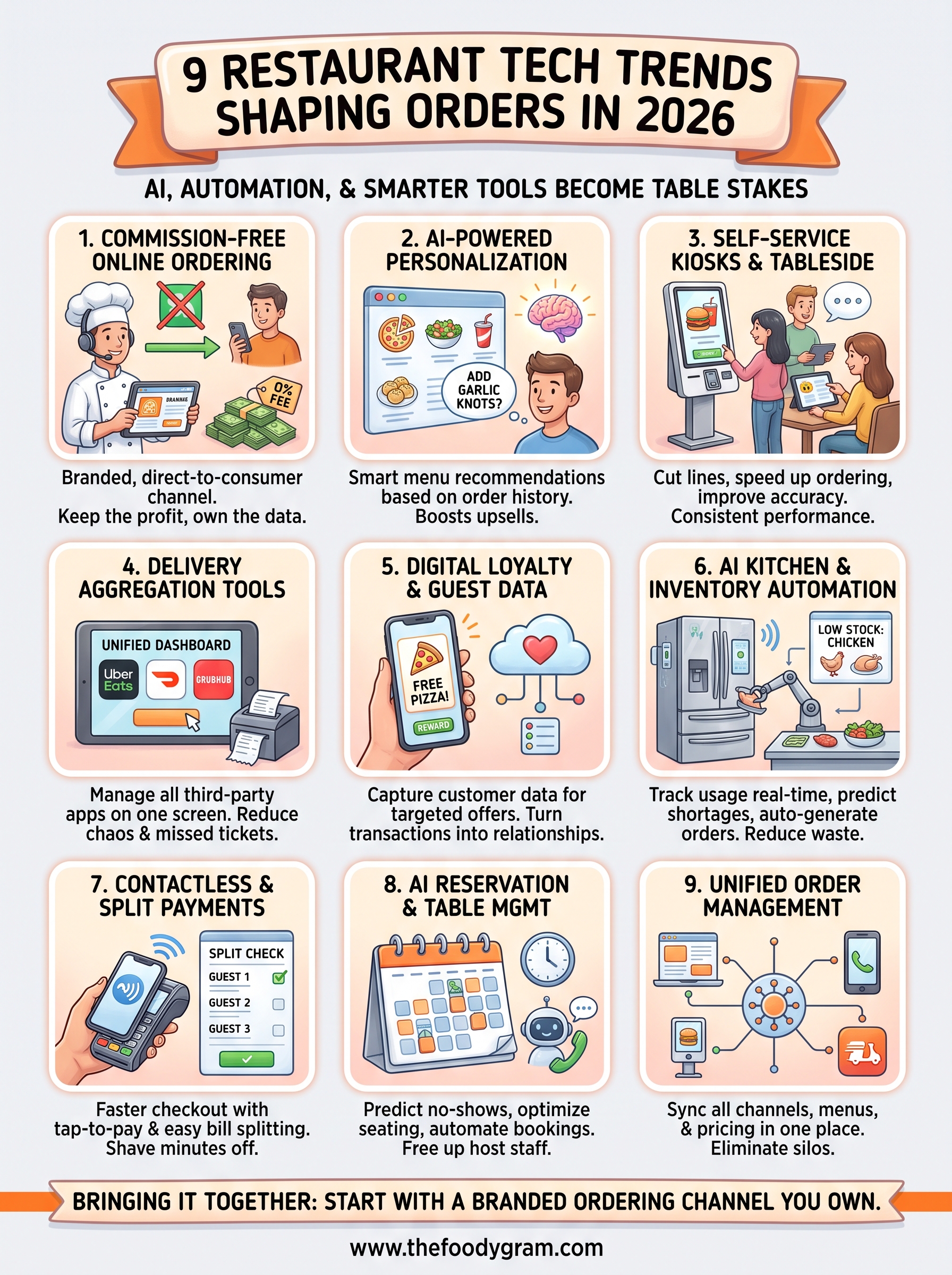
9 Restaurant Technology Trends Shaping Orders in 2026
Walk into any kitchen right now and you'll see a tablet propped next to the fryer, a kiosk by the door, and a phone buzzing with orders from three different apps. Restaurant technology trends move fast, and 2026 is pushing that pace even harder as AI, automation, and smarter ordering tools stop being nice-to-haves and become table stakes for staying competitive.
If you're trying to figure out which of these shifts actually matter for your restaurant, the short answer is this: the trends worth your attention are the ones that cut labor strain, speed up order accuracy, and put more of each sale back in your pocket instead of a third-party app's. That means AI-driven order automation, self-service kiosks, and smarter digital menu management are no longer experimental, they're becoming standard operating equipment.
In this list, we'll walk through nine technology trends reshaping how restaurants take and manage orders this year, from predictive inventory tools to commission-free ordering platforms that let you own your customer data instead of renting access to it. Whether you run a single pizzeria or a small group of locations, you'll get a clear picture of what's worth adopting now and what can wait.
1. Commission-free online ordering websites
Commission-free ordering websites give restaurants a branded, direct-to-consumer channel for taking orders, no middleman skimming 20-30% off every ticket. Instead of routing hungry customers through Uber Eats or DoorDash, you send them to a website that looks and feels like your restaurant, not a marketplace stuffed with competitors' ads. This is the trend most owners ask about first in 2026, because it directly addresses the two biggest complaints in the industry: shrinking margins and zero ownership of customer data.
How it works
A provider like The Foody Gram builds you a mobile-optimized website with integrated ordering, then processes payments straight to your bank account instead of holding funds in an app wallet. Orders land on a real-time dashboard, print as kitchen tickets, and sync with pickup, delivery, and pre-order options. Menu updates typically go through managed support rather than DIY tools, so you're not fumbling with a backend every time a price changes.
Owning the order means owning the customer, and that's worth more than any single transaction.
Who it's for
This fits independent restaurants and small groups (1-3 locations) that already have a customer base and want to stop bleeding margin on repeat orders. It's especially useful for pizzerias, ethnic cuisine spots, and fast-casual chains where regulars order weekly and the commission math adds up fast.
What it costs
Most commission-free platforms charge a flat monthly fee instead of per-order commissions, which is the entire point.
| Feature | Typical Range |
|---|---|
| Monthly subscription | $159-$199 |
| Setup fees | Often $0 |
| Contract length | No contract, cancel anytime |
| Website turnaround | 48-72 hours |
| Money-back guarantee | 45 days |
Compare that flat fee against what a $40 average order times 100 weekly orders costs in commission, and the savings become obvious within the first month. No per-transaction cut means every order you close is more profitable than the one before it.
2. AI-powered personalization and menu recommendations
Personalization engines watch what a customer orders, when they order it, and how they browse your menu, then use that data to suggest add-ons or reorder favorites automatically. This is one of the fastest-moving restaurant technology trends heading into 2026, because it turns a static online menu into something that actually sells for you instead of just listing items.
How it works
AI tools plug into your ordering platform and scan past order history, time of day, and even weather data to surface relevant suggestions like "add garlic knots" or "you usually order this on Fridays." Some systems reorder menu categories dynamically based on what's trending that week, nudging slow-moving items or pushing high-margin dishes to the top without you touching a dashboard.
A menu that learns from your customers sells more than one that just sits there.
Who it's for
Restaurants with a steady stream of repeat online orders benefit most, especially fast-casual spots and pizzerias where regulars have predictable habits. If your ordering volume is still low, the AI has too little data to make useful predictions, so this trend pays off faster once your commission-free ordering channel already has traction.
What it costs
Pricing varies widely: some platforms bundle personalization into existing ordering software, others charge $50-$150 monthly as an add-on module. Before paying extra, check whether your current ordering provider already offers basic recommendation features built in.
3. Self-service kiosks and tableside ordering
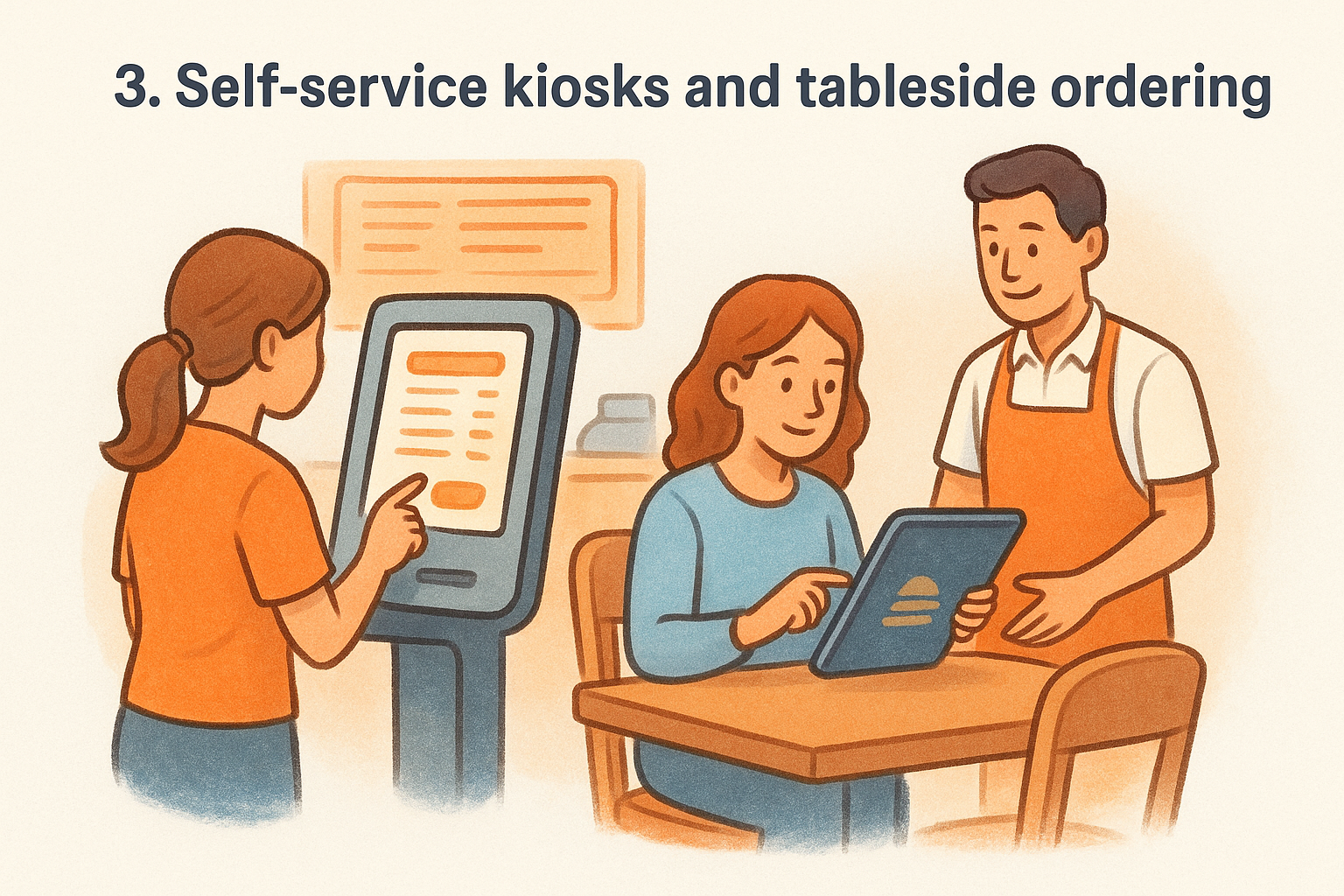
Self-service kiosks let customers build and pay for their own order at a counter or table, cutting the line and taking pressure off your front-of-house staff during rush hours. Tableside ordering tablets do the same job from the seat, letting diners order apps, drinks, and desserts without waving down a server. Both count among the restaurant technology trends owners adopt specifically to shrink wait times, not to replace staff entirely.
How it works
Kiosks run a simplified version of your menu with upsell prompts built in, guiding customers through modifiers and combos the same way a trained cashier would. Tableside tablets sync directly with your kitchen printer, so an order placed at table 12 hits the line the same second as one placed at the counter. Most setups integrate with your existing point-of-sale system rather than replacing it, which keeps reporting and inventory tracking in one place.
A kiosk doesn't get tired at 7pm on a Friday, and that consistency shows up in your order accuracy.
Who it's for
High-volume fast-casual restaurants, pizzerias with heavy walk-in traffic, and counter-service concepts see the fastest payoff here. Full-service dining rooms benefit too, mainly for drink and dessert upsells rather than full meal ordering.
What it costs
Hardware runs anywhere from $1,200 to $3,500 per kiosk unit, plus a monthly software licensing fee that typically lands between $50 and $100 per terminal. Tableside tablets cost less upfront but add up fast across a full dining room, so weigh unit count against your average table turnover before committing.
4. Third-party delivery aggregation and management tools
Aggregation tools pull orders from Uber Eats, DoorDash, Grubhub, and other apps into one screen so your kitchen isn't juggling five tablets during a Friday rush. These platforms don't remove commission fees, but they cut the chaos that comes with running multiple delivery apps side by side, which matters when order volume climbs and staff start missing tickets.
How it works
An aggregator connects to each delivery app's API and funnels every incoming order into a single tablet or point-of-sale integration, often printing one unified kitchen ticket regardless of source. Some tools add analytics that show which app drives the most profit after commissions, helping you decide where to keep a presence and where to pull back. Menu changes sync across every connected app at once instead of requiring manual updates on each platform separately.
Fewer screens in the kitchen means fewer missed orders, even if the commission checks still sting.
Who it's for
Restaurants that rely heavily on delivery apps for volume, but aren't ready to drop them entirely, get the most value here. It's a practical middle step for owners building toward a commission-free ordering setup without cutting off existing delivery revenue overnight.
What it costs
Most aggregation tools charge $50-$200 monthly depending on how many delivery platforms and locations you connect, on top of whatever commissions those apps already take.
5. Digital loyalty programs and guest data platforms
Loyalty programs built into your ordering platform track every visit, every reorder, and every dollar spent, turning scattered transactions into a real customer database you actually own. This matters because third-party delivery apps hoard that data for themselves, leaving you with zero insight into who your regulars are or what they order most.
How it works
A guest data platform captures order history, contact details, and visit frequency automatically each time someone checks out on your website or app. Points, punch cards, or spend-based rewards trigger automatically, and the system can send targeted offers like "come back for 15% off" to guests who haven't ordered in three weeks. Some platforms sync this data with email and text marketing tools, so you're not exporting spreadsheets by hand.
Every order you process without owning the customer's contact info is a missed chance to bring them back.
Who it's for
Restaurants with steady repeat traffic, especially pizzerias, family-owned spots, and neighborhood favorites, get the biggest lift here. If most of your business already comes through commission-free ordering channels, layering loyalty on top compounds the value since you're capturing first-party data instead of feeding it to an app.
What it costs
Many ordering platforms bundle basic loyalty features into the existing monthly fee, while standalone guest data platforms typically run $30-$100 monthly depending on contact list size and marketing automation features included.
6. AI-driven kitchen and inventory automation
Kitchen automation tools track ingredient usage in real time, predict when you'll run low on mozzarella or chicken thighs, and auto-generate purchase orders before you ever notice the shortage. This is one of the quieter restaurant technology trends for 2026, but it hits margins hard because food waste and emergency supplier runs eat profit just as fast as commission fees do.
How it works
Sensors, POS integrations, or manual recipe inputs feed an inventory automation platform with data on every ingredient that leaves the walk-in. The system cross-references sales velocity against current stock, flags items trending toward a shortage, and can place reorders automatically with approved vendors. Some tools also predict prep quantities for the next shift based on historical sales patterns, cutting down on over-prepped food that gets tossed at close.
The restaurants losing the least money aren't the busiest ones, they're the ones that waste the least food.
Who it's for
Multi-location groups and high-volume kitchens benefit most, since manual inventory counts get unreliable fast once you're managing several walk-ins. Single-location restaurants with tight margins on perishables, like seafood or produce-heavy menus, also see quick returns here.
What it costs
Standalone inventory automation platforms typically run $100-$300 monthly depending on location count and how deeply the system integrates with your existing POS and supplier network. Some point-of-sale providers bundle basic inventory tracking into their existing fee, so check there before adding a separate subscription.
7. Contactless and split payment technology
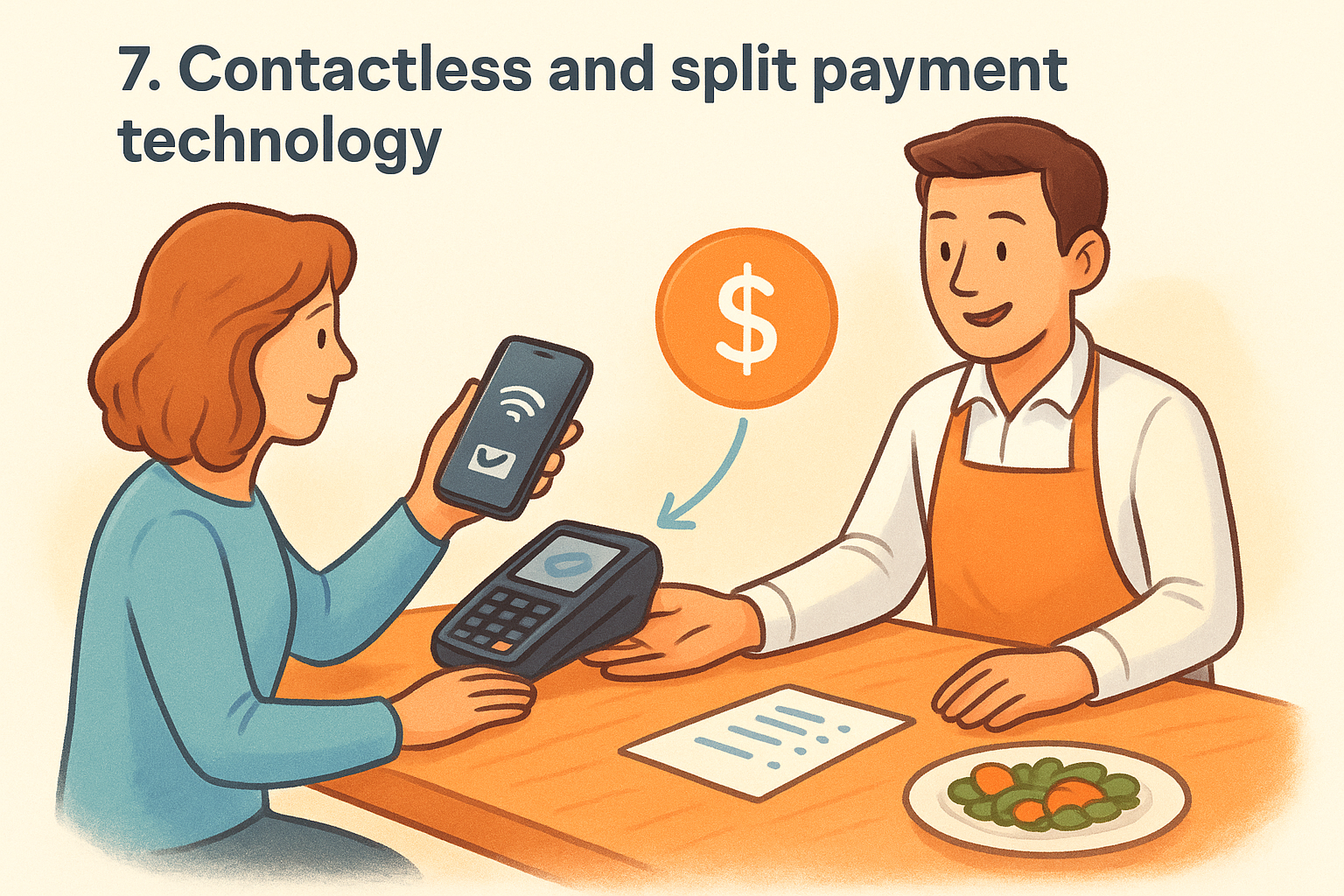
Contactless payment lets a customer tap a card or phone at the counter or table instead of handing over cash or waiting on a signature. Split payment tools handle the messier part of dining out, letting a table of six divide one check by item, by percentage, or evenly without your server doing math on a napkin. Together these tools shave minutes off every transaction, which adds up fast during a packed Friday night.
How it works
Modern point-of-sale terminals now support NFC taps, mobile wallets like Apple Pay and Google Pay, and QR codes that open a payment link straight from a diner's phone. Split payment logic runs through the same terminal or app, letting servers assign items to specific guests or split a total any number of ways before closing the check. Most of these systems sync directly with your existing order management platform, so tips and totals land in the same reporting dashboard you already check daily.
Faster checkout isn't a luxury anymore, it's what keeps a line moving on a Friday night.
Who it's for
Full-service restaurants with group dining traffic benefit the most, since split checks are where old-school terminals slow everything down. Quick-service spots with high tap-to-pay volume also see faster turnover at the register.
What it costs
Most payment processors bundle contactless and split payment features into standard card processing rates, typically 2.6%-3.5% per transaction, with no extra hardware fee beyond a modern terminal costing $300-$800 upfront.
8. AI reservation and table management systems
Reservation software has moved past a simple phone book of names and times. AI-driven table management systems now predict no-shows, optimize seating based on party size and turn time, and answer booking calls automatically so your host stand isn't buried under ringing phones during a Saturday rush. This is one of the restaurant technology trends that quietly saves labor hours without changing anything the guest actually sees.
How it works
An AI reservation platform pulls booking data from your website, phone line, and third-party apps into one calendar, then uses historical patterns to flag high-risk no-shows and suggest overbooking buffers. Some systems include a voice assistant that answers calls, confirms reservations, and texts reminders automatically, cutting down on the staff hours spent chasing confirmations. Seating logic factors in table size, dietary notes, and average dining duration to keep turnover steady instead of guessing.
A host who isn't stuck on the phone all night can actually greet the guests standing in front of them.
Who it's for
Full-service restaurants with steady reservation volume, especially those juggling large parties or private events, get the most value here. Quick-service and counter spots without a reservation model can skip this one entirely.
What it costs
Most table management software runs $100-$250 monthly depending on party volume and whether voice-answering features are included. Some point-of-sale providers bundle basic reservation tools into existing plans, so check there before paying for a standalone system.
9. Unified, real-time order and menu management platforms
Unified order management pulls every channel, your website, kiosk, delivery apps, and phone-in orders, into one dashboard so nothing gets missed and nobody's juggling five tablets during a rush. This is the trend that ties the other eight together, since restaurant technology trends only pay off when the systems behind them actually talk to each other instead of running in separate silos.
How it works
A unified menu management platform syncs pricing, item availability, and modifiers across every channel at once, so marking a dish sold out on your website also pulls it from delivery apps and kiosk screens instantly. Orders route to one kitchen ticket printer regardless of source, and a real-time dashboard shows sales, wait times, and channel performance side by side. Most platforms integrate directly with your commission-free ordering website and existing POS, so you're not maintaining separate systems for each order source.
The fewer systems your staff has to check, the fewer orders slip through the cracks.
Who it's for
Restaurants running multiple order channels, especially those juggling a branded website alongside delivery apps and in-house dining, get the most value here. Multi-location groups benefit even more, since one dashboard replaces separate logins and reports for every store.
What it costs
Unified platforms typically run $50-$150 monthly per location as an add-on to your existing ordering or POS subscription, though some commission-free providers bundle this functionality into their standard monthly fee at no extra charge.
Bringing these trends together in your restaurant
Nine trends sound overwhelming until you notice they all lean on one foundation: a branded ordering channel you actually own. Kiosks, loyalty data, AI recommendations, and unified dashboards work best when they're feeding a website that puts your restaurant, not a delivery app, at the center of the transaction. Chase every trend at once and you'll burn cash on tools that don't talk to each other. Start with the one that fixes your biggest leak, usually commission fees, then layer in automation as your order volume justifies the cost.
You don't need a tech overhaul this quarter. You need a plan that starts with owning your orders and builds outward from there. If commission fees are the trend costing you the most right now, check our pricing and see what a flat monthly fee could save you compared to what you're handing over per order today.