


7 Smart Ways On How To Grow Restaurant Sales For More Profit
Most restaurant owners know how to cook great food. Fewer know how to grow restaurant sales without burning through cash on ads or handing over 30% of every order to a third-party delivery app. The gap between a full dining room and a profitable one is often wider than it looks, and closing it takes more than just putting out a good menu.
The truth is, growing sales comes down to systems, how you attract new customers, how often existing ones come back, and how much they spend each time. Get those three things right, and revenue follows. Get them wrong, and you're stuck working harder for margins that keep shrinking.
That's exactly why we built The Foody Gram: to give restaurant owners a commission-free online ordering platform that puts more revenue back in your pocket. But a great ordering system is only one piece of the puzzle. Below, we're breaking down seven practical strategies to help you increase sales, keep more profit, and build a restaurant that grows on your terms.
1. Switch to commission-free direct online ordering
If you're using Uber Eats or DoorDash as your main online ordering channel, you're already losing a significant chunk of revenue. Commission rates from third-party apps typically run 15% to 30% per order, and that comes straight off your bottom line. Switching to direct ordering is one of the fastest ways to understand how to grow restaurant sales without increasing your order volume.
Why direct ordering grows sales and profit
When customers order directly through your website, you keep the full margin on every transaction instead of splitting it with a platform. That difference adds up fast. A restaurant doing $10,000 a month in delivery orders through a third-party app at 25% commission loses $2,500 monthly. Move even half of that volume to a direct channel and you recover $1,250 in profit without serving a single extra table.
Shifting $5,000 in monthly orders from a 25% commission app to your own ordering page puts $1,250 back in your pocket every month, no extra customers required.
What you need on your restaurant website
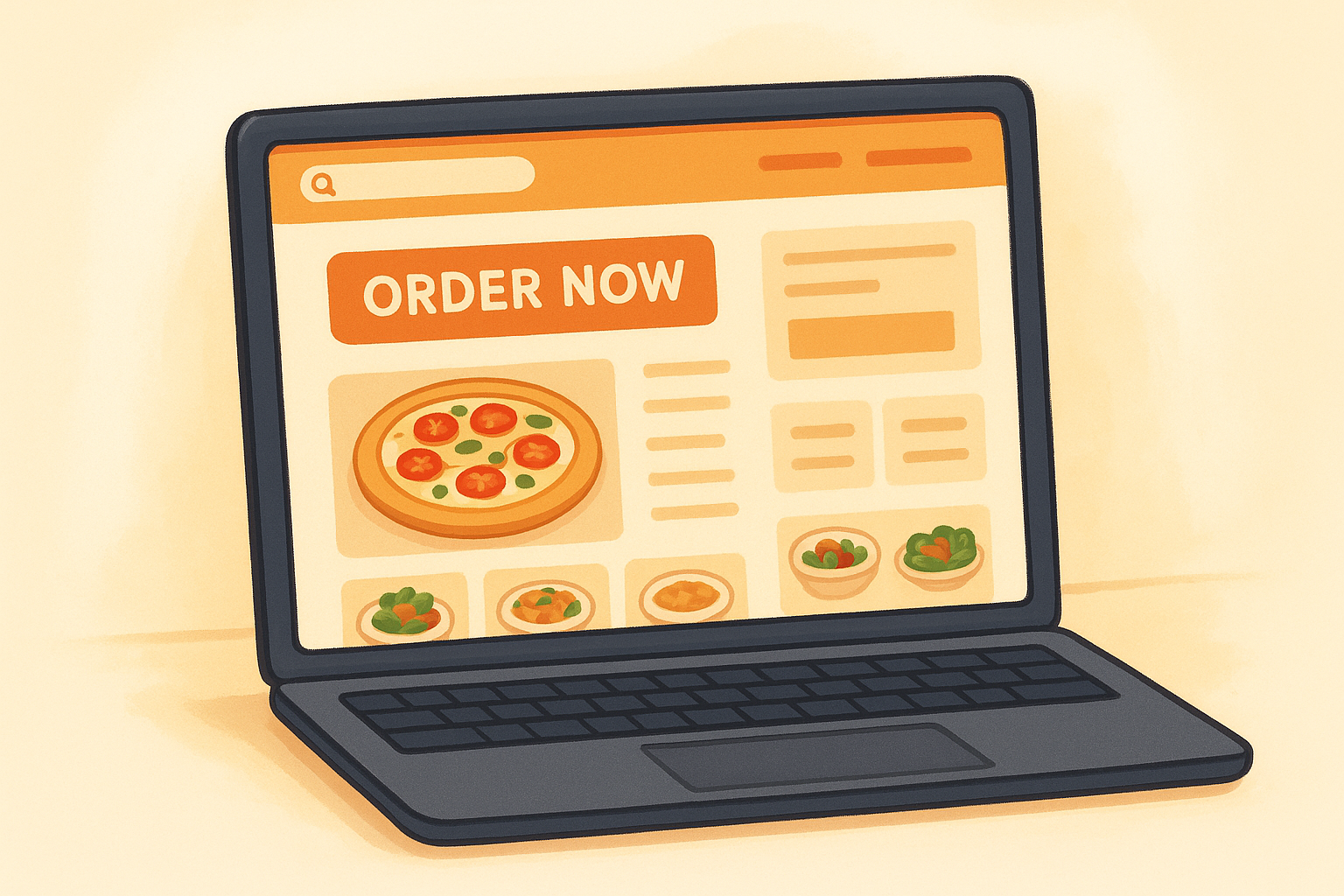
Your website needs to do one job well: convert a visitor into a paying customer. That means a fast-loading, mobile-optimized page with a clear "Order Now" button above the fold. Your menu should be easy to read and navigate, with photos for your best sellers, clear item descriptions, and a simple checkout flow. If any of those pieces are missing, customers leave before they complete an order.
How to drive orders from social and Google
Posting your ordering link on Instagram and Facebook costs nothing and works well. Pin the order link in your bio and include it in every post that features your food. On Google, make sure your Business Profile links directly to your ordering page, not just your homepage. Customers who search your restaurant name expect a fast path to placing an order, so cut every unnecessary click between them and checkout.
What to track weekly
Review your direct order volume versus third-party volume every week and watch the ratio shift over time. Also track your average order value on each channel. Direct orders often run higher because you control the upsell prompts, not the app.
2. Optimize your Google Business Profile and local SEO
Most people searching "pizza near me" never scroll past the first few results. Your Google Business Profile is often the first impression a customer gets, and if it's incomplete or outdated, they'll choose a competitor. Local SEO is one of the most cost-effective answers to how to grow restaurant sales without spending money on ads.
Set up your Google Business Profile to win clicks
Claim and verify your Google Business Profile if you haven't already. Add your hours, menu link, and ordering URL, then upload at least ten high-quality food photos of your dishes and interior.
A complete, active profile consistently ranks higher and earns more clicks than one left half-finished.
Fix the local SEO basics on your site and menus
Your website's page titles and meta descriptions should include your city, neighborhood, and cuisine type. Make sure your name, address, and phone number match exactly across your website and Google profile. Inconsistent data confuses search engines and hurts your local ranking.
Consistent business information across every online listing is one of the simplest, free ways to improve your local search visibility.
Turn searches into calls, bookings, and orders
Enable the "Order Online" and "Reserve a Table" buttons on your Google Business Profile so customers can act the moment they find you. Removing unnecessary friction is what converts more searches into sales.
Google lets you add these buttons directly inside your Business Profile dashboard at no cost.
What to track weekly
Check your Google Business Profile insights each week to see how many people viewed your listing and how many clicked your ordering link.
Click-through rate tells you whether your profile is compelling enough to drive real action.
3. Engineer your menu to raise average ticket size
Your menu is a sales tool, and most restaurants underuse it. Understanding how to grow restaurant sales often starts with getting more from customers you already have, not just finding new ones. Small changes to what you highlight, how you price, and what you bundle can meaningfully raise your average ticket without adding a single new customer.
Find your high-margin and high-demand items
Pull your sales data and identify which items sell well and carry a strong margin. These are your star items, and they deserve the most prominent placement on your menu. Put them in the top-right corner of a printed menu or at the top of your digital menu, where eyes naturally land first.
Look for items that meet all three of these:
- High customer demand based on order frequency
- Strong profit margin after food cost
- Easy to execute consistently during a rush
Use menu design that guides better choices
Limit your menu to items you execute well. Shorter menus reduce decision fatigue and tend to increase both order speed and customer satisfaction. Use anchor pricing by placing your most expensive item near the top so mid-priced items feel like the smarter choice by comparison.
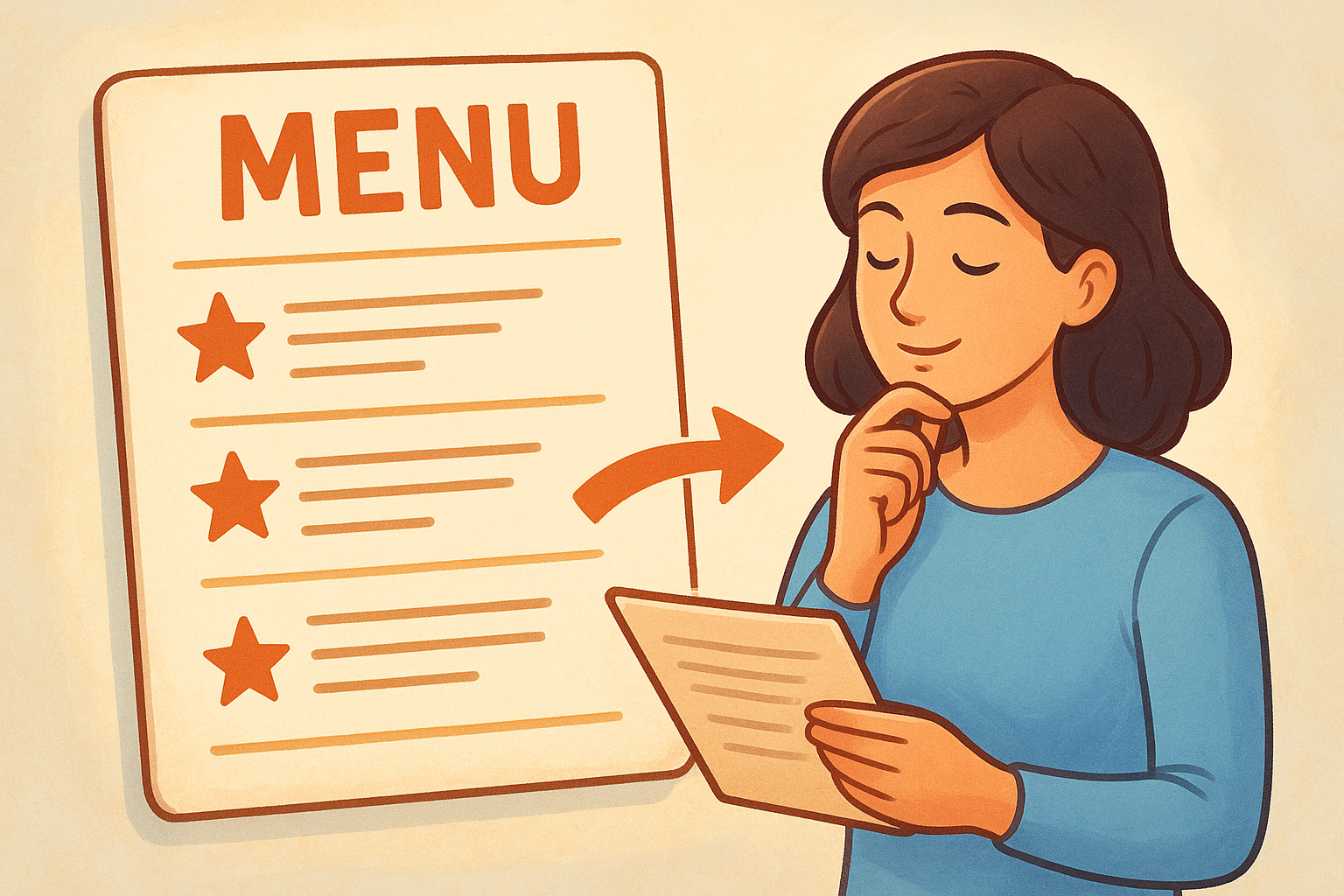
A well-structured menu is one of the cheapest and most effective tools you have to influence what customers order.
Add profitable modifiers and bundles
Build in add-on options like extra toppings, side upgrades, or premium swaps at checkout. Meal bundles that pair a main with a drink and a side increase total spend while giving customers a clear sense of value.
What to track weekly
Watch your average ticket size each week by channel and time of day. Track which modifiers and bundles customers select most so you know what to expand and what to remove.
4. Train your team to upsell without feeling pushy
Your staff interact with every customer who walks through the door, which makes them one of your most powerful sales assets. Upselling doesn't require pressure or scripted pitches that make everyone uncomfortable. It requires a [simple, repeatable system](https://www.thefoodygram.com/blogs/news/restaurant-upselling-examples) and the right words delivered at the right moment.
Build a simple upsell system for every shift
Every shift should start with a brief team huddle to identify two or three high-margin items worth pushing that day. Pick items that are easy to execute and genuinely good, so the recommendation feels honest. Consistent focus across your whole team turns individual suggestions into measurable revenue gains over time.
Write scripts your staff will actually use
Short, specific prompts outperform open-ended questions every time. Train your team to make direct suggestions, like "the loaded fries go really well with that burger," rather than asking vague questions like "would you like anything else?" Keep the language conversational and natural so it doesn't sound rehearsed.
The easiest upsell is a specific recommendation, not a generic question.
Improve speed, accuracy, and hospitality
Understanding how to grow restaurant sales includes recognizing that a fast, accurate, and friendly experience makes customers far more likely to add items and return. Fix order errors immediately without making the customer feel like an inconvenience. Train staff to check in once during a meal, not repeatedly, so guests feel attended to rather than hovered over.
What to track weekly
Pull your average ticket size per server every week to identify who upsells effectively. Use that data to coach lower performers with specific feedback, not generic encouragement.
5. Build repeat business with SMS and email
A new customer is valuable, but a returning customer costs far less to win than a brand new one. One of the most reliable answers to how to grow restaurant sales is keeping your existing customers engaged between visits. SMS and email give you a direct line to people who already like your food, and that's an audience worth protecting.
Collect customer info the right way
Ask customers for their name, email, and phone number at checkout, whether online or in person. Your online ordering page is the easiest place to capture this data automatically since every customer already provides it to complete a purchase. For dine-in guests, a simple tablet at the register or a QR code on the table linking to a short sign-up form works well.
The customer data you collect through direct ordering belongs to you, not to a third-party app.
Send campaigns that fill seats and drive orders
Send targeted messages tied to real reasons, like a weekend special, a new menu item, or a slow Tuesday that needs a boost. Keep SMS messages under 160 characters with a direct link to order. Email campaigns work best with a single clear offer and one call to action, not a wall of text.
Set up automations for birthdays and lapsed guests
Automated birthday messages with a small offer bring customers back without any manual effort. Set up a separate trigger for guests who haven't ordered in 30 to 45 days to send a re-engagement message with a reason to return.
What to track weekly
Monitor your email open rate and SMS click-through rate each week. Track how much revenue each campaign directly generates so you can double down on what works and cut what doesn't.
6. Fill slow shifts with targeted promos and events
Every restaurant has dead zones: the Tuesday lunch that barely covers labor costs or the early Sunday dinner that sits empty until 6 PM. Knowing how to grow restaurant sales means learning to fill those gaps without discounting so heavily that you wipe out your margin.
Identify where you have unused capacity
Pull your sales data by day and daypart to find your lowest-performing shifts. Look for patterns over at least four weeks so you're responding to real trends, not a random slow night.
Your POS system should give you hourly sales breakdowns that make this easy to spot. Common slow windows for most restaurants include mid-week lunches, early weekday dinners, and late weekend afternoons.
Choose offers that protect margins
Avoid blanket percentage discounts, which cut revenue across every order including ones that would have happened anyway. Instead, build offers around high-margin items, like a free appetizer with a minimum spend or a bundle that pairs a slow-moving item with a popular one.
A well-structured promo drives new visit occasions without training customers to wait for a deal before ordering at full price.
The goal is incremental revenue, not subsidizing sales you were already going to make.
Run low-lift events that bring in groups
Trivia nights, sports viewing parties, and themed dinners bring in groups that spend more per table than walk-in solo diners. Keep the format simple so your team can execute it without adding extra staffing costs.
What to track weekly
Compare revenue per shift before and after running a promo or event. Track cover count and average ticket separately so you know whether the promotion drove more visits, higher spend, or both.
7. Grow off-premise sales with better pickup and delivery
Off-premise orders represent a growing share of restaurant revenue, and the experience you deliver outside your four walls matters as much as the one inside. Improving how you handle pickup and delivery is one of the clearest answers to how to grow restaurant sales, because it captures demand you're already missing without requiring more tables or longer hours.
Make pickup faster and more reliable
Designate a dedicated pickup area in your restaurant, ideally near the front so customers don't have to weave past dine-in guests. A clear handoff process where staff confirm the order name and bag contents before handing it over cuts errors and complaints significantly.
A smooth pickup experience turns a one-time online customer into a repeat direct customer.
Package and menu your food for travel
Use packaging that maintains heat and structure for at least 20 to 30 minutes so your food arrives in good condition. Audit your menu for items that don't travel well and either remove them from your online ordering menu or adjust preparation notes accordingly.
High-margin items that hold up well, like bowls, wraps, and baked dishes, deserve the most prominent placement on your delivery menu so you're selling items that protect your margins and your reputation.
Use third-party apps strategically without dependence
Third-party apps can generate discovery, but treating them as your primary channel permanently surrenders your margins. Use them to bring in new customers, then redirect those customers to your own direct ordering page through packaging inserts or a simple card with your ordering link.
What to track weekly
Monitor your pickup order error rate and your split between direct and third-party delivery volume each week to measure progress.
Next steps
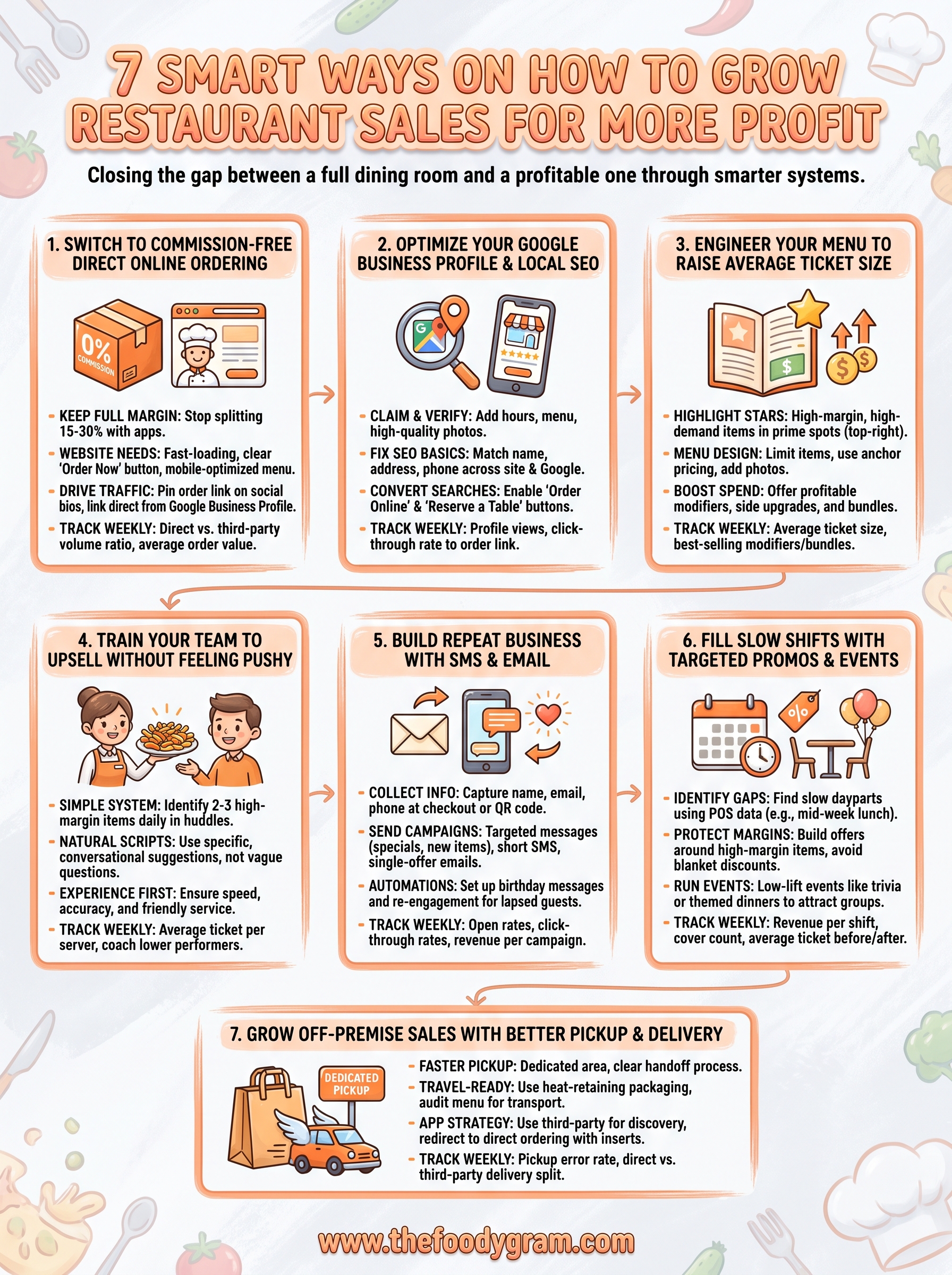
Every strategy in this guide works, but none of them work if you try to run all seven at once. Pick the one or two with the clearest impact on your current situation and execute them well before adding more. If you're still paying 25% to a third-party app on most of your orders, that's the most logical place to start.
Knowing how to grow restaurant sales comes down to controlling the variables within your reach: where your orders come from, what your customers spend, and how often they return. You don't need a big marketing budget to move those numbers. You need the right systems in place.
If you're ready to stop paying commissions and start keeping more of what you earn, see what The Foody Gram costs per month and compare it against what you're currently handing over to third-party apps.